Arm tattoo cuffs in this collection run from a single thin line finished in one short session to solid black bands needing multiple passes and two healing periods, with botanical patterns and geometric compasses falling somewhere between.
Your own decision is how much ink you want living on that spot, because light botanical lines or scrollwork need touch-ups by year two while solid black ground with florals asks for more commitment upfront.
The thin single-needle lines and curved botanical patterns both ask about blowout risk up front; that is the detail that separates a cuff you keep from one you cover.
[link-whisper-related-posts]1. Thin Black Ink Lines
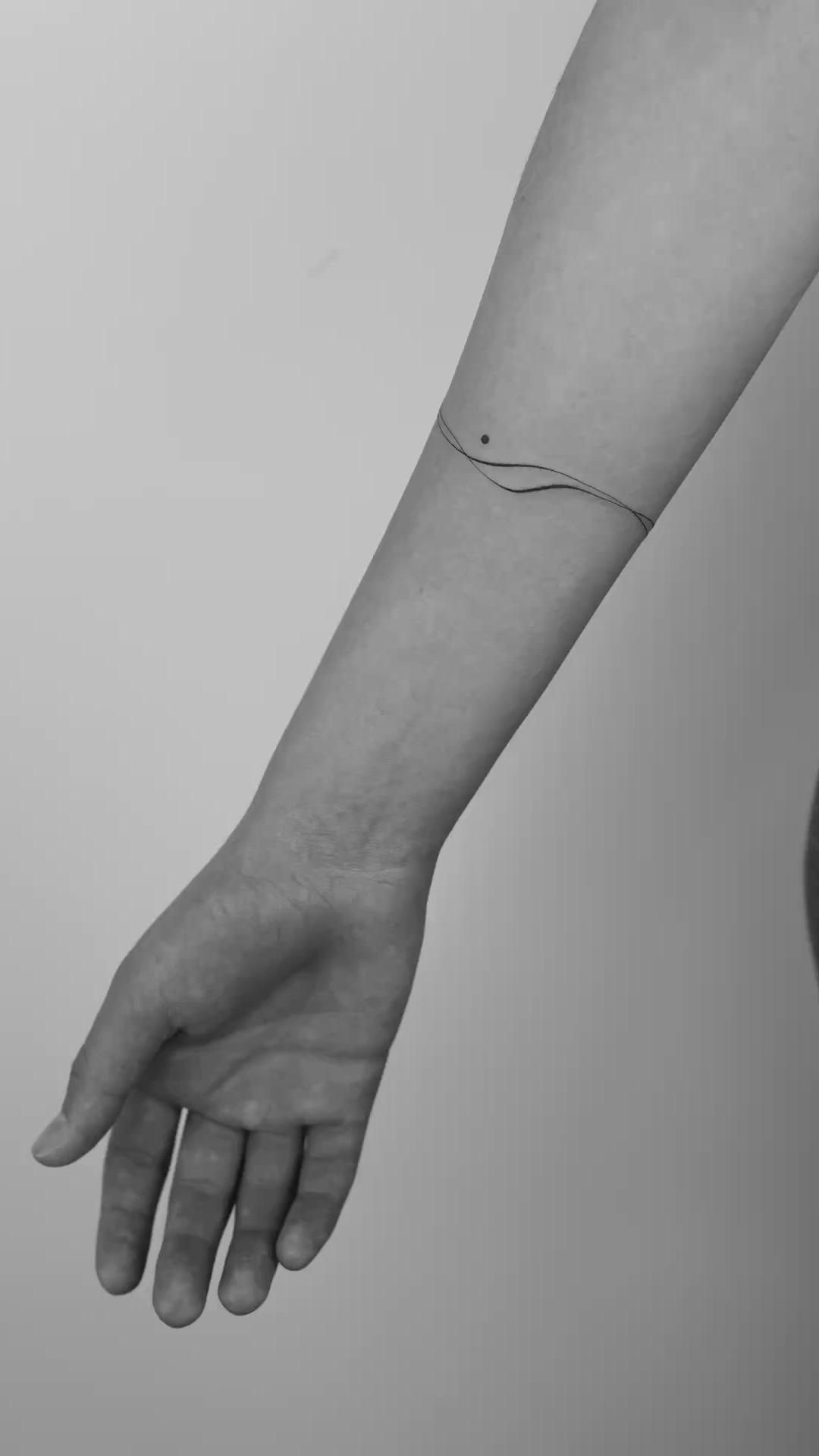
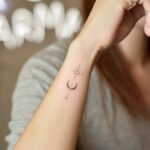
A single unbroken line, or a few spaced close together, reads as jewelry without trying to look like any particular piece. I like this version for anyone who wants a cuff that does not fight with watches or bracelets.
A steady hand keeps the line clean and even all the way around.
Ask your artist about their experience with single-needle work; blowout shows harder here than in heavy designs. A small solid dot placed off-center breaks the band just enough to catch light without adding clutter.
Pain stays low on the outer forearm, higher toward the inner wrist where skin is thinner. Plan for one short session, maybe two if you add dots or a second line.
This ages well because there is little detail to blur, though sun protection matters more than people think; thin black ink fades to gray faster than most people expect.

ELEGANT BOTANICAL VINE ART: Features a graceful, continuous blooming layout mimicking the natural, organic curvature of growing forest flora. This delicate botanical illustration is crafted using a digital hand-drawn fine line tattoo ensures crisp lines to deliver ultra-sharp leaf silhouettes, intricate wildflower clusters, and clean minimalist stem line weights.

Massive Quantity: 60 Sheets in total of fake temporary tattoo stickers, including 30 sheets of inspirational and motivational quotes and scripts, cursive words, retro typewriter style sayinging, 30 sheets of simple branch flower tattoos. Enough for friends party gatherings to enjoy together or choose different pattern to match your everyday mood.

Innovative Skin-Sync Technology: We don't just sit on the skin; we interact with it. By reacting organically with naturally occurring proteins in your skin's outermost layer (stratum corneum), our plant-based formula magically transforms from a transparent guide into a rich, ultra-realistic navy-black. It looks exactly like a healed, permanent tattoo—without the needles or depth.
2. Botanical Patterns with Curved Leaves
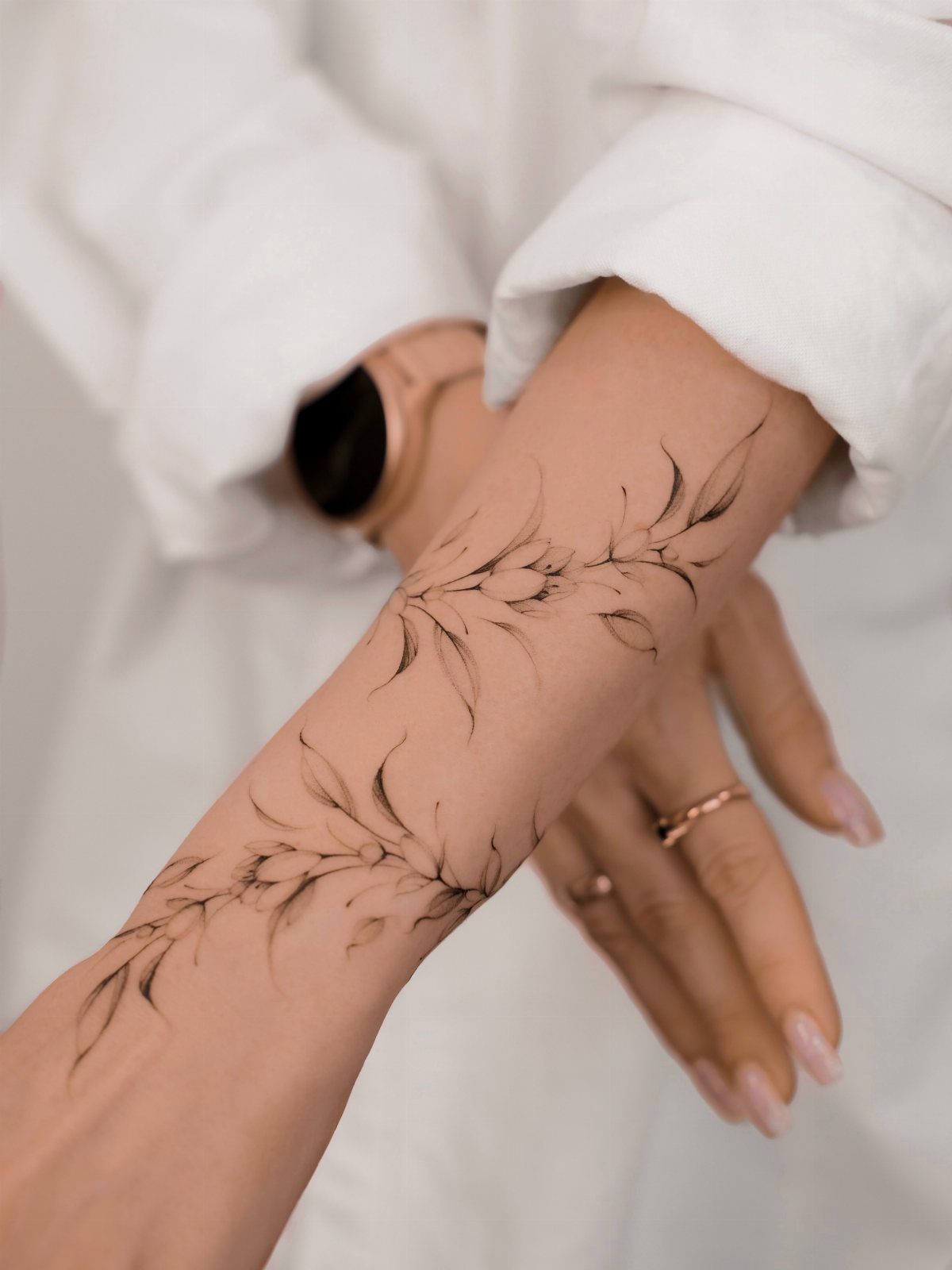
Curved leaves and small buds follow the arm’s shape better than straight geometry, which is why this style sits naturally on muscles that flex and relax.
The semi-circular arrangement leaves a gap at the inner arm, a choice that keeps the design from distorting when you bend your elbow.
Dot accents between leaves add texture without weight.
I would ask for these rather than extra linework if the design starts feeling busy; they read as spacing, not ornament. Fine-line botanicals need touch-ups sooner than bold blackwork, so budget for that in year two or three.
This suits readers who want nature imagery but not a full sleeve. The curved forms draw the eye around the arm, which flatters most builds.
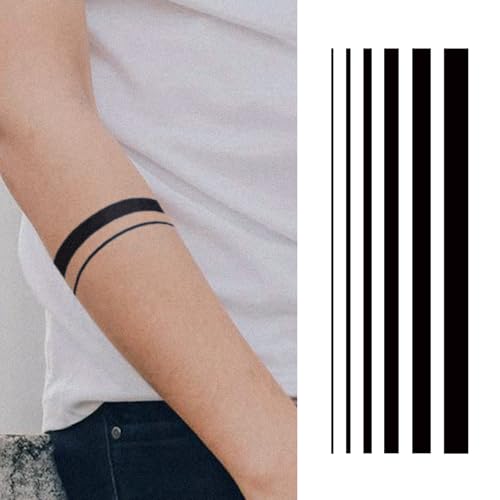
GEOMETRIC LINE & ARMBAND DESIGNS: Features a striking minimalist collection of continuous parallel lines engineered in varying stroke weights. This modern unisex set ranges from delicate hairline threads to bold solid blackout bands

🌼 Beautiful Hand-drawn Fine Line Style Tattoos - Black and White Fine Line Flowers, Roses, Branch, Butterfly, Arrows, Hearts, Stars

3. Compass with Geometric Bands
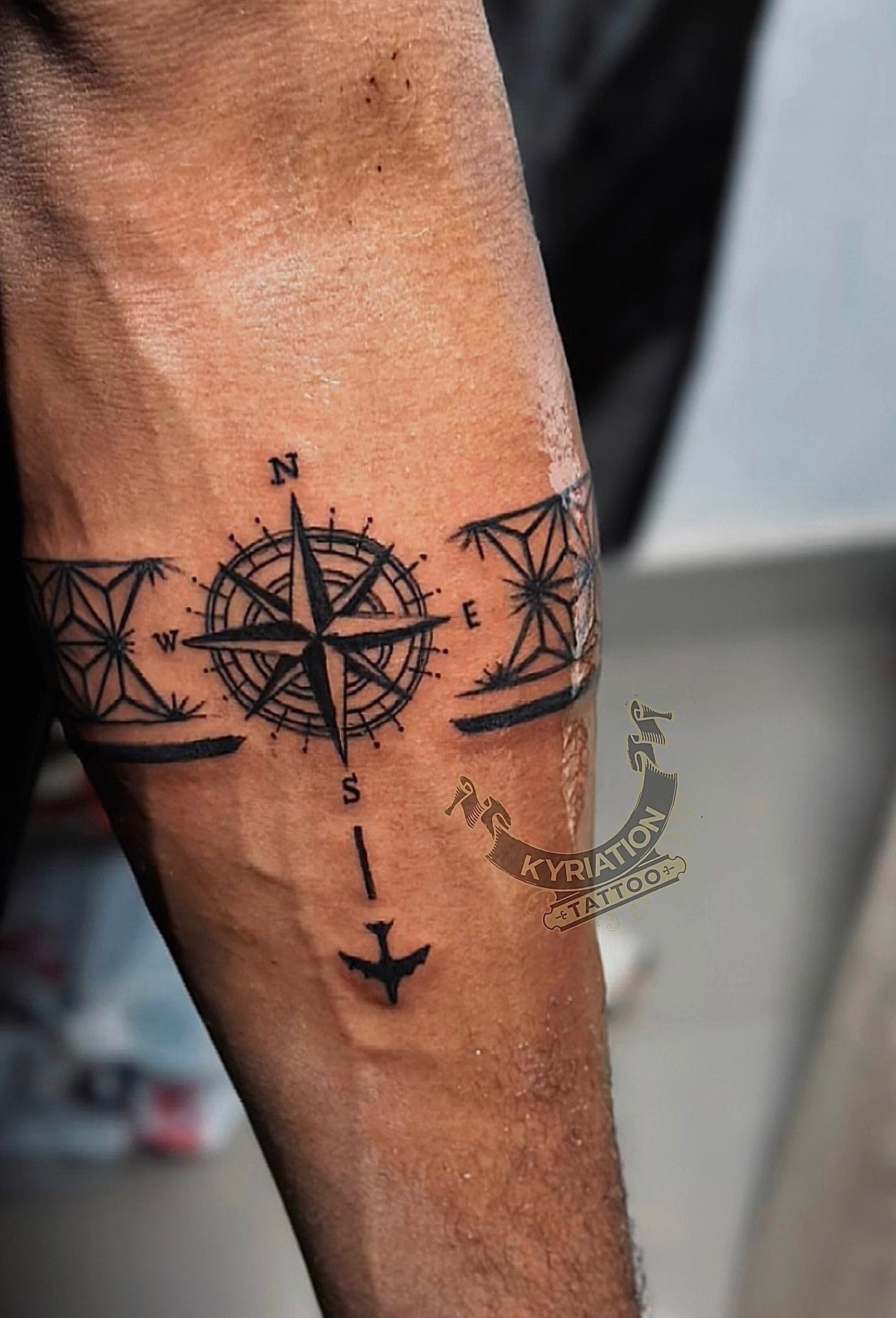
A compass rose at center with geometric bands extending both directions gives the cuff a clear front and back, something most arm bands lack. A small airplane turns travel interest into a specific memory without requiring text.
Geometric flanking patterns need precise spacing to read as bands rather than scattered shapes.
I would measure the arm circumference at the placement spot, then divide by the repeat length your artist proposes; remainders mean a gap or a squeezed motif, and you should decide which before the needle starts.
Parallel bands, one thin and one thicker with pattern, work on larger arms where a single band would look stranded.
This style carries more ink than fine-line options, so healing runs longer and scabbing comes heavier.

GOOD MATERIAL:The tattoo rubber bands tattoo is made of high-quality silicone material, soft and durable,elastic and durable.The good elasticity makes the rubber band not easy to deform after long-term use.Tattoo rubber bands have reliable strength and flexibility.The tattoo elastic ring has good elasticity, is very durable and safe

Dragonhawk Tattoo Needles: High-quality tattoo needles, manufactured under the trusted Dragonhawk brand, are perfect for all-purpose work. With a polished, long taper design, these needles ensure reliable performance and excellent control.

4. Solid Black Bands with Florals
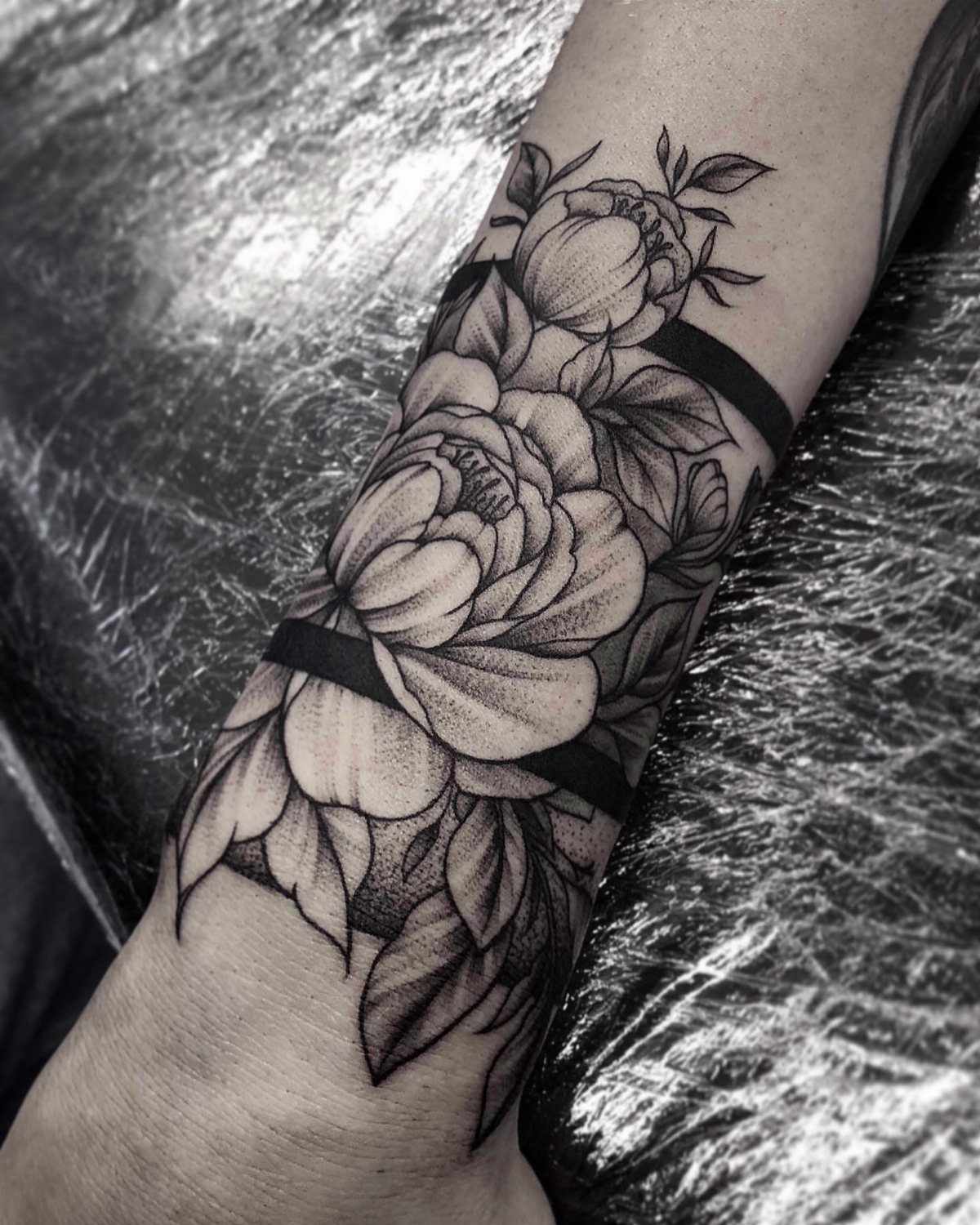
Solid black bands underneath flowers create depth the flowers alone cannot manage; peonies seem to float forward because the black ground recedes. This is the most graphic cuff style on the list, and it needs the most commitment.
Thick black bands require multiple passes to saturate evenly.
I have seen artists lay the black first, let it heal, then return for the gray and white floral detail; the two-session approach costs more time but saves the fine work from swelling distortion.
Beige or white floral patterns on black need a specialist; not every shop stocks the pale inks that stay visible on dark fields.
This hides older tattoos or scars better than open linework, but summer sun will heat the black bands noticeably and fade them fastest.

【UNIQUE AMAZING DESIGNS】Each Size is about 11.4 x 21 cm / 4.48 x 8.26 inch. Contains 8 sheets temporary tattoo paper stickers which are printed with non-toxic ink.

NAUTICAL COMPASS & EAGLE: Features a nautical compass rose combined with a geometric arrow and a soaring eagle in flight. Advanced digital hand-drawn fine line tattoo ensures crisp lines.
5. Symmetrical Scrollwork Band
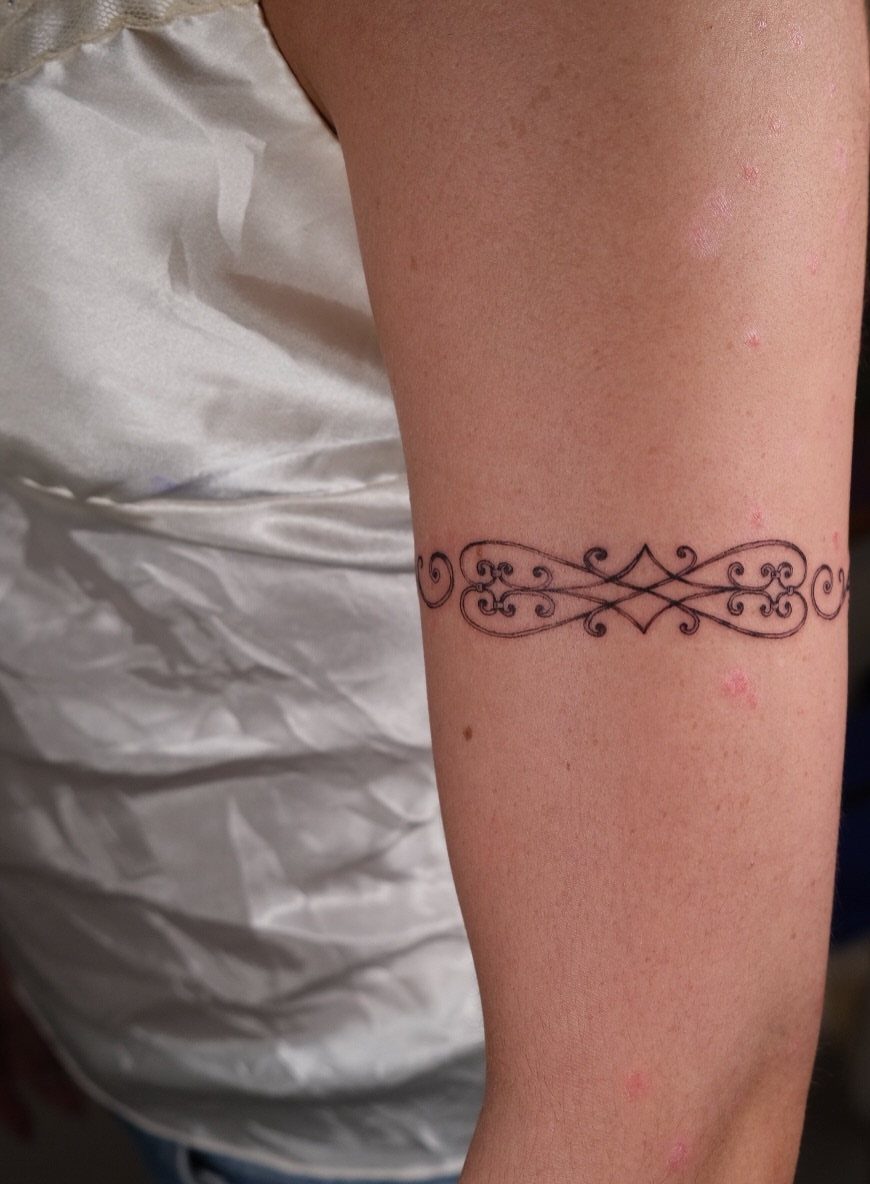
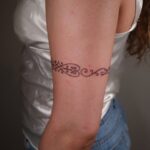
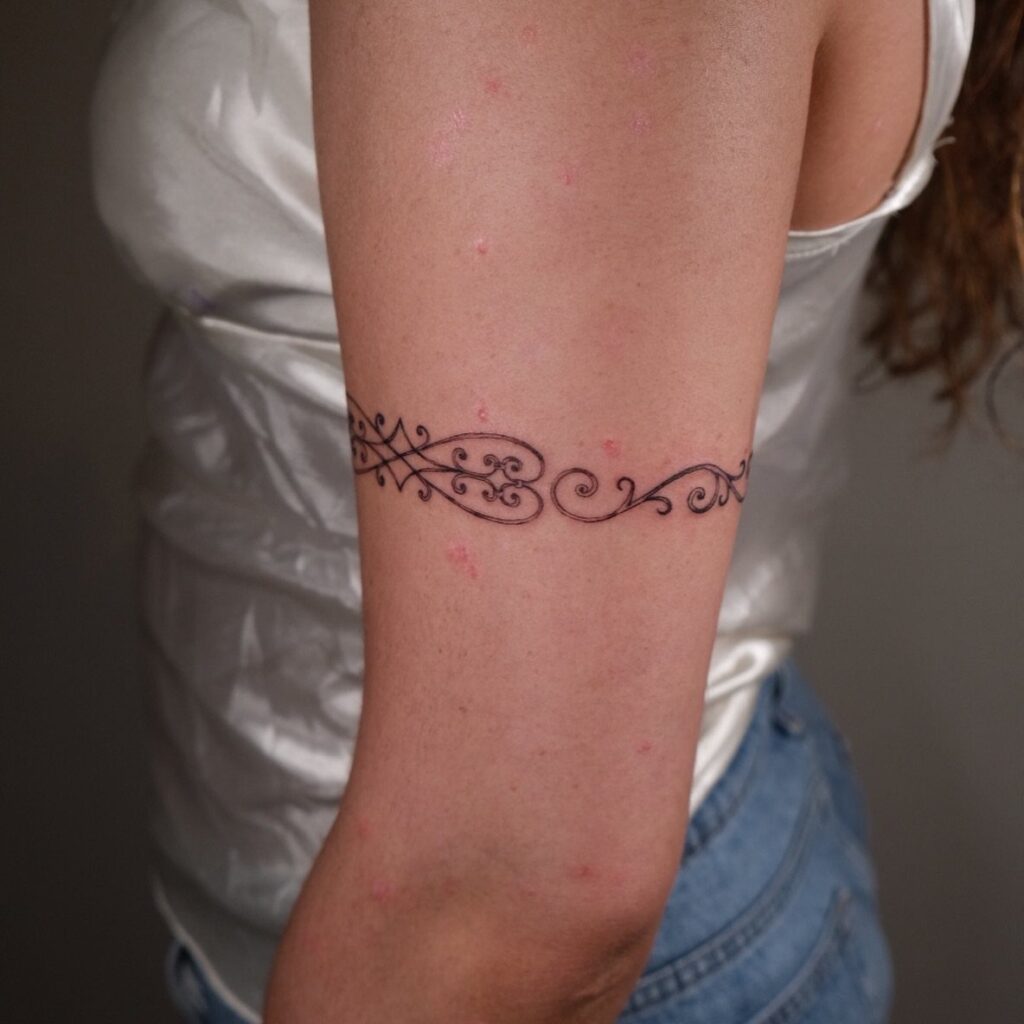
Symmetrical scrollwork depends on the arm being held straight; any rotation throws the balance off, which makes upper arm placement smarter than forearm for this design.
The filigree stays readable because the band is narrow enough that distortion stays minimal through normal movement.
Fine-line scrollwork needs an artist who works slowly; rushed needle movement wobbles curves that should flow. I would check their portfolio for healed photos of similar detail, not just fresh work, because thin lines spread unpredictably.
A satin garment beside the tattoo gives useful scale: this band runs about the width of a ribbon, not a sash, which is the proportion that flatters most upper arms.
No color means lower cost and faster healing, but also less camouflage of any asymmetry that develops as skin ages.

🎡【Package Includes:】 71 Sheets Watercolor Temporary Tattoos For Women Men Adults Including 12 Sheets Half Arm Sleeve Tattoo Stickers and 59 Sheets Tiny Cute Small Fake Tattoos For Kids Boys Girls, 3D Gothic Tatoos Universe Planets Star Moon Spider Web Cross Birds Scorpion Bat Ghost Elephant Flower Floral Pirate Compass Anchor Butterfly Skull Skeleton Maori Totem Wolf Tiger Lion Dragon Eagle Owl Bear Crown Mountain Sea Wave Snake Tree infinity Letter Words Clock Quotes Abstract ECG Feather Gangster Minimalism Coyote Feather Astronaut Whale Lotus Dreamcatcher.

★【59 Sheets! Variety Temporary Tattoos For Women】--Contain More Than 500 Exquisite Designs COKTAK Brand Variety Waterproof Temporary Tattoos For Kids Boys Girls Teens Fashion Hot Popular Designs Tattoo Stickers in One Package.【Size】:12 Sheets Large Arm Temporary Tattoos For Adults Women 7.4"x3.5" inch 19x9CM Tattoo Kit and 47 Sheets Small Temporary Tattoos Stickers For Kids 10.5x6CM 4.1x2.3inch Skull Skeleton Moon Sea Weave Bat Constellation Dragon Scorpion Gangster.
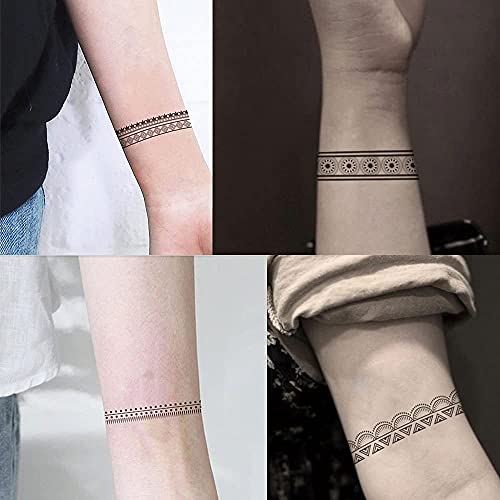
❤️ Bold Tribal Bracelet Designs: This set features 2 sheets of tribal-style temporary tattoos, showcasing intricate black patterns that wrap around your wrist like a bracelet. Perfect for fans of black tattoos and bold, masculine designs.