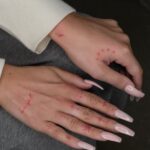
A wrist tattoo runs from the inner face to the side edge, or wraps the joint like a bracelet.
The deciding factor is not style but your actual week: which hand faces clients, which rests on a keyboard, whether your workplace reads visible ink as neutral or unprofessional.
Each of the 7 placements below heals at a different rate because wrist skin thins and thickens around the bone in patches, and the wraparound alone puts ink on every one of those patches at once.
[link-whisper-related-posts]1. Inner Wrist
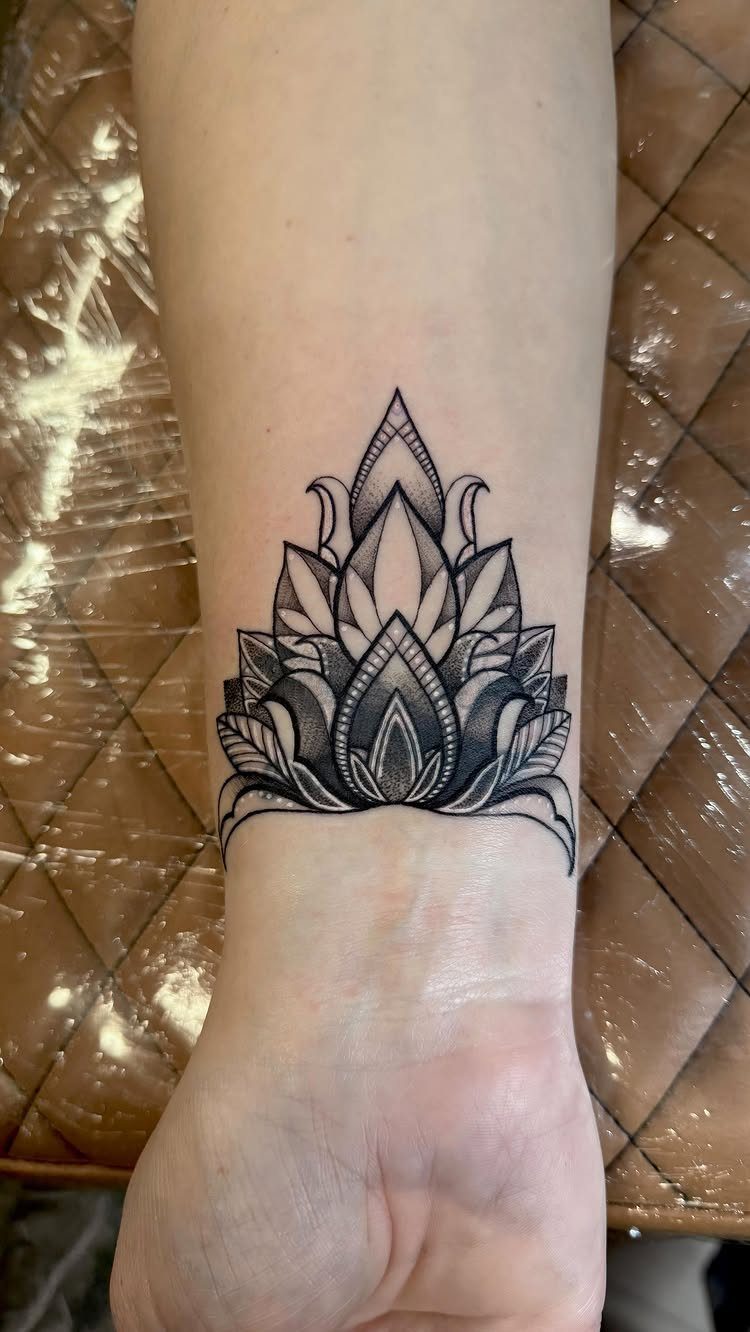
The inner wrist faces you every time you check a watch or rest your hands on a keyboard.
That makes it the spot for words you need to reread, dates you refuse to forget, or a small symbol that only means something when you turn your arm over.
Geometric shapes and single lotus flowers sit well here because the flat plane keeps lines straight and detail readable at close range.
The skin is thin and the bone sits close beneath, so expect sharper pain than on the outer wrist. Healing means retraining yourself not to rest your forearms on desks, which rubs the fresh ink constantly.
This placement stays visible to you first, to everyone else second. Choose something that holds up to that frequency.
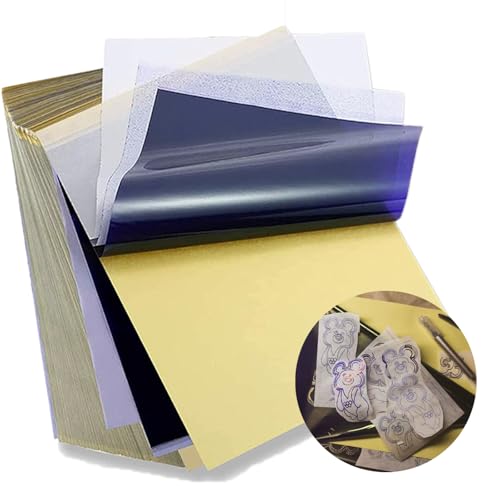
Standard size: Tattoo Transfer Paper is standard A4 paper size, each measures 8.27 in X 11.69 in. There are 4 levels in total. The thickness of the paper is very light and smooth to the touch.

Warm Tips: The tattoo transfer paper need to work with transfer medias.You will need to purchase the stencil ointment separately. Apply the design made on the master paper. Please pay attention to press the back side of the pattern to the skin for at least 3 seconds

Precision Transfers & Long Lasting: Tattoo stencil paper delivers vibrant, high-definition transfers even for intricate designs. Creates crisp, dark lines that transfer cleanly to skin (clearly on different skin tones) which are easy to follow during tattooing. The carbon layer made from high-quality dyes ensures sharp outlines without smudging or fading and maintains crisp lines visibility throughout long tattoo sessions, so you can focus on creating art instead of re-drawing lines
2. Side of the Wrist
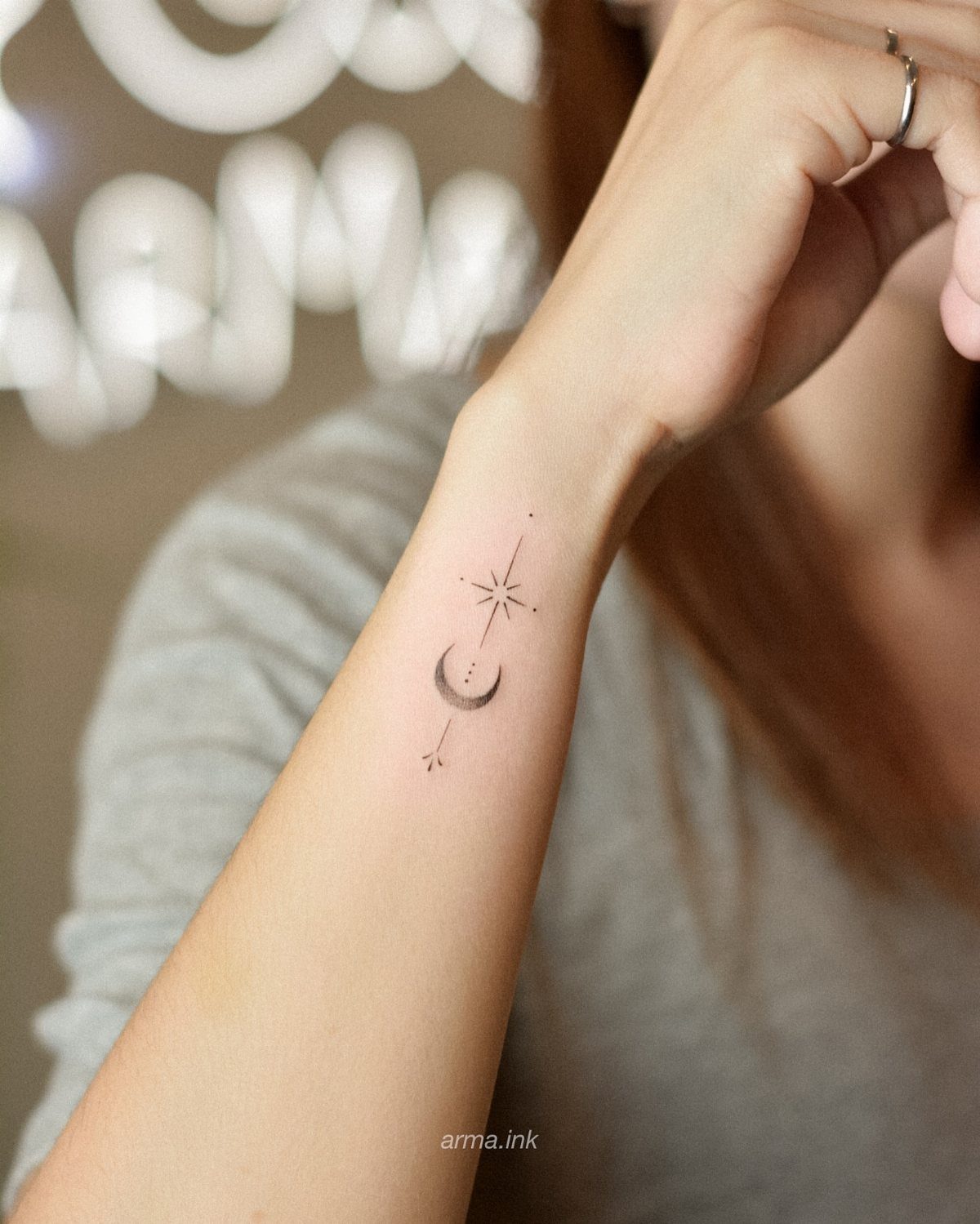
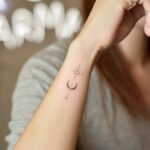
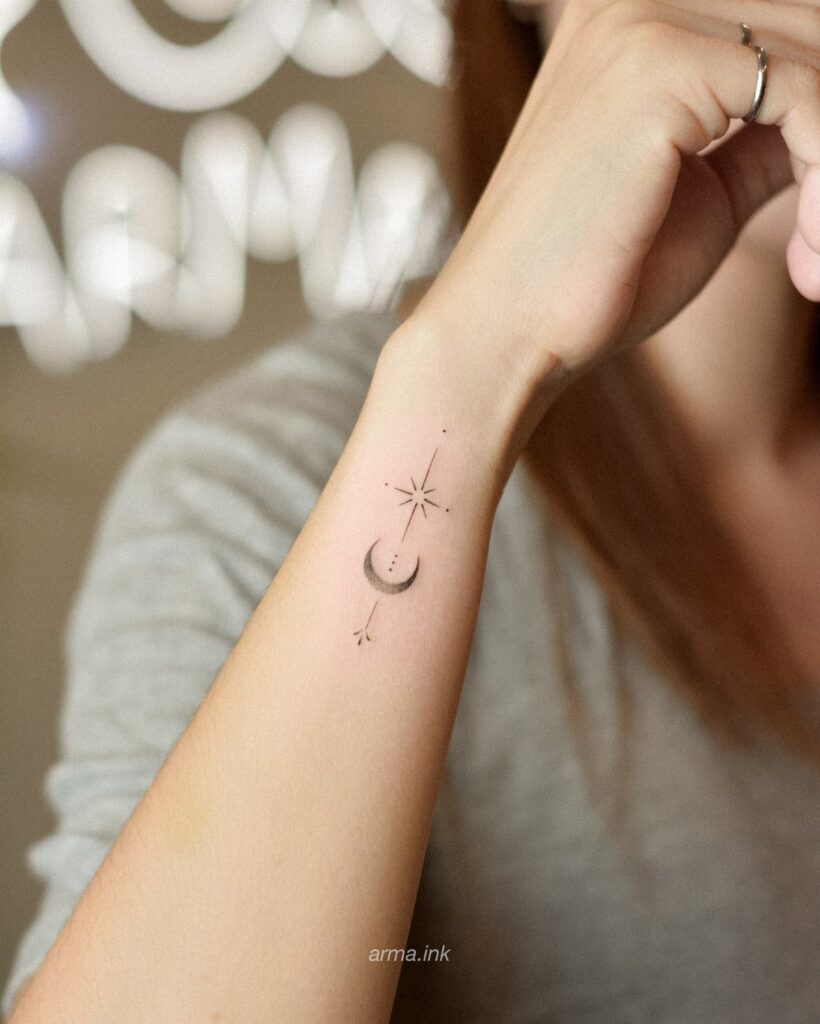
A star and crescent on the outer edge of the wrist disappears under most sleeves and watch bands.
That narrow strip of skin only shows when you gesture or reach, which gives the tattoo the quality of a half-secret you choose when to reveal.
Fine-line moons, single stars, and tiny symbols work best here because the space is limited and curves slightly.
The bone is closer than on the top of the wrist but the skin is not as thin as the inner side, so pain sits in the middle range for most people.
A long sleeve covers it completely for jobs or family events where visible ink complicates things.
I like this spot for first tattoos because the commitment to visibility feels manageable. You see it when you want to.

【Elegant Feminine Lotus Design】This fine-line lotus set is designed to enhance the natural beauty of your body. Soft, balanced lines create a feminine and intimate look that feels symbolic and graceful. Ideal for subtle yet meaningful self-expression, these tattoos offer quiet confidence and beauty.

★【18 Sheets 200+ PCS Small Finger Temporary Tattoos For Women Men Adults】--COKTAK Brand Mixed Style Black Small Temporary Tattoos For Men Women Adults Hot Fashion Variety Y2K Tiny Geometric Arrow Lotus Rose Flowers Leaf Leaves Sun Crescent Moon Butterfly Words Letters Finger Tattoo Stickers In One Package.

Premium Quality 1.5mm Silicone Material – Crafted from premium 1.5mm thick silicone, this tattoo skin offers a true-to-life feel with excellent durability and a smooth surface for effortless needle movement during practice.
3. Wraparound Tattoo
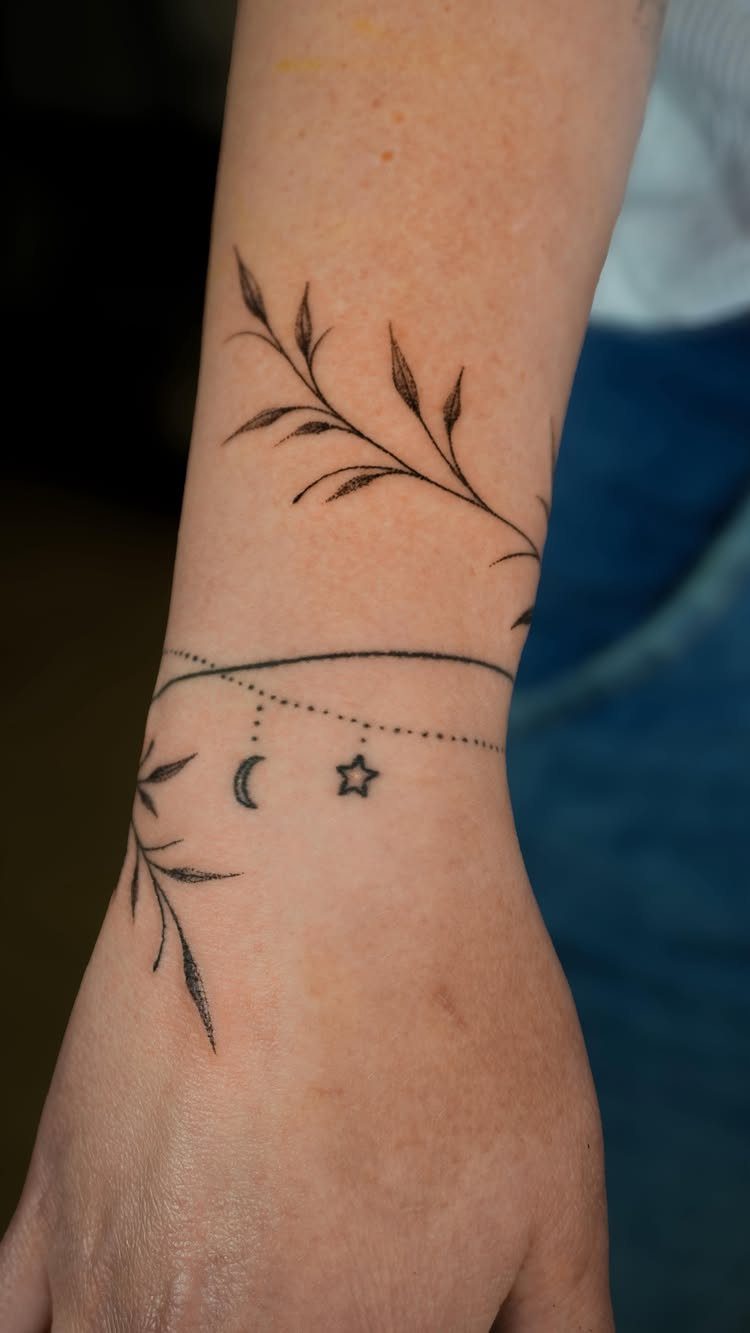
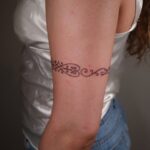
A wraparound uses the wrist as a three-dimensional surface instead of a flat panel. Vines, bands with dangling charms, or bracelet-style patterns circle the whole joint, which means the design reads from every angle and moves when you move.
A wraparound heals on every surface at once, which slows things down. The inner side rubs against desks, the top takes sun, and the constant flex of the joint disturbs scabbing.
Outer wrist areas hurt less, inner and side spots hurt more, so a session circling the wrist delivers the full range. Sunscreen becomes non-negotiable for the long term because the top of the wrist fades fastest.
This is the choice when one small symbol feels too slight for what you want to carry.

COMPLETE AFTERCARE KIT FOR NEW & EXISTING TATTOOS: This Tattoo Aftercare Kit brings together 3 essentials, Antimicrobial Soap, Tattoo Balm, and Tattoo Lotion, to help cleanse, protect, and moisturize fresh ink. Useful after tattoo sessions and throughout healing, it supports vibrant color and skin comfort for dedicated ink enthusiasts and artists

🌿 VIBRANT COLOR & DEEP MOISTURE - Crafted with nutrient-rich a&d ointment, our balm deeply hydrates freshly inked skin. It supports your natural moisture barrier, keeping body art and microblading looking bold and beautifully vibrant.

TATTOO OINTMENT act as a healing agent after you have received a tattoo. This healing ointment safeguards your skin and also protects the tattoo from rubbing on your clothes and getting irritated.
4. Left Wrist Tattoos
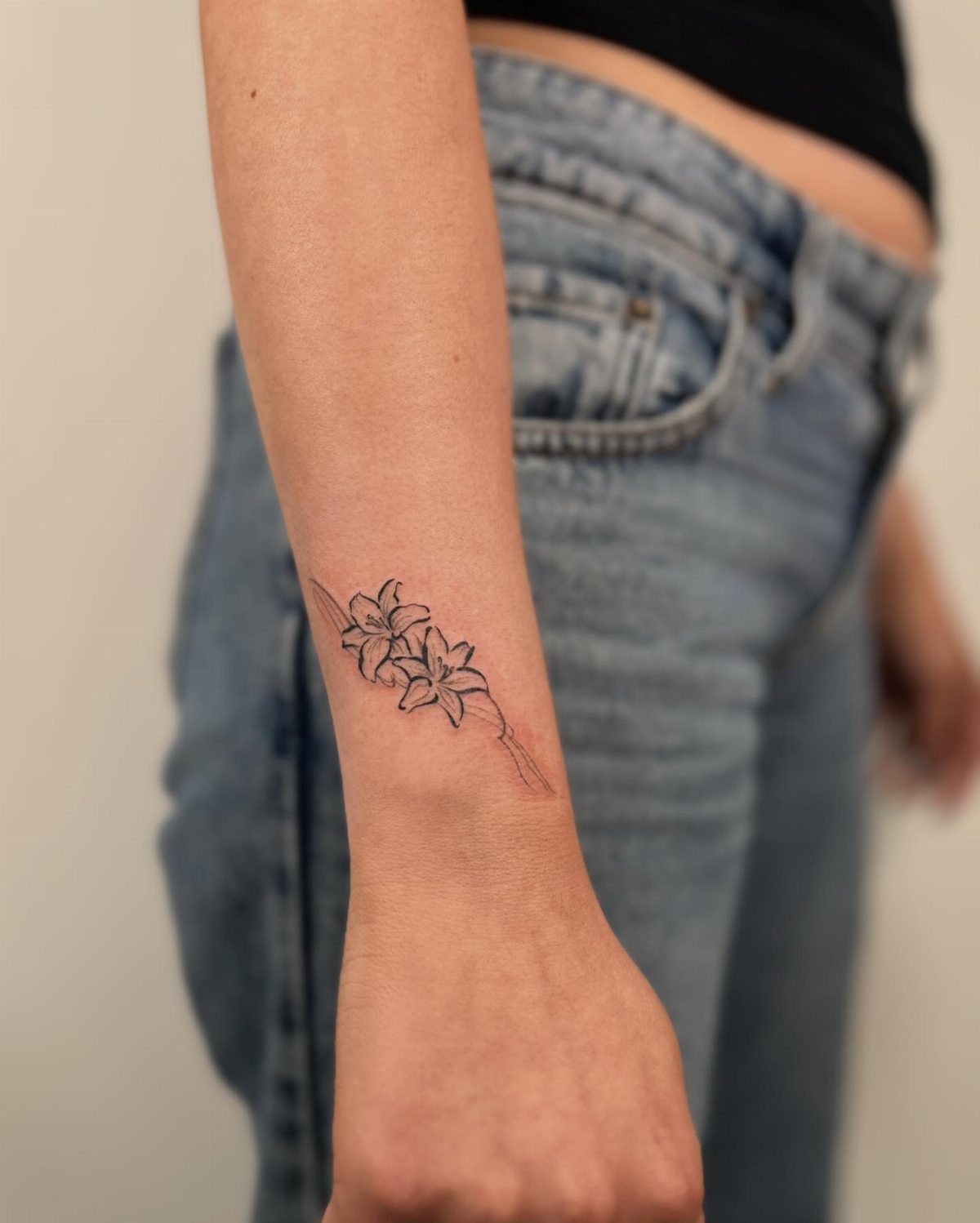
The left wrist carries specific weight in several cultural frameworks: femininity, intuition, emotional connection, receptivity. A lily placed here draws on that association deliberately, whether the wearer names it or not.
Flowers on this side often read as more inward-turning than identical designs on the right.
The left hand is the receiving hand for right-handed people, which layers meaning onto symbols of growth or opening. I would place lilies, lotuses, or soft-edged botanicals here rather than aggressive geometry; the cultural coding already tilts toward organic forms.
Pain matches the inner or outer placement you choose, not the side itself. The symbolism is free.

Unique Pixel Art Designs: This set features 2 sheets (12x17cm) of pixel-style tattoo stickers, creating vibrant, colorful bracelet-like patterns that wrap around your wrist or ankle. Perfect for fans of retro-inspired and geometric body art.
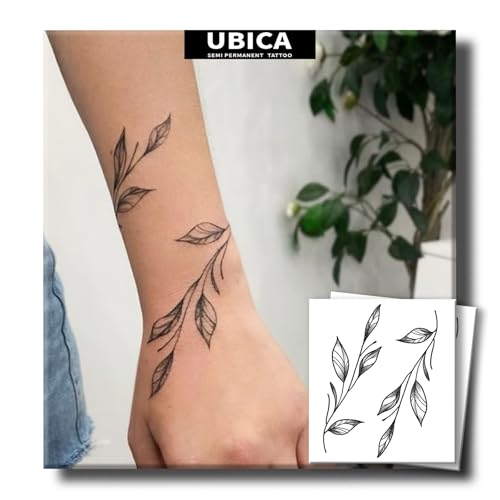
【Natural & Skin-Friendly】Made with plant-based extracts and free from harsh chemicals, UBICA semi permanent tattoos are gentle on all skin types—even sensitive skin. Express yourself without irritation!

BOTANICAL VINE BAND ART: Features a stunning collection of four distinct nature-inspired band designs, including creeping leaf vines, ornate floral chains, and a graceful branch trail complete with a tiny hummingbird. This delicate collection is crafted using a digital hand-drawn fine line tattoo ensures crisp lines and flawless gradient shading to deliver ultra-clean micro-linework, crisp botanical details, and soft, natural shading gradients.
5. Floral Patterns on Left Wrist Tattoo
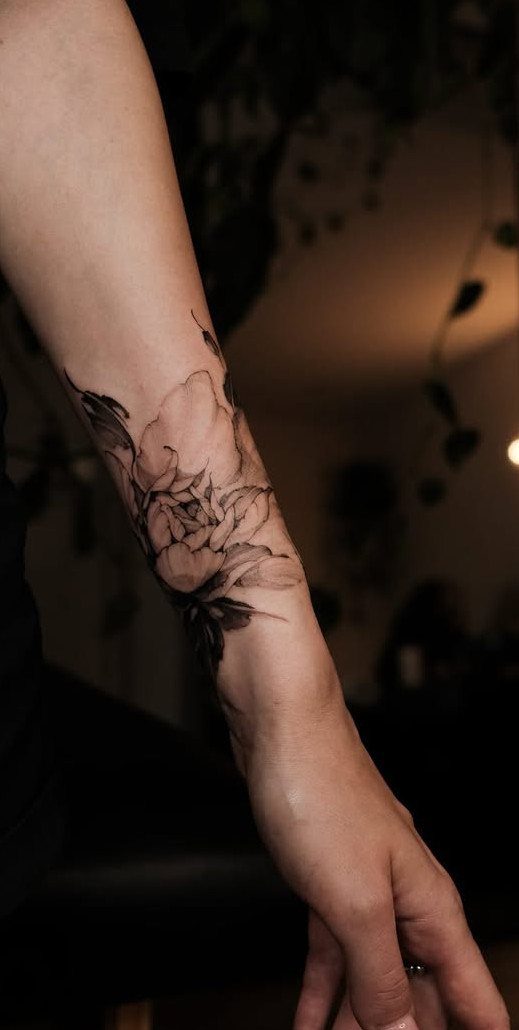
Large peony or rose work that starts on the forearm and tapers onto the wrist uses the left side’s cultural associations without stating them directly.
The flower’s scale matters: a small bloom gets lost against the bone structure, while one that extends past the wrist line holds its visual weight.
Black and grey shading keeps the focus on form and texture rather than color that will need refreshing.
One artist whose cover-up work I have followed mentioned that the piece visible here replaced older ink that had already gone through four laser removal sessions.
That history is worth noting because wrist skin shows wear faster than back or thigh skin, and starting fresh on this spot sometimes requires clearing space first.
Consider how the stem or vine enters and exits the frame. A flower floating without connection reads as sticker-like; roots or stems extending up the forearm give it somewhere to belong.

DAISY CHAIN BRACELET DESIGN Hand-drawn floral chain tattoo designed to wrap around the wrist or arm like a piece of jewellery.

Unique Design:Music guitar leather bracelet inspired by rock and punk aesthetics, this guitar leater bracelet combines guitar motifs and music symbols with retro charm. Grunge musical enthusiast bracelets never out of fashion.

🌼【VARIETY OF POPULAR PATTERNS】17 Sheets High Quality Mixed Style Realistic Women Temporary Tattoos For Hands Feets Including Beautiful Butterfly Lotus Peony Rose Floral Flowers Temp Tattoo Stickers And Fake Jewelry Pendants Tattoos Crescent Moon Sun Star Lovely Cat Dragonfly Leopard Temporary Tattoos For Women.
6. Wrist to Hand Tattoo
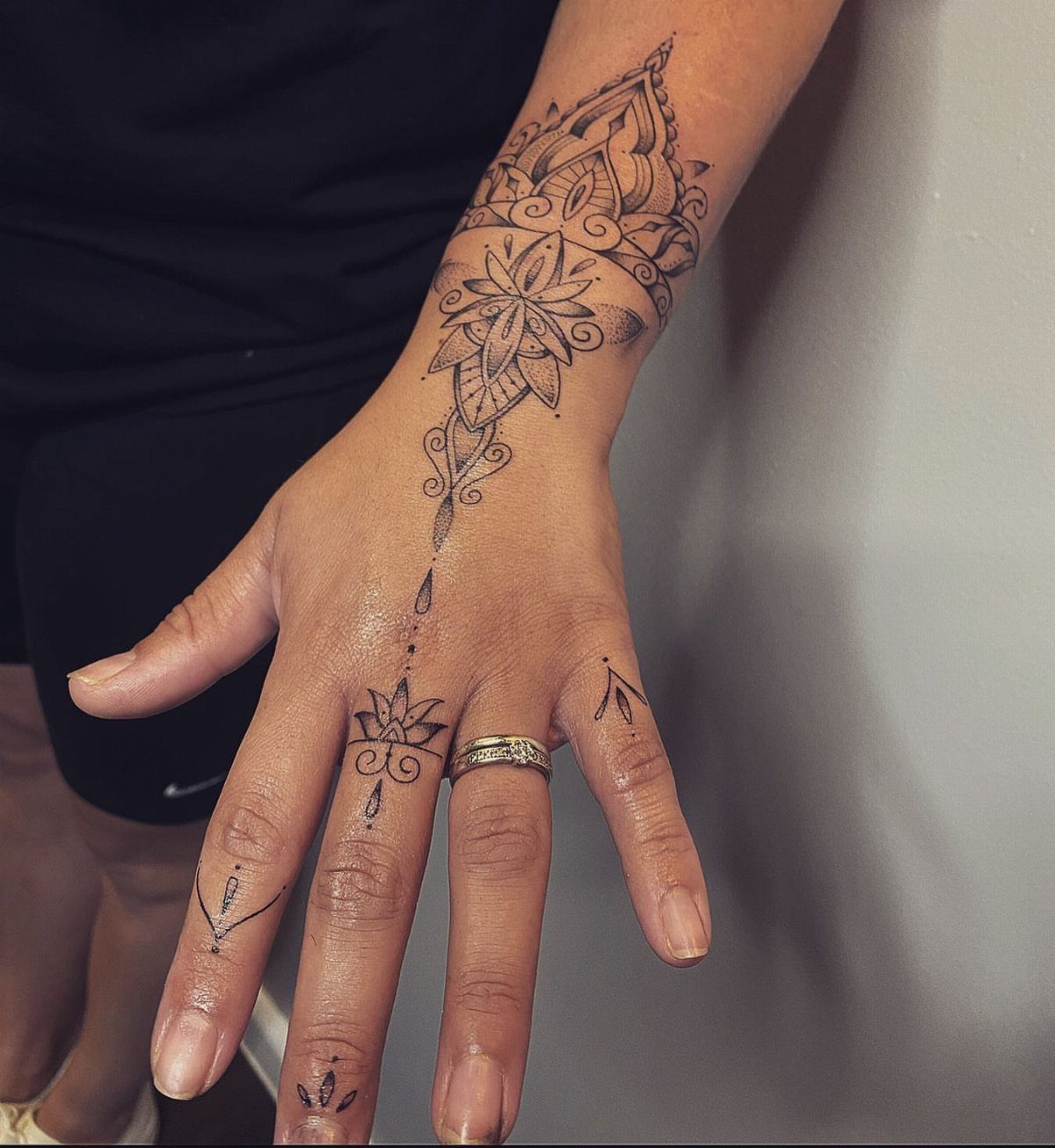
Mandala and dotwork that crosses from wrist onto hand commits to visibility in a way that wrist-only placement avoids.
The hand moves through every gesture, every handshake, every meal. There is no covering it without gloves.
Intricate linework in this zone faces 2 enemies: sun exposure on the back of the hand, and the faster shedding of skin on palms and fingers.
Even the most precise dotwork softens sooner here than on the forearm. Right-handed people add wear to the right hand from daily use, so the dominant hand needs more frequent touch-ups over years.
The design must account for knuckle movement. A mandala centered on the back of the hand distorts when fingers spread.
Patterns that flow with the tendons rather than fight them age better. I would plan the hand portion as secondary to the wrist anchor, not equal to it, so the eye has a home base.
The 10 best hand tattoos for men. The wrist is a nice and flat piece of skin to work with, so many designs will look good here.

Spirit Tattoo Classic Thermal Transfer Paper, 8.5” X11” (100 Sheets): Established since 1946, the original and trusted choice of tattoo artists globally, offering reliability and consistency in tattoo stencil creation.

Precision Transfer Performance - It’s professional-grade tattoo stencil paper delivers vibrant, high-definition transfers even for intricate designs. The carbon layer ensures sharp outlines without smudging or fading, ensuring crisp lines that stay true to your original artwork.

Crystal Clear Transfer & Stable Stencil Effect : Our KVM transparent tattoo stencil film delivers sharp, clean printed lines. The pattern transfers perfectly onto skin, not easy to smudge or wipe off after application. It works great for intricate mandalas, skulls, portraits and line art.
7. Forearm Extending to Wrist
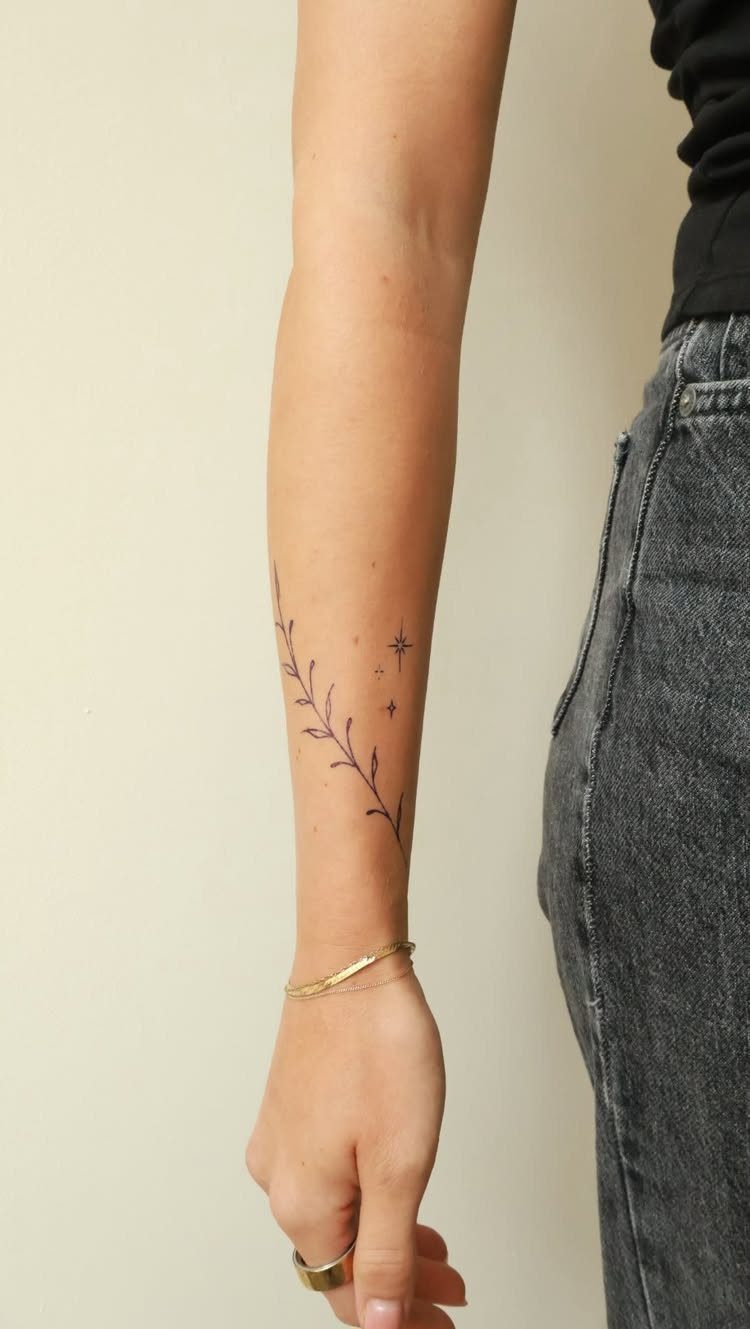
Fine-line branches and scattered stars that travel from mid-forearm down to the wrist line turn the arm’s natural length into the design’s frame.
The forearm gives space for detail that compresses as it approaches the wrist bone, where skin tightens and curves.
This layout suits someone who wants more than a single symbol but still needs to hide ink under a long sleeve.
The forearm portion stays covered; the wrist portion shows when you push up your cuff. Pain increases toward the wrist, so a session usually starts higher and works down.
The branch needs a clear stopping point. Designs that fade out or break at the wrist line read as unfinished; ones that end where a real branch would snap carry that logic with them.

LOTUS MANDALA GEOMETRIC ART: Features an ornate, vertically extended lotus mandala design enriched with intricate geometric symbols, a central starburst, and decorative linear accents. This sacred ornamental layout is crafted using a digital hand-drawn fine line tattoo ensures crisp lines to maintain absolute symmetry and keep the micro-dots and sharp floral contours perfectly defined.

Innovative Skin-Sync Technology: We don't just sit on the skin; we interact with it. By reacting organically with naturally occurring proteins in your skin's outermost layer (stratum corneum), our plant-based formula magically transforms from a transparent guide into a rich, ultra-realistic navy-black. It looks exactly like a healed, permanent tattoo—without the needles or depth.

Tiny Tattoo Practice Skin: the double-sided, easy-wipe, fine-line tattoo practice skins feature over 80 different stencil designs on the front and back of the skin.
Visibility and Concealment
A watch band or bracelet covers the side of the wrist completely. A long sleeve hides the top or outer edge.
The inner wrist is harder: you would need to wear gloves or a sweatband, which draws more attention than the tattoo itself. Your dominant hand matters because it moves through more gestures, more handshakes, more visibility.
Right-handed people who need concealment for work might prefer the left wrist for that reason alone. The wraparound is the hardest to hide; nothing short of a full sleeve covers it, and even then the cuff line can slip.
Think through your actual week before choosing. Which wrist faces clients?
Which rests on the desk during video calls? The answers matter more than which side looks better in the mirror.

Nourishes Healing Ink for Vibrant Color: Tattoo Goo supports healing tattoos & maintains vibrancy on healed ink with a lightweight formula rich in olive oil, lavender oil, cocoa butter, and beeswax. It absorbs quickly, moisturizes deeply, and helps reduce dryness, itch and tightness so your tattoo looks and feels comfortable through everyday routines
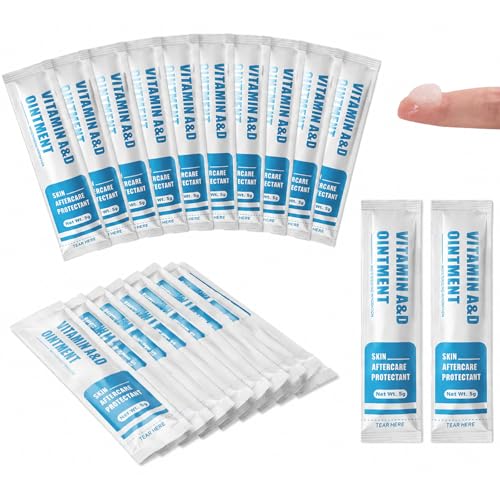
Honest, Accurate Care – This protective ointment comes in 50 hygienic single-serve packets for mess-free, on-the-go convenience. Easy to apply for tattoo protection anytime.

Workplace Acceptance
Some industries treat visible wrist ink as neutral now.
Others still read it as unprofessional, particularly in finance, law, medicine, and client-facing corporate roles. The gap between fields is wide enough that guessing costs you nothing and can cost you a job.
Ask before you ink. Not your friends, your actual manager or HR contact, phrased as planning rather than announcement.
Some workplaces have written policies; more have unwritten ones that shift by department or by who holds seniority. Know which of your placements your specific workplace would register, because "visible" means different things in different buildings.
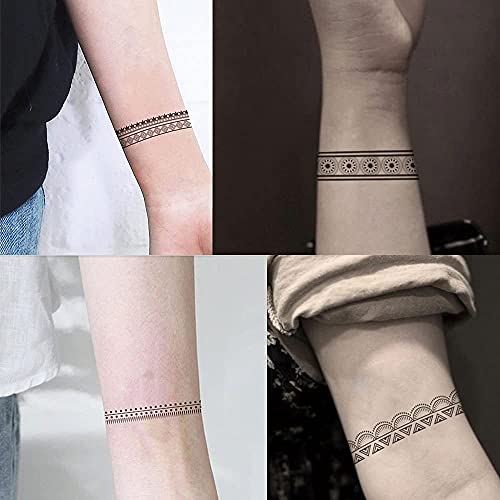
❤️ Bold Tribal Bracelet Designs: This set features 2 sheets of tribal-style temporary tattoos, showcasing intricate black patterns that wrap around your wrist like a bracelet. Perfect for fans of black tattoos and bold, masculine designs.

98PCS COWBOY PARTY FAVOR SET -A generous Western-themed bundle featuring 24 cowboy slap bracelets and 74 temporary tattoos—a complete Wild West accessory kit ideal for party tables, treasure games, and themed celebrations.

COMPLETE VALUE SET - Cow Party Favors Set Includes 104PCS – Comes with 24 slap bracelets and 80 pre-cut temporary tattoos featuring cow, milk, and farm-themed designs. A well-balanced combination for party favors, decorations, and interactive fun.
Choosing a Reputable Tattoo Artist
Look for healed photos, not just fresh ones. Wrist skin is thin and shows every waver in a line; an artist whose portfolio only displays new work may not hold up on this spot.
Ask specifically how many wrist pieces they have done, and whether they have photographs of those healed over the long term.
Certification means different things by state. Some require bloodborne pathogen training; some require county health permits.
Verify what your state actually mandates, then confirm the studio meets it. A portfolio with consistent line weight across multiple wrist placements matters more than range across body parts; this joint moves and swells differently than a shoulder or thigh.
Read reviews that mention healing problems or touch-ups, not just the appointment itself. An artist who disappears after the bandage comes off is not the one you want for a spot that rubs against desks and keyboards daily.
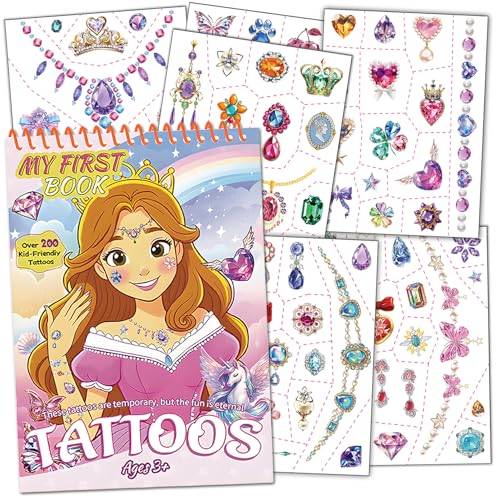
Jewelry fake tattoo: size 6.18in*4.41in.The beautiful temporary tattoo book is designed inspired by jewelry, featuring realistic butterflies, hearts, crowns and vibrant watercolor-style gemstones. It can be paired with beautiful clothes, jewelry and bags. They feature a variety of popular tattoo designs, each pattern can be used alone or freely combined to fully unleash creativity

🌼【300+ PCS VARIETY POPULAR Small Temporary Tattoos For Finger Hand】Brand FANRUI 16 Sheets High Quality Mixed Style Black Realistic Women Temporary Tattoos For Hands Fingers Including Lovely Tiny Cute Flower Butterfly Crescent Moon Sun Planet Cloud Star Viking Symbol Cat Starfish Seahorse Jellyfish Mushroom Manta Turtle Shell Conch Rose Snake Leaf Geometric Lotus Arrow Jewelry Pandant Chains Temporary Tattoos For Women Adults.

Unique Design:Music guitar leather bracelet inspired by rock and punk aesthetics, this guitar leater bracelet combines guitar motifs and music symbols with retro charm. Grunge musical enthusiast bracelets never out of fashion.
Frequently Asked Questions
How bad is the pain of a tattoo on your wrist?
Bone sits close beneath the skin there, so the needle buzzes against something solid and the sting feels sharper than on fleshier spots.
The outer wrist carries thicker skin and more cushion, so pain dulls to a middle-range ache for most people. A wraparound delivers the full spread in one session, since it circles every surface at once.
Should I get a tattoo on my right or left wrist?
The left wrist carries cultural associations with femininity, intuition, and receptivity, so lilies or soft botanicals read naturally there.
The left wrist suits right-handed people who want less daily wear, since the dominant hand takes more friction from use and needs touch-ups sooner. For concealment, the non-dominant hand moves through fewer visible gestures.