These 8 designs range from a single-session geometric sun wheel to multi-session sleeves with a warrior maiden and heavy black fills.
Your own pain tolerance and maintenance budget decide which one fits, since the fine lines of a forest spirit and solid black fields of a Baba Yaga piece age at very different rates.
The Kolovrat’s straight geometry and the Baba Yaga’s two-session detail sit at opposite ends of that range, and the armored maiden’s chainmail texture will test whether your artist can hold grey contrast once the piece heals.
[link-whisper-related-posts]1. Geometric Symbols and Sun Wheels
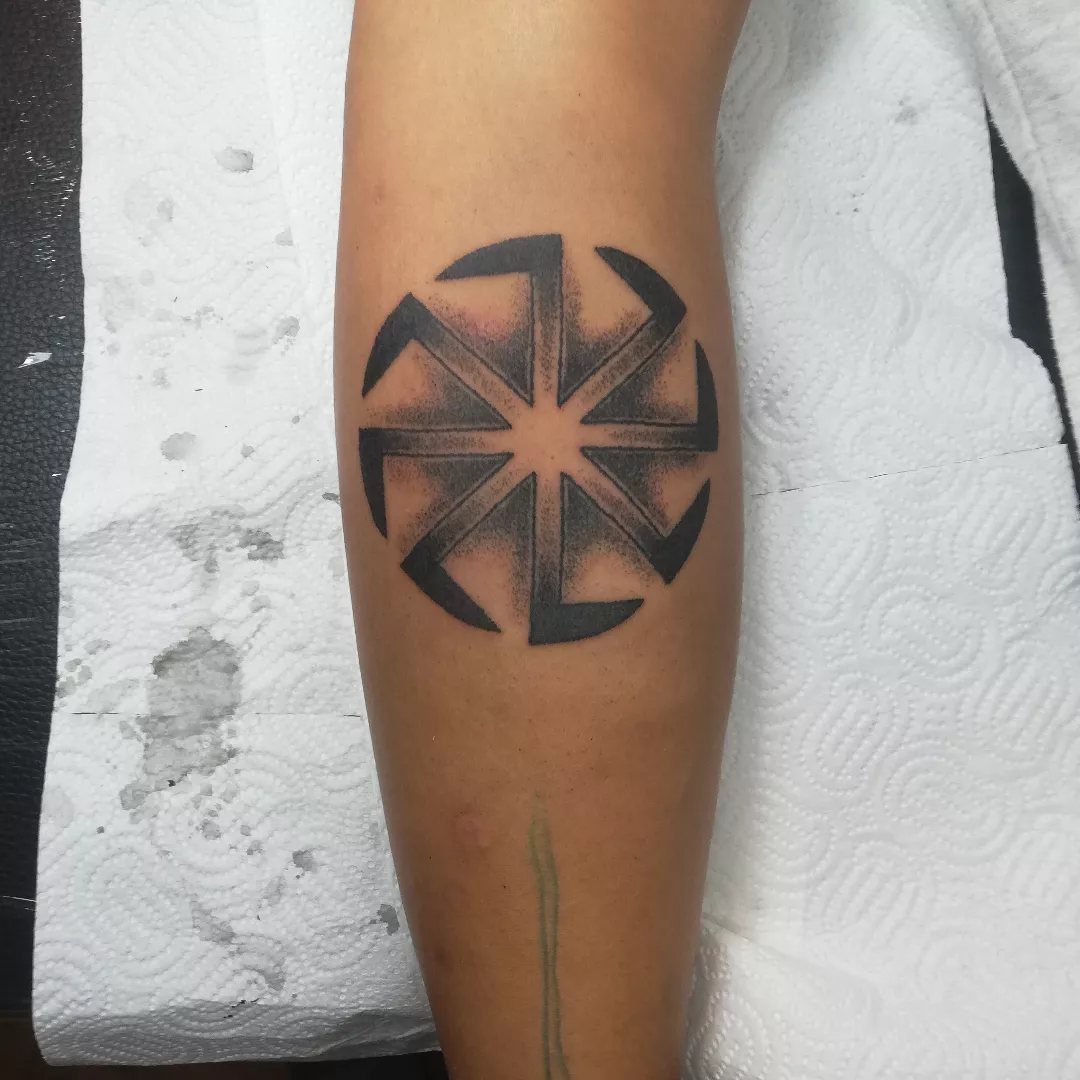
A Kolovrat sits well on a long bone like the forearm, where the straight line lets the geometry read clean.
Black ink keeps the symbol sharp; color would fight the precision of the interlaced lines. A vertical arrangement follows the arm’s natural axis, so the design moves with you rather than against.
Ask your artist about line weight. The sun wheels need enough ink to hold their shape as they age, but too heavy and the fine crossings blur together.
I would plan for touch-ups once the lines start to soften, which happens sooner on high-friction spots like the inner arm.

Package Included:Contains 7 black tattoo cones, with a net weight of 25 grams.made from eucalyptus oil, lemon Juice ,tea tree oil and clove oil. You can be creative and design your own patterns, or use templates to create perfect designs.
PACKAGE CONTENTS: There are 3 packs black temporary tattoo ink, 103 patterns tattoo stencils and one pin included in this comprehensive kit

Dopetattoo Waterproof High-Quality Easy-Use Long-Lasting Temporary Tattoos.You can take it to the beach, swimming pool, bath and any other water activities. Without excessive friction. It will last 3-5 days.
2. Floral Crown Woman
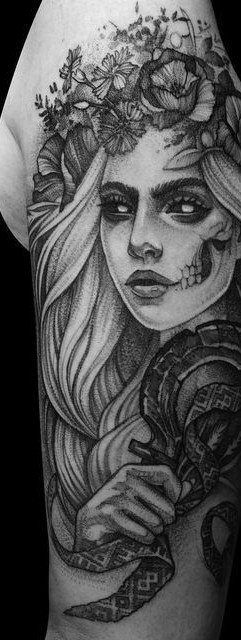
The Noonwraith carries a specific Slavic dread: the spirit of a woman dead before her time, appearing at midday in fields of grain.
A floral crown marks her as both bride and corpse, the skull jaw making the warning plain. Black and grey suits this subject; color would turn her folk-horror into something friendlier than she is.
The half-skull shading demands an artist comfortable with smooth gradation.
Rough transitions break the illusion. Placement on the outer arm gives the portrait space to breathe and keeps the jawline visible to others, which is half the point of a piece like this.

REUSABLD VARIETY OF OPTIONS - This set of temporary tattoo stencil includes 123 different patterns for adult,male. Scorpion tiger dragon cow eagle skeleton Tribal Symbols geometric design etc patterns in 20 pages A4 size, Almost unlimited creative combinations and options to meet your every need.

【 575+ Fun Assorted Tattoo Stencils 】-The ChurlChurl tattoo stencils collection includes 575 high quality stencils with multiple themes. enjoy cute trendy tattoo stencil designs like butterflies, words, flowers, symbols, totem, Egypt style patterns and more.

⯁ 400+ Reusable Henna Stencils: Get 24 sheets of high-quality, self-adhesive hollow templates featuring over 400 unique patterns. These temporary tattoo stencils allow you to create stunning body art including mandalas, butterflies, and dragons. Perfect for practicing techniques without permanence
3. Baba Yaga Tattoo
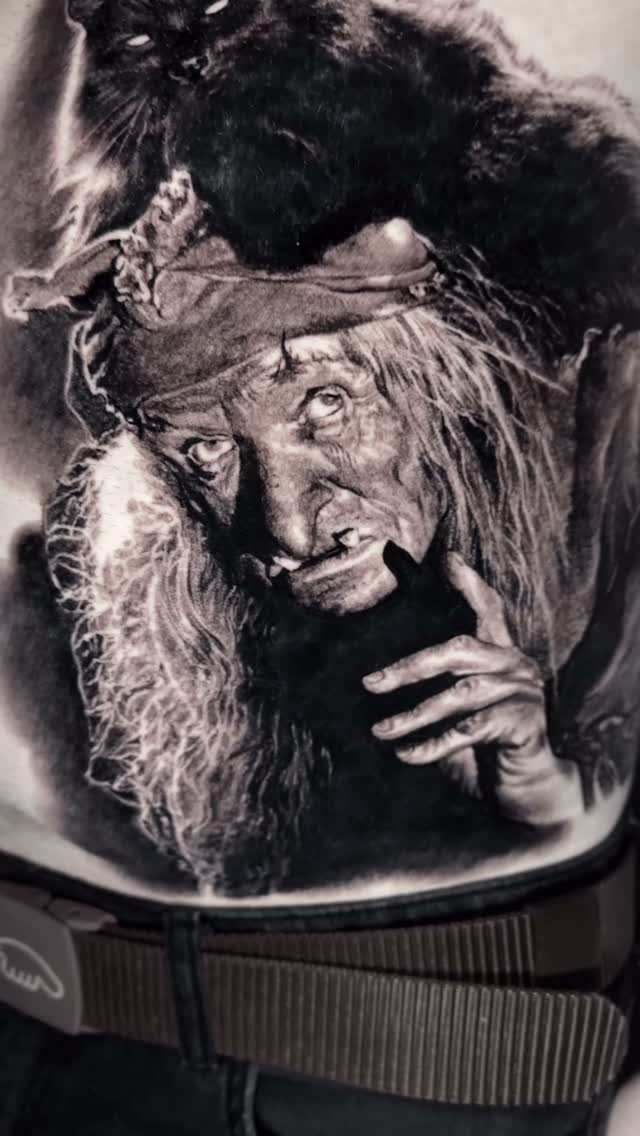
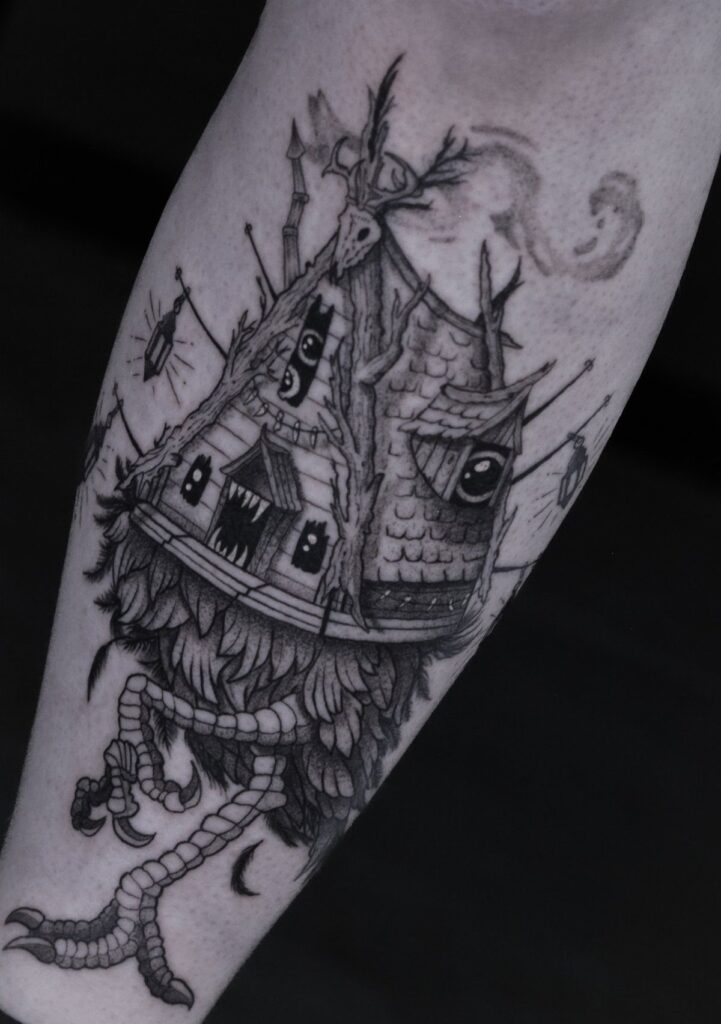
Baba Yaga tattoos usually show her flying in her mortar or guarding her fence of skulls. The seated portrait with her black cat keeps her power but softens the menace; she becomes a figure of knowledge rather than only threat.
2 sessions back to back tells you the level of detail involved in a piece like this.
The black-and-grey palette in her tunic is a choice I would think hard about.
It ages faster than black, and on a character this loaded with meaning, faded rose reads as damage, not design. If you want the color, plan for maintenance.

BLACK AND WHITE FUN: Get ready to embrace the allure of monochrome mystique with Savvi's Black and Gray Flash Temporary Tattoo Pouch. This isn't just a pouch; it's a gateway to a world of sleek sophistication.
Official Product of Skulls and Succulents, a Lucky Needle brand. We're a small husband-and-wife owned retail & tattoo shop, based out of Southwest New Mexico!

ICONIC CHINESE POETRY DESIGN: Features the famous poem "Qiang Jin Jiu" (Bring in the Wine) by the legendary Tang Dynasty poet Li Bai. The bold, free-flowing calligraphy style represents freedom, boldness, and the carpe diem spirit ("Enjoy life to the fullest"). A perfect choice for lovers of Asian culture and literature.
4. Woman with Deer Skull Tattoo
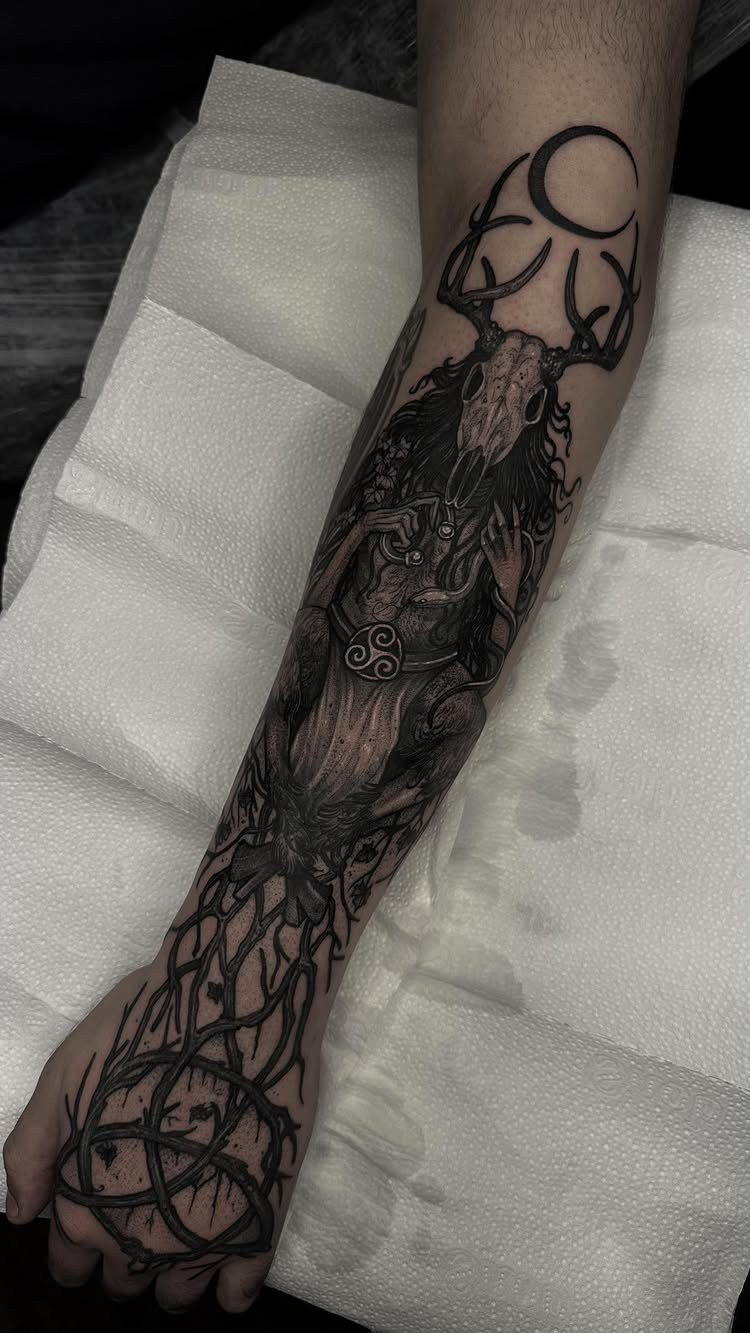
The deer skull replaces the woman’s face entirely, not worn as mask but grown as bone.
This reads differently than a headdress; she is the animal, or the animal is her, which fits Slavic shape-shifter lore where the boundary between human and creature stays thin.
The triskelion and moon phases anchor the piece in specific tradition rather than generic pagan mood.
Roots extending onto the hand commit you to visibility. Employers see it.
Family sees it. Stopping at the wrist breaks the design, but continuing means daily explanation or daily acceptance.

MORE AND RICHER STENCILS: You will receive 15 pieces of reusable painting stencils, each measuring 4.7×11.8 inches. A variety of styles and patterns, sufficient quantity and reasonable combination. Let you enjoy the fun of painting, meet your different painting needs

11PCS Hunting Scenery Stencils: You will receive 11PCS creative hollow out nature theme template with 1PC plastic paint brush. The template features 11 styles wild animals scenes patterns, the unique mountains and forests designs will surely inspire you. Our stencil are suitable for decorating for easy DIY home decoration, add a splash of color to your home.

【Packing List】You will receive a journal stencils set, including 1 straight line template and 1 wooden marker, which you can use to draw lines and mark. This set can basically meet your basic needs
5. Forest Spirit Tattoo
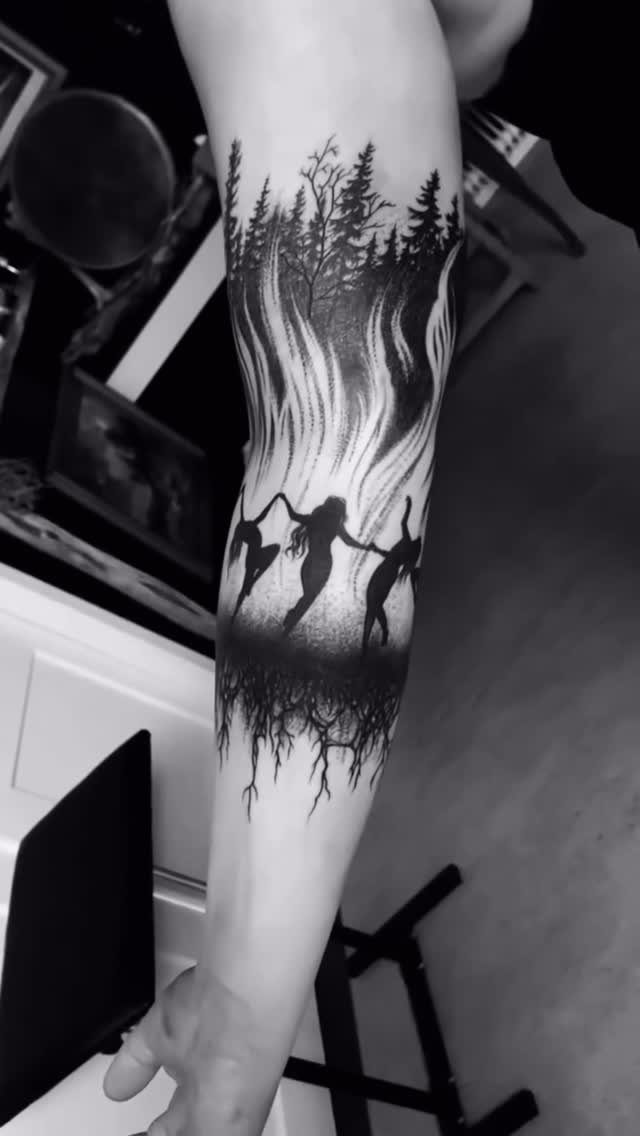
Forest spirits in Slavic belief guard boundaries: the edge of the village, the edge of the field, the edge of waking.
A sleeve lets you build that liminal space in layers, trees above and roots below with the figures suspended between.
Fine line work, as in the dancing figures and root details, needs an artist who works slowly; rushing this style produces wobbly branches and lost faces.
Forest spirit tattoos mark the spirit’s domain: what grows from rot, what flows without human direction. I would keep the palette restricted; too many tones and the scene becomes illustration rather than tattoo.

Samurai Warrior Stencil: The reusable stencil is character theme. There are 5 man silhouette pattern on the stencil and they are samurai warrior in different postures. The template will help you make good decorations by yourself.

The Maiden And The Fine Horse Stencil: You will receive 1 PC creative hollow out human theme template with 1PC plastic paint brush. The template features The Maiden And The Fine Horse Pattern, the unique line art designs will surely inspire you. Our stencil are suitable for decorating for easy DIY home decoration, add a splash of color to your home.

The dimensions shown are the overall stencil sheet size. The graphic fits inside the sheet and is slightly smaller than the overall sheet size
6. Goddess with Geometric Solar Symbols
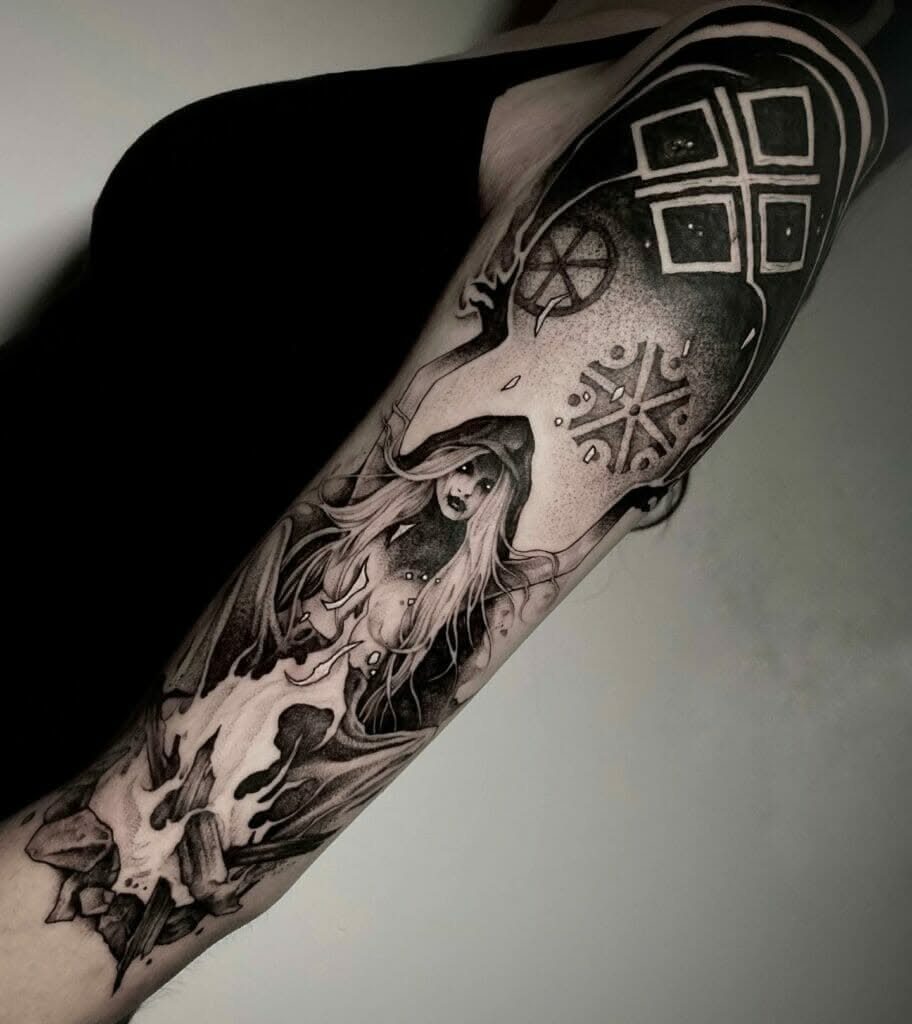
A hooded goddess with solar geometry above her reads as priestess rather than deity, which may suit you better than claiming direct divinity on your skin.
Veles artwork heals very poorly because solid black tends to fall out or blur within a few years.
The forearm is practical for a complex sleeve, since you can see the work yourself and the artist gets a flat, stable surface.
You see the goddess yourself, others see the symbols; both views satisfy. Black and grey with selective heavy blacks, as in the fire detail, gives the design its depth without color commitment.

High quality fashionable temporary tattoo, which looks like real

💖LONG LASTING WATERPROOF: The Black tattoo pastes are long lasting. The color darkens over time (24-48 hours) and lasts 7 to 12 days before fading. When dry, it is waterproof, but can also be easily removed by rubbing soapy or makeup remover.

💕【64 Sheets Black Temporary Tattoos For Women Girls】--VANTATY 3D Realistic Temporary Tattoos For Adults Women Kids Adults Girls Body Art Stickers Look Real! 【Click Our Store/Brand Name To See More Fashion Designs】Tribal Lion Wolf Indian Feather Lotus Butterfly Bohemia Boho Lotus Mandala Flower Floral Animals Elephant Tattoos Dreamcatcher Serpent Dream Catcher Owl Moon Turtle Hummingbird Skull Skeleton Snake Bat Bowknot Dolphin Moon Crown.
7. Slavic Warrior Maiden Tattoo
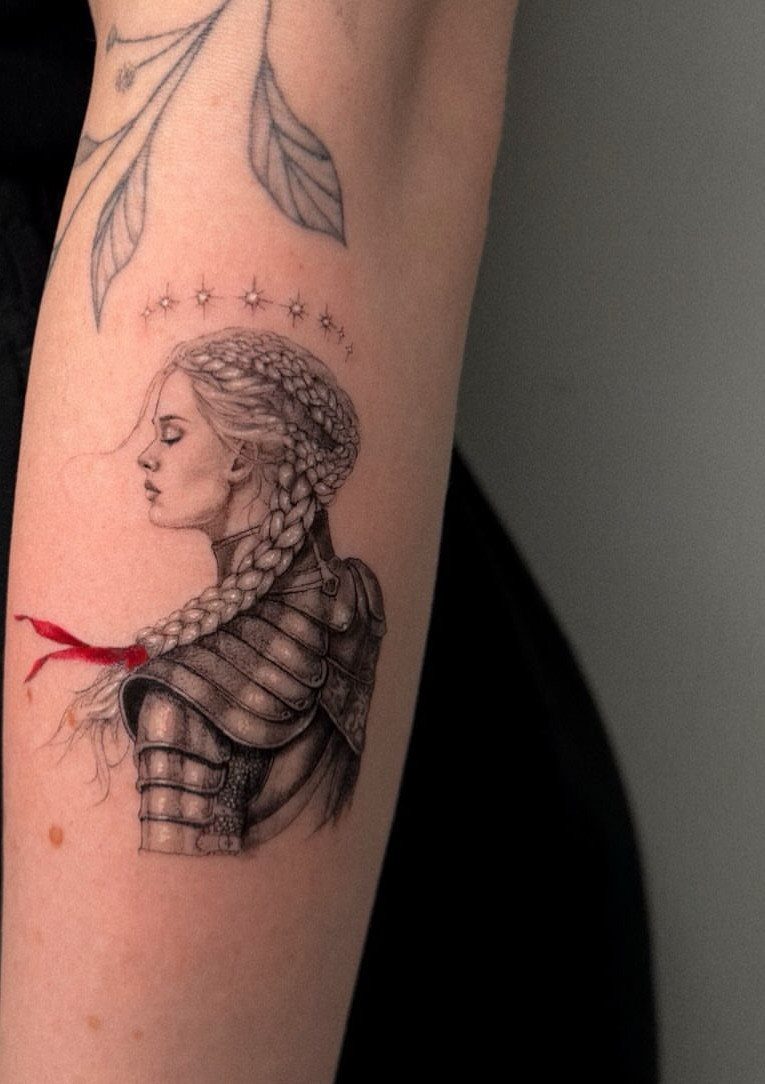
Armored women in Slavic lore carried the red ribbon as a mark of the living, tied into hair before battle so the dead would know not to claim them.
The braid keeps that detail legible; loose hair would lose the ribbon in the shading. Stars above read as protection or prophecy, depending on how your artist weights the black.
This much armor in black and grey lives or dies on texture contrast. Polished plate against matted hair, chain against skin: without that range of grey, the figure flattens into a grey blob.
I would ask to see healed photos of similar pieces from your artist, not fresh ones, since fine chainmail dots tend to spread.

▶ Henna Tattoo Kit: 16 sheets tattoo stencils. airbrush tattoo stencils suitable for tattoo lovers. Experience the effects of tattooing without the pain of tattooing.

【 761+ Fun Assorted Tattoo Stencils 】-The ChurlChurl tattoo stencils collection includes 761 high quality stencils with multiple themes. enjoy cute trendy tattoo stencil designs like butterflies, words, flowers, symbols, totem, Egypt style patterns and more.

Package Includes: You will receive 20 sheets reusable tattoo stencils, enough quantity to meet your daily requirements. The mehndi stencils are suitable for airbrush painting, glitter tattoo, and so on.
8. Goddess with Serpent Tattoo
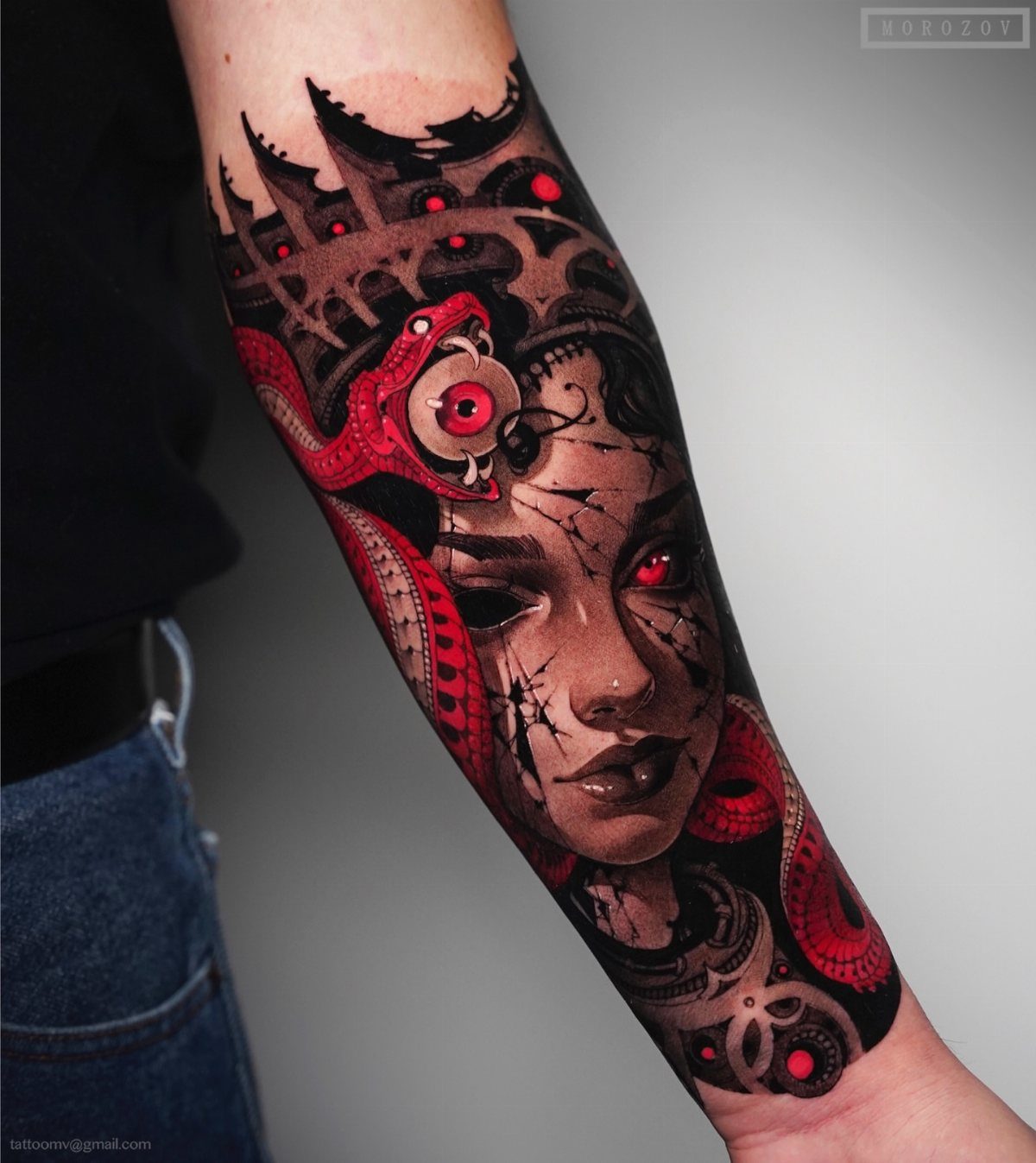
The cracked skin and red eyes mark this figure as something other than human, but the serpent does the real work: in Slavic iconography, it coils around the world tree, guards the threshold to the underworld, speaks prophecy.
Winding it through the crown rather than around the neck keeps the face visible, which matters when the eyes are already this intense.
Red ink on a face this central will not stay quiet. The serpent’s scales and the eyes will need attention sooner than the rest of the piece, especially if the arm sees sun.
Black and grey with a single red accent is safer, but the two-red version commits to the maintenance; plan for it in your budget and your calendar.
Tattoo Styles and Techniques
Blackwork, fine line, and realism each handle Slavic material differently. Fine line suits the interlaced geometry and dotwork the Polish artists favor; the lines stay crisp where heavier black would close up the small crossings.
Realism carries the folklore portraits, the Baba Yaga and the wraiths, but needs an artist who can grade tone without relying on color to separate forms.
Most of these pieces work in black and grey with the occasional hit of red.
The red ages faster, so place it where it matters most and where sun exposure is lowest. A forearm piece sees more light than a chest or back; plan accordingly.
Symmetrical vertical arrangements, the diamonds and sun wheels, need the skin pulled flat during application.
Any shift in position and the geometry skews. Ask your artist how they stencil for symmetry on curved surfaces.

Forest-Inspired Designs: Features 15 unique stencil designs, including wildlife (deer, bears, wolves), pine trees, mountains, and water elements—perfect for nature lovers and outdoor-themed projects

Product includes: This set contains 1 PET painting template and 1 paintbrush. The template measures approximately 11.81×11.81 inches (30×30 cm) and features a combination pattern of mountains, lines, and figures. The paintbrush assists with coloring processes, and together they provide the essential tools for basic creative projects.

Vivid Set: you will receive 20 pieces stencils of various kinds, a variety of different matching shape give you endless possibilities to create various DIY art projects, bringing vivid decor to your home in minutes
Cultural Significance of Tattoos
Sicanje, the Balkan hand-poking tradition, is said to date back to Illyrian practice around the 4th century BC and to have persisted through later periods.
Slavic pagan tattoos were meant to be seen across a battlefield or a festival field, and that visibility shaped the designs; dense dotwork reads at a distance where fine line would disappear.
The meeting of pagan custom and later religion produced layered meanings.
A sun wheel might mark the old calendar, or it might mark a saint’s day; the same hand could carry both. Contemporary work draws from this overlap, but wearing it now is a choice of identification, not inheritance.
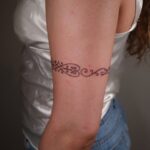
Polish artists working in folk motifs emphasize flowing bands over fixed icons.
The continuous line suggests movement, procession, the seasonal cycle. This differs from the static geometry of some Nordic revival work; Slavic material tends toward narrative arrangement even in abstract form.

The dimensions shown are the overall stencil sheet size. The graphic fits inside the sheet and is slightly smaller than the overall sheet size

Spartan Helmet stencil for your DIY craft signs and home decor featuring a gladiator head-armor for temple knight and medieval art, stencil size 9"x12", image sizes 3",4",5",6",

Enhance your medieval-viking theme DIY craft signs and home decor with this stencil template featuring a regal knight honor shield armor with swords; a perfect stencil for your stencil collection
Frequently Asked Questions
What is the symbol of Slavic paganism?
Sun wheels like the Kolovrat rank among the most recognizable, built from interlaced lines that read clean even at a distance.
Polish artists also favor continuous flowing bands and dense dotwork over fixed icons, suggesting movement and seasonal cycle rather than static emblems. The triskelion and moon phases appear in contemporary pieces alongside these older geometries.
What are Slavic pagans called?
Practitioners go by different names depending on the specific tradition, Rodnovery being the most widely used term for modern Slavic native faith. Contemporary wearers of Slavic pagan tattoos typically treat the imagery as identification rather than inherited religious practice.
Did Slavs have tattoos?
Sicanje, a hand-poking method from the Balkans, carries roots in Illyrian work from roughly the 4th century BC.
Slavic pagan tattoos were designed for visibility across battlefields and festival grounds, with dense dotwork chosen specifically because it reads where finer lines would disappear.