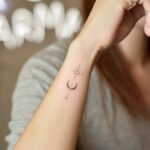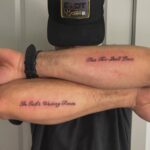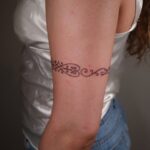
Christian minimalist tattoos keep the message quiet: small black text, a thin cross line, or a simple fish symbol, all without color or noise.
The deciding factor is how much you want to explain: a small fish symbol signals only to people who already know, while cursive text like "faith" reads plainly to anyone.
Every piece here relies on fine-line work that demands an artist with healed photos in their book, since thin strokes blur fast if the hand is too heavy.
[link-whisper-related-posts]1. Small Black Cursive Text Tattoos
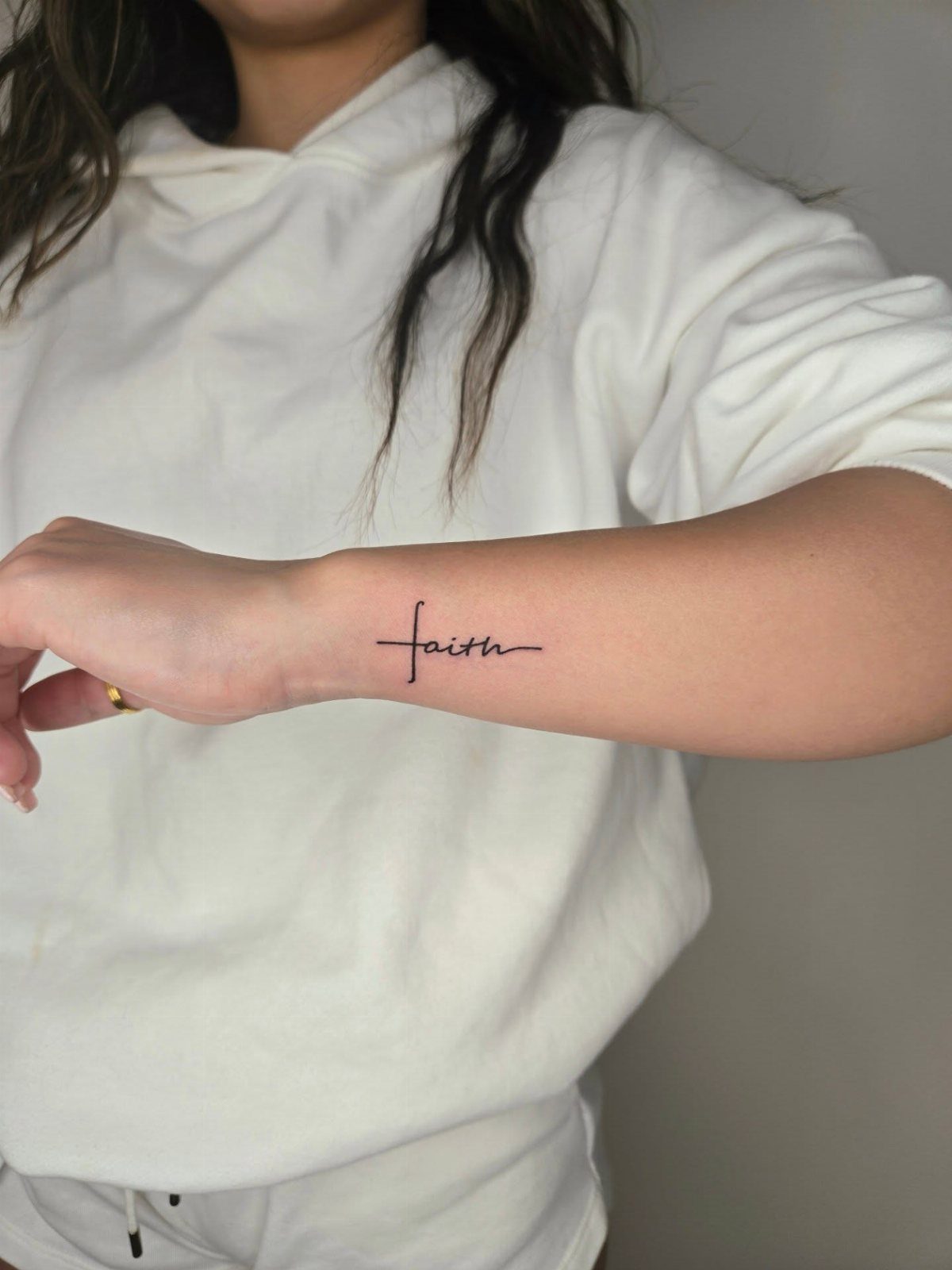
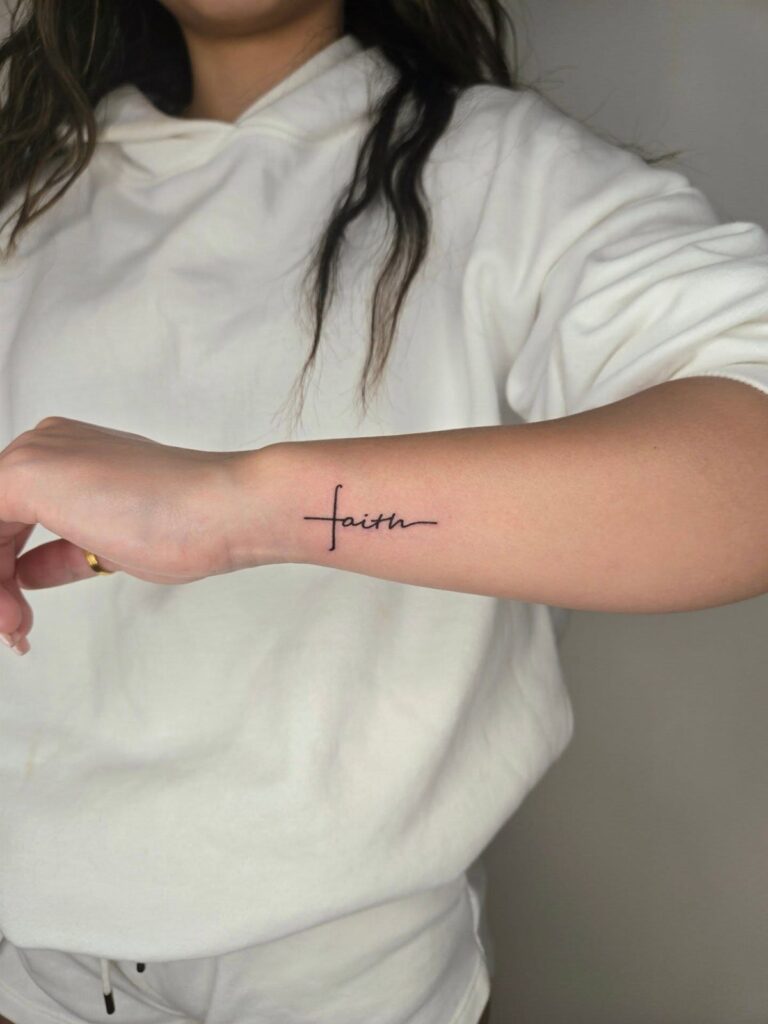
A single word in flowing script carries more weight than most people expect. "Faith" shaped into a cross, or a phrase like "it is well" running along the inner forearm, keeps the meaning personal without shouting it.
The wrist and forearm suit this best for visibility; the ribs or ankle hide it when work or family settings call for that.
Cursive needs a steady hand, so I look for artists who letter often, not ones who mostly do bold lines and shading.
Pick a phrase you have actually said out loud, not one that just looks good online. The words last longer than the trend.

Massive Quantity: 60 Sheets in total of fake temporary tattoo stickers, including 30 sheets of inspirational and motivational quotes and scripts, cursive words, retro typewriter style sayinging, 30 sheets of simple branch flower tattoos. Enough for friends party gatherings to enjoy together or choose different pattern to match your everyday mood.

Elegant Minimalist Designs, Versatile for Every Occasion: Explore our collection of finely crafted finger tattoos featuring bohemian ornaments, delicate flower doodles, scattering stars, and geometric patterns. Each design exudes simplicity and sophistication, perfect for those who adore minimalist aesthetics. Whether it's a festival, wedding, or everyday chic, these tiny tattoos complement any outfit. Mix and match designs to create unique combinations that reflect your personality and mood. 50 Pcs (48 mm x 69 mm / 1.89 x 2.72 inches).

🌼 Beautiful Hand-drawn Fine Line Style Tattoos - Black and White Fine Line Flowers, Roses, Branch, Butterfly, Arrows, Hearts, Stars
2. Minimalist Black Vertical Crosses
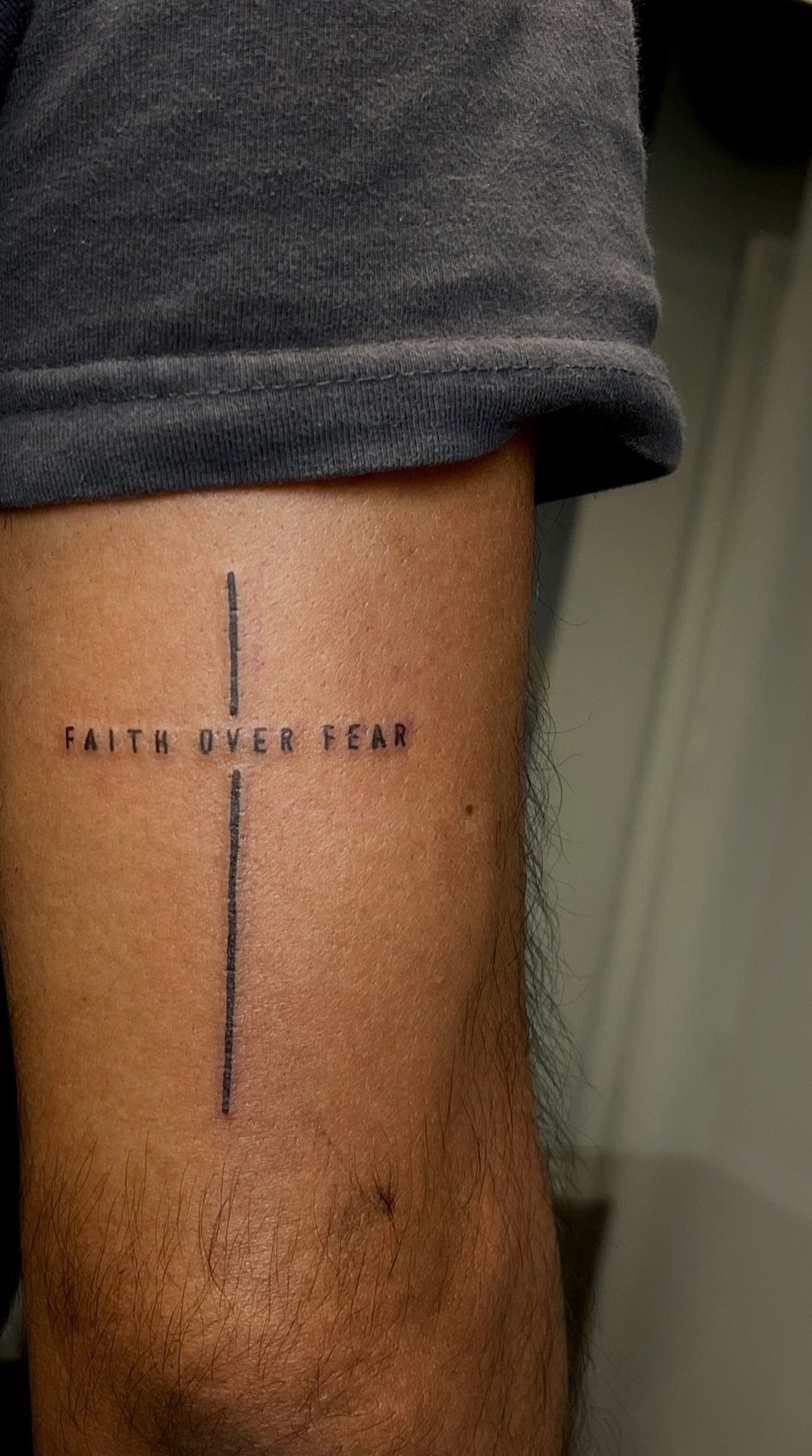
3 crosses stacked or spaced down an arm strip the symbol to its bones.
A line of text across the horizontal beam reads "FAITH OVER FEAR," which works if the phrase already lives in your head; without it, the plain vertical lines hold their own.
This reads clearest at 2–3 inches tall, large enough that the thin strokes do not blur as they age. The upper arm or calf gives the vertical run room to breathe.
I would skip color entirely. Black ink on healed skin keeps the stark contrast that makes minimalism work.

❥[20 SHEETS] 20 sheets cross temporary tattoos, original brand of Briyhose fake tattoos for adults women men kids boys girls. Size is 4.13*2.36 inch (10.5*6cm) 20 Sheets, used for arms, shoulder, back, neck, face, hands, finger, legs and any other part of your body skin. You can share it with your family and friends.

MINIMALIST CHRISTIAN ART: Features a beautiful collection of faith-inspired spiritual designs, including fine-line crucifixes, a rosary bead strand, a continuous script "faith" text, and geometric sacred icons. This graceful assortment is crafted using a digital hand-drawn fine line tattoo ensures crisp lines to keep every tiny intersecting beam, script curve, and miniature dot perfectly defined.
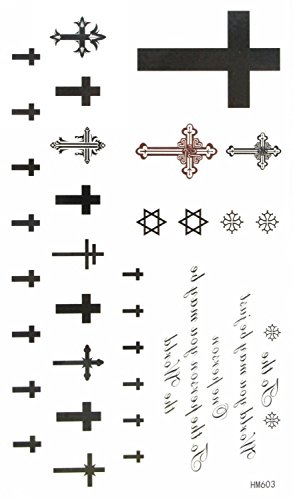
3. Fine-line Black Ink Cross
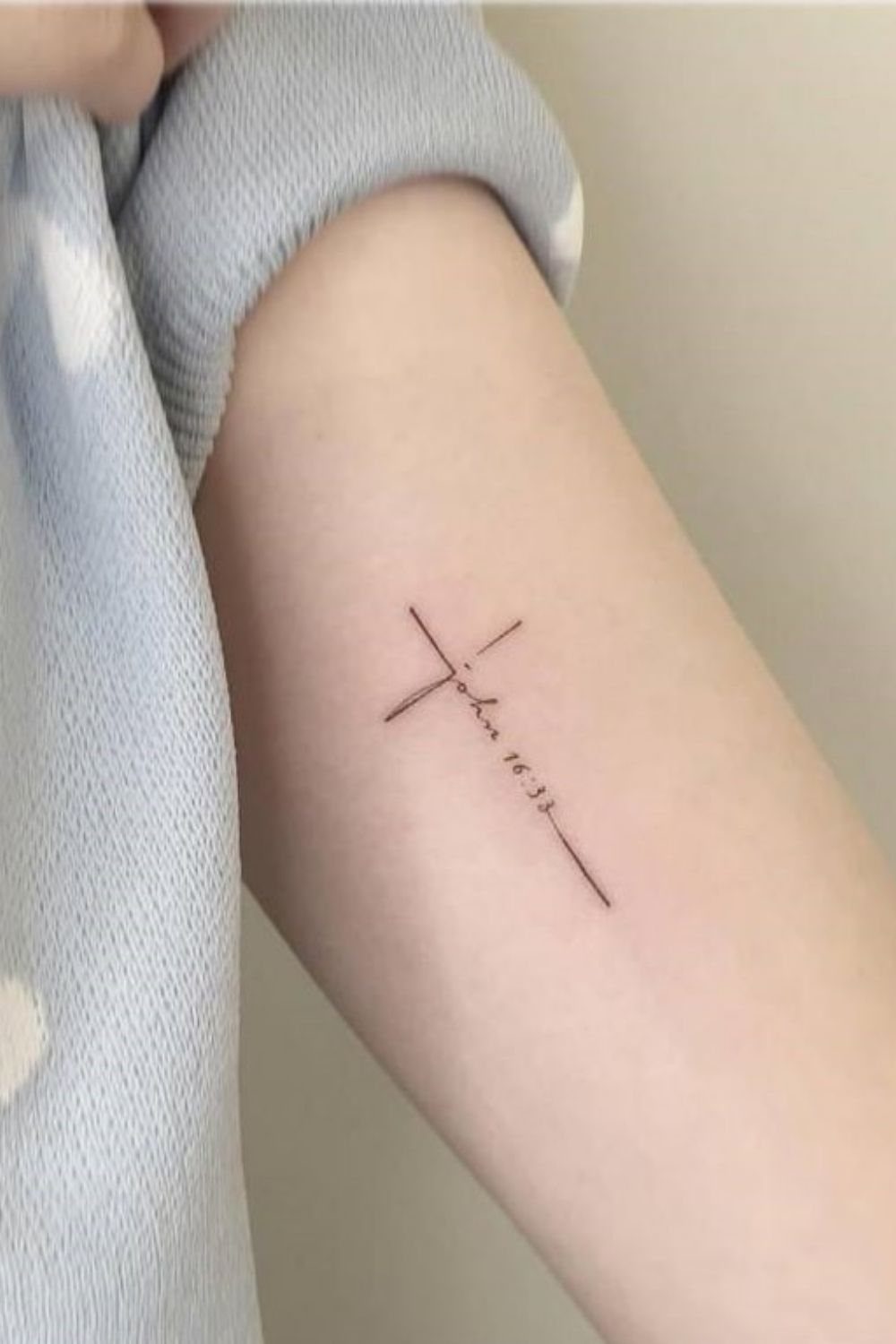
Scripture reference worked into the stem turns a simple cross into something you can explain without explaining much. "John 16:33" in fine line above the wrist means the verse sits there for you, not for everyone who asks.
Fine line demands touch; too heavy and the cross looks stamped on, too light and it fades to gray before long. Ask to see healed photos from your artist, not just fresh work.
The inner arm heals slower than the outer from bending and rubbing against the body. Plan for an extra week of careful washing.

[Real Matte, No Plastic Shine] Say goodbye to shiny, plastic-looking temporary stickers! Our semi-permanent herbal ink sinks gently into the outer layer of your skin instead of just sitting on top. Once developed, it features a gorgeous, non-reflective, flat matte finish designed to look like genuine body art.

Mess-Free Game-Day Look: BLSTK Athletics eye black temporary tattoos create a defined look without applying traditional eye black grease. The preprinted designs provide a consistent appearance for football, baseball, softball, and lacrosse, helping athletes coordinate their eye black with their game-day uniform and gear.

CONTENTS: Pack includes 9 modern cross temporary tattoos in 3 distinct styles - geometric pattern, brushstroke, and tree of life designs
4. Heart with Cross
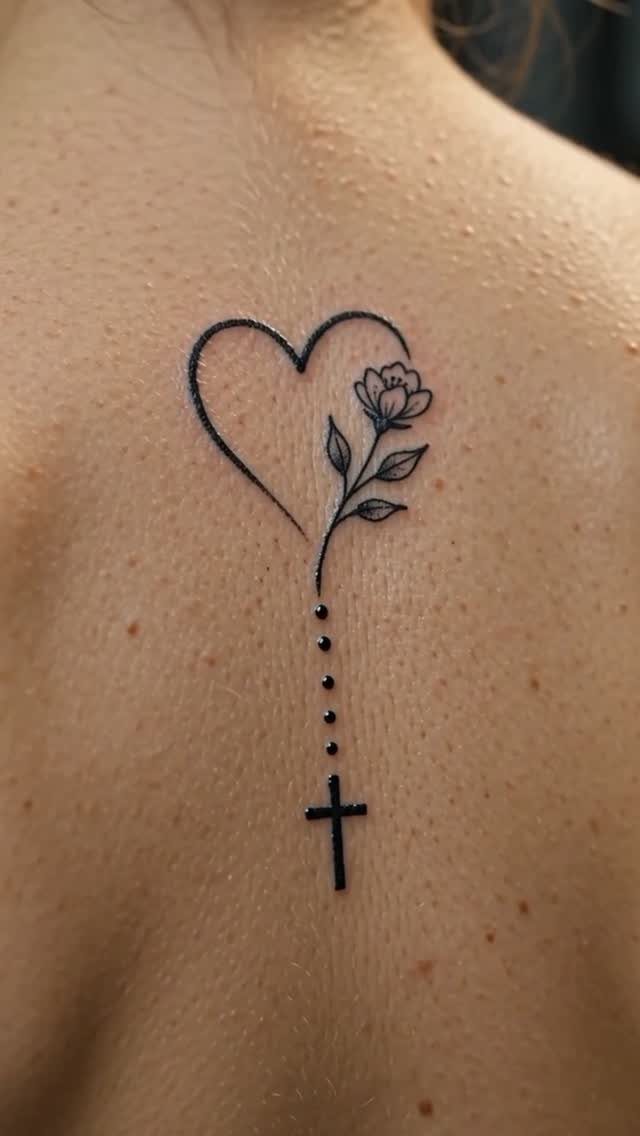
A heart drawn in single needle with a cross at its center, or trailing down through dots to a small cross below, ties 2 symbols together without crowding either. A botanical line softens the geometry without losing either symbol.
This flows best where the body has length: the spine, the side of the torso, or down from the collarbone. This placement runs down the upper back, letting the eye travel.
I like the heart-and-cross pairing for people whose faith grew out of love more than doctrine. The symbol says both at once.

Innovative Skin-Sync Technology: We don't just sit on the skin; we interact with it. By reacting organically with naturally occurring proteins in your skin's outermost layer (stratum corneum), our plant-based formula magically transforms from a transparent guide into a rich, ultra-realistic navy-black. It looks exactly like a healed, permanent tattoo—without the needles or depth.

Innovative Skin-Sync Technology: We don't just sit on the skin; we interact with it. By reacting organically with naturally occurring proteins in your skin's outermost layer (stratum corneum), our plant-based formula magically transforms from a transparent guide into a rich, ultra-realistic navy-black. It looks exactly like a healed, permanent tattoo—without the needles or depth.

Innovative Skin-Sync Technology: We don't just sit on the skin; we interact with it. By reacting organically with naturally occurring proteins in your skin's outermost layer (stratum corneum), our plant-based formula magically transforms from a transparent guide into a rich, ultra-realistic navy-black. It looks exactly like a healed, permanent tattoo—without the needles or depth.
5. Small Black Ink Fish Symbol Tattoo
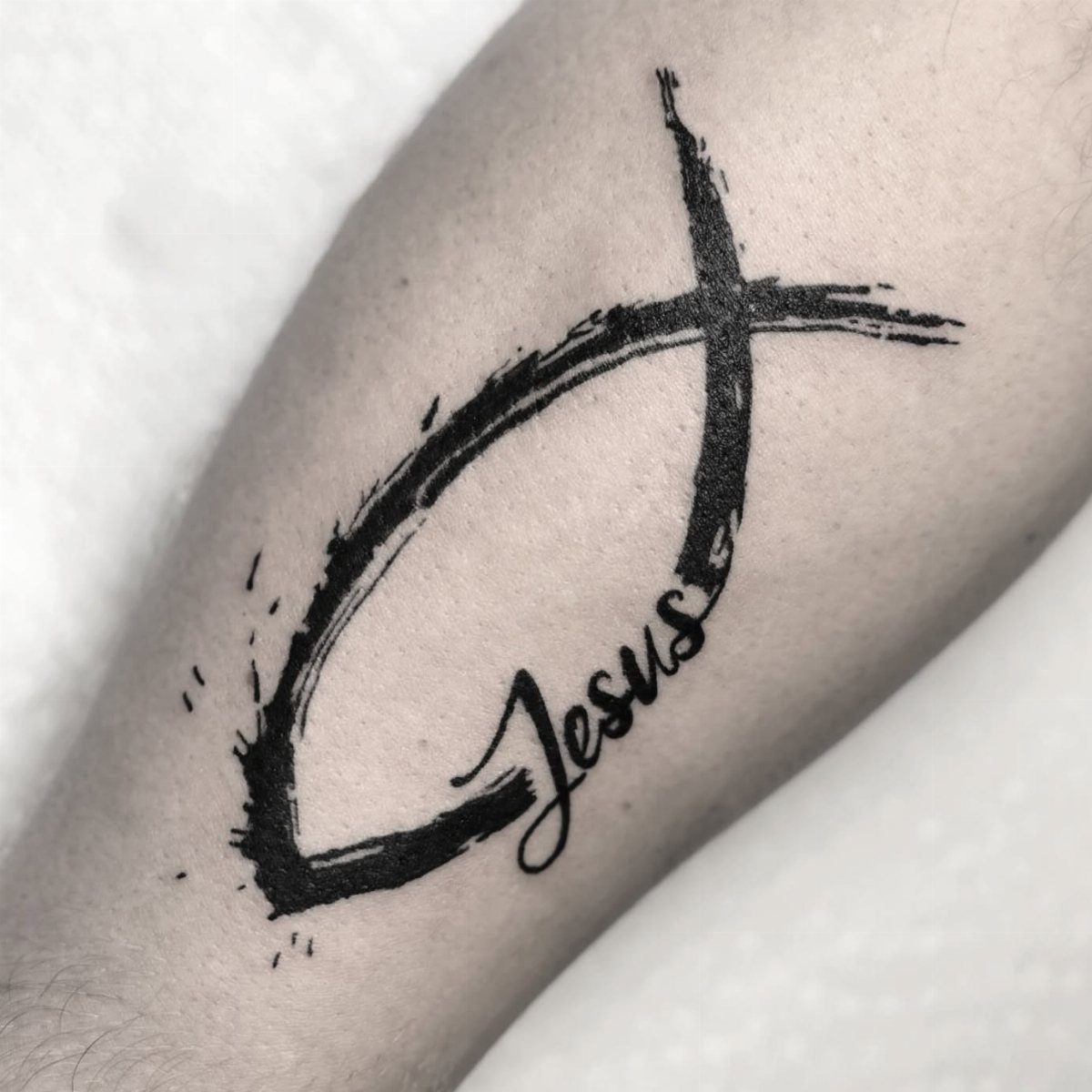
The fish outline, the ichthys, carries 2,000 years of quiet identification. Drawn in brush-stroke black with "Jesus" in cursive inside, it speaks to other believers without broadcasting to everyone else.
Greek letters inside the body, usually ΙΧΘΥΣ or a shortened form, push the design toward history buffs; the plain outline with a word in English stays accessible. Either way, the forearm or ankle keeps the shape recognizable at small size.
This symbol has survived longer than most tattoo trends. That matters to me when I think about what still reads at 60.


Innovative Skin-Sync Technology: We don't just sit on the skin; we interact with it. By reacting organically with naturally occurring proteins in your skin's outermost layer (stratum corneum), our plant-based formula magically transforms from a transparent guide into a rich, ultra-realistic navy-black. It looks exactly like a healed, permanent tattoo—without the needles or depth.

Massive Quantity: 60 Sheets removable temporary tattoo stickers, including 30 pcs of inspirational and motivational quotes and scripts, cursive words, meaningful sayinging and writings, 30 pcs of simple minimalist flower tattoos. Enough choices for friends outing, party gatherings to enjoy together or choose different tattoo designs to match your everyday mood.
6. Small Black Ink Fine-line Cross
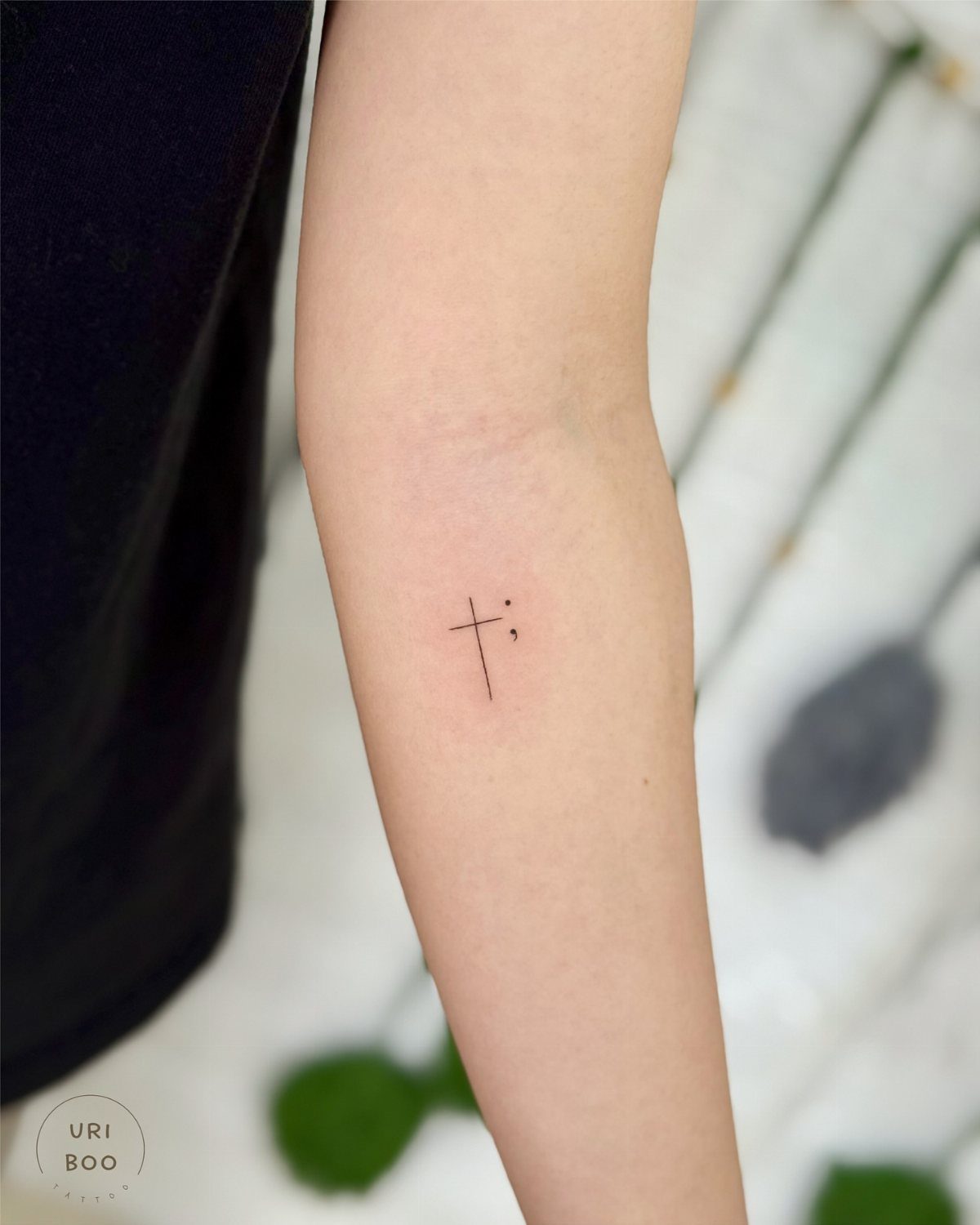
A cross beside a semicolon pairs 2 separate conversations: faith and mental health survival. The semicolon tattoo movement started with Project Semicolon, and adding the cross beside it layers meaning without forcing them to share the same symbol.
The fine-line versions I have seen sit small, under an inch, on the inner forearm or ankle. Placement matters because the semicolon has its own grammar; it needs space to read as punctuation, not a smudge.
Not every artist knows the semicolon’s significance. I would bring a reference photo and be ready to explain why the pause matters.

5 DISTINCT FAITH CROSSES: Features a beautiful mix of five unique spiritual designs, including detailed rose-wrapped crucifixes, minimalist botanical fine lines, and an elegant cursive "faith" script cross. This holy collection is crafted using a digital hand-drawn fine line tattoo ensures crisp lines and flawless gradient shading to deliver deep black contrast, delicate leaf shading, and smooth, flowing calligraphic strokes.
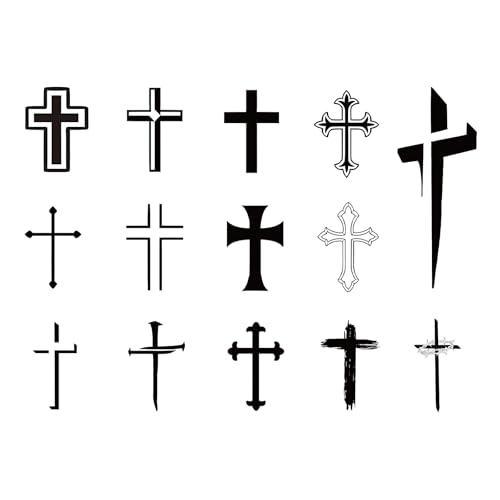
11 FAITH CROSS DESIGNS: Features a comprehensive variety of eleven unique religious symbols, including clean traditional crucifixes, bold modern abstract shapes, rugged brushstroke effects, and thorns-wrapped variants.

Innovative Skin-Sync Technology: We don't just sit on the skin; we interact with it. By reacting organically with naturally occurring proteins in your skin's outermost layer (stratum corneum), our plant-based formula magically transforms from a transparent guide into a rich, ultra-realistic navy-black. It looks exactly like a healed, permanent tattoo—without the needles or depth.
7. Thin Black Line Cross
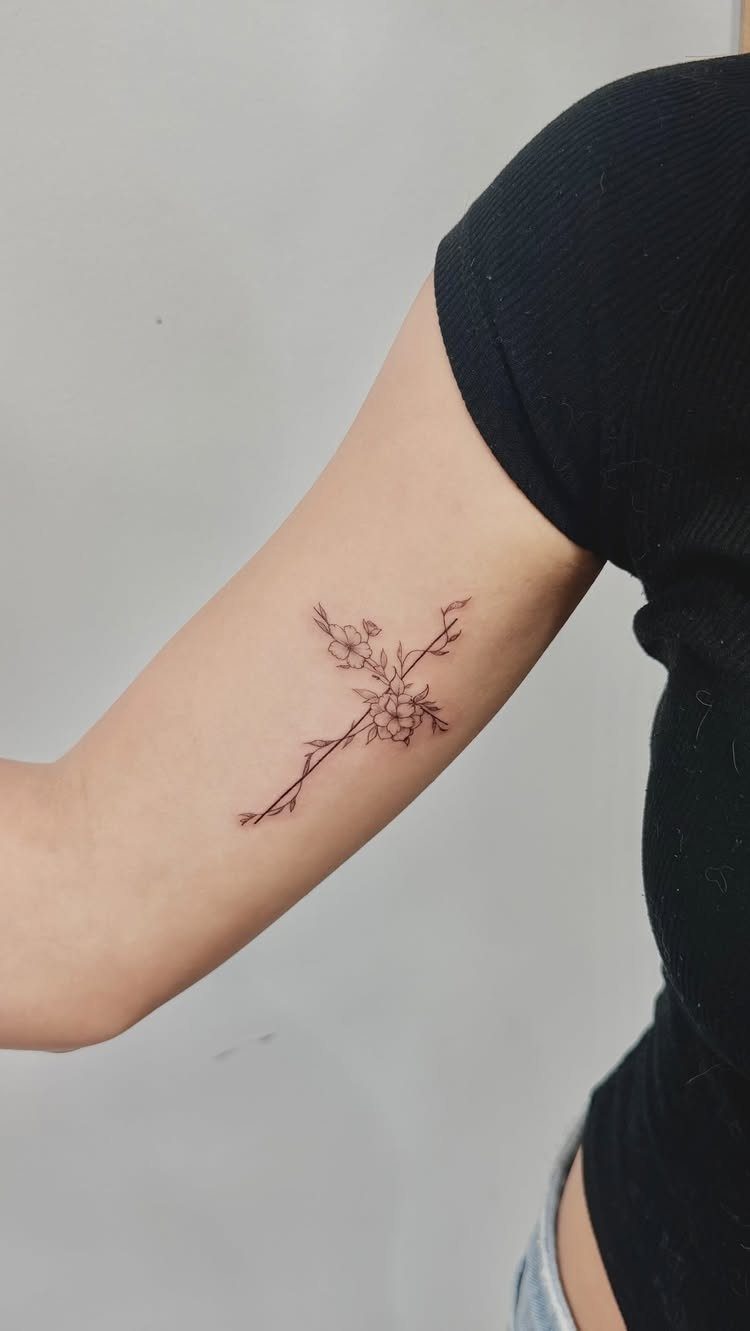
Botanical vines threading through a thin cross soften the geometry without weakening it. The stems wrap where the beams meet or trail from the base, living growth against fixed belief.
This version suits people who found faith outdoors or in seasons of change. The flowers will fade slightly faster than the cross itself; that imbalance is part of the point.
A single-needle artist with botanical work in their book is worth the wait. Leaves drawn too heavy turn to black blobs as they settle, so I ask for healed photos of their florals specifically.
The upper arm lets the vines grow straight rather than bending around an elbow or shoulder.
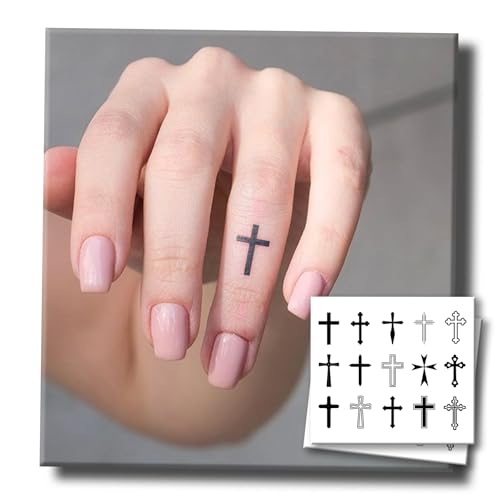
Minimal Tiny Cross Design: This semi-permanent tattoo pack holds two sheets with assorted slim & ornate mini cross patterns with clean thin outlines. Cross symbolizes faith, hope, protection and inner peace; Specifically sized for discreet placements like the fingers, behind the ear, or the side of the wrist, they offer a realistic ink appearance without the commitment. Perfect for those seeking a subtle yet powerful way to express their spiritual beliefs or personal values.

Innovative Skin-Sync Technology: We don't just sit on the skin; we interact with it. By reacting organically with naturally occurring proteins in your skin's outermost layer (stratum corneum), our plant-based formula magically transforms from a transparent guide into a rich, ultra-realistic navy-black. It looks exactly like a healed, permanent tattoo—without the needles or depth.

【96 Tiny Minimalist Cross Tattoos】This semi-permanent tattoo set includes 96 realistic mini cross designs in sleek black ink, ranging from classic Latin crosses to delicate ornate styles. The cross symbolizes faith, hope, protection, and personal spirituality. Perfect for men and women drawn to subtle edgy or Christian-inspired aesthetics, these tiny tattoos fit seamlessly on fingers, hands, wrists, and collarbones for a quietly meaningful, effortlessly cool look.
Tattoos and Christian Beliefs
Some Christians still hear Leviticus quoted at them after getting ink. The verse about not marking the body sits in the same chapter as rules about beard trimming and fabric blends, so denominations split on how literally to take it.
I have watched Catholic friends receive tattoos as pilgrimage souvenirs while a Baptist friend in Dallas waited until he left his parents’ house to get his first.
The fish symbol was how early Christians identified each other in Rome, drawn in dust or scratched on walls. A tattoo continues that tradition of quiet signaling, though today the signal reaches anyone who recognizes it.
Your own community decides what reads as respectful, not a rulebook.
If your church teaches against tattoos, the ink becomes a wedge; if your circle treats them as witness, the same design opens conversation. Decide which pressure you can live with, because both last longer than the healing.

Realistic Floral Temporary Tattoos: Botanical wildflower inspired designs with fine lines and soft watercolor tones; lifelike artistic floral styles for adult temporary tattoos

💕【200+ PCS 20 Sheets Mixed Style】--VANTATY Lovely Cute Black Temporary Tattoos For Women Men Adults Body Art Stickers Look Real! Tiny Infinity Geometric Arrow Smile Face Flowers Crescent Moon Sun Stars Temporary Tattoos For Hands Fingers, Realistic Small Butterfly Love Heart Mountain Birds Feather Snake Cat Dog Tattoos For Ear Neck Arm Hands Temp Tatoos Decals.【Click Our Store/brand Name To See More Fashion Designs】

🐤【65 Sheets Watercolor Flower Temporary Tattoos For Women Girls Adults】Brand FANRUI Distinctive Design Colorful Floral Rose Temporary Tattoos For Women Girls Teens Men Daughters Son Lovers Kids Chilren Child DIY 3D Custom Tattoo Cover Up Snake Peony Cross Tiger Lion Compass Wolf Dragon Mountain Mermaid Skull Skeleton Elephant Gothic Gangster Owl Space Planets Moon Sea Wave Dream Catcher Butterfly Sunflower Anchor Astronaut Tatuajes Temporales Kids Autocolante.
Choosing Tattoo Placements
Inner wrist crosses show when you gesture and hide under a watch band.
That control matters in offices where visible tattoos still raise eyebrows. The wrist also heals rough, skin flexing hundreds of times daily, so expect touch-ups.
Ankle placement survives better but faces outward less.
Boots cover it; sandals expose it. I think of this as the test for whether you want the tattoo for you or for the occasional beach day.
Collarbone work looks delicate and frames the face, but shirts rub there. Healing means sleeping on your back and choosing necklines carefully.
Ribs and spine suit longer designs if you want the ink hidden most days.
These hurt more and fade faster from breathing and stretching. I would not start there for a first tattoo, but the concealment is absolute.

Insta-Glam Tattoo Set: Peel, press, and slay your way to the most extra look in the room!

【Modern Graphic Design】This minimalist set combines clean fine lines with bold stripes to create a modern, graphic look. Designed for sleeves, hands, or arms, these tattoos emphasize balance, structure, and simplicity. A great choice for those who prefer contemporary, simple style body art.

BOHO MANDALA GEOMETRIC DESIGN: Inspired by elegant Bohemian ornaments and starry mandala patterns, this digital hand-drawn fine line tattoo ensures crisp lines and flawless gradient shading upon application. Its intricate dotwork composition and symmetric vertical layout create a timeless, authentic design with sharp details perfectly tailored for women.
Tattoo Design Considerations
Size limits detail.
A cross at under an inch cannot carry both a verse reference and a vine; something will blur. Fine-line crosses and doves work best when they commit to one clean element.
Black ink ages most predictably.
Colored accents, like the soft red on some wrist crosses, look fresh for months then soften to brown or gray. If the accent is the point, plan for refresh sessions every few years.
Personal significance beats aesthetic novelty. The semicolon cross in the list works because both symbols already mean something to the wearer; borrowed meaning reads as borrowed.
I would sit with a design for a month before booking, checking whether it still holds weight on bad days as well as good ones.
Every artist’s portfolio shows skin still swollen and shiny. Ask to see healed photos, not fresh ones; that is the tattoo you will actually live with.

😺【74 SHEETS SELIDODO Black Temporary Tattoos For Men Women Adults】Package Includes 12 Sheets Realistic Waterproof Tribal Half Sleeve Temporary Tattoos For Women and 62 Sheets Cute Tiny Small Temporary Tattoos For Kids Boys Girls Teens 3D Gothic Tatoos Religious, Jesus Christ, God, Rose Flowers Floral, Animals, Angels, Jesus, Virgin Mary, Lion, Barbed Wire, Dove of Peace, Christian.

【Develops Fully in 48H】Your unique realistic tattoo will initially appear silver before naturally darkening to a rich finish within 48 hours. For optimal results, avoid contact with bare skin (particularly the face) and cover the area with clothing during sleep to prevent transfer. strength angel wing & gothic cross designs for back arm wrist, temporary fake tattoos for women adult
Frequently Asked Questions
Is it okay for a Christian to have tattoos?
Denominations split on this.
Leviticus bans body markings, though that same chapter also forbids round haircuts and mixing wool with linen, rules most congregations quietly retired generations ago. Your own community’s teaching matters more than any single verse.
Why are tattoos no longer a sin?
Modern readings of Leviticus place the verse in its historical context, alongside rules about fabric blends and beard trimming that few Christians follow literally.
In Rome, believers sketched the fish on walls or traced it in dirt to find each other without drawing attention; the symbol had to stay hidden to stay useful.
A small cross or ichthys still works that way, a quiet mark of belonging, though whether your particular congregation sees it as faithful witness or needless provocation depends on the people in the room.