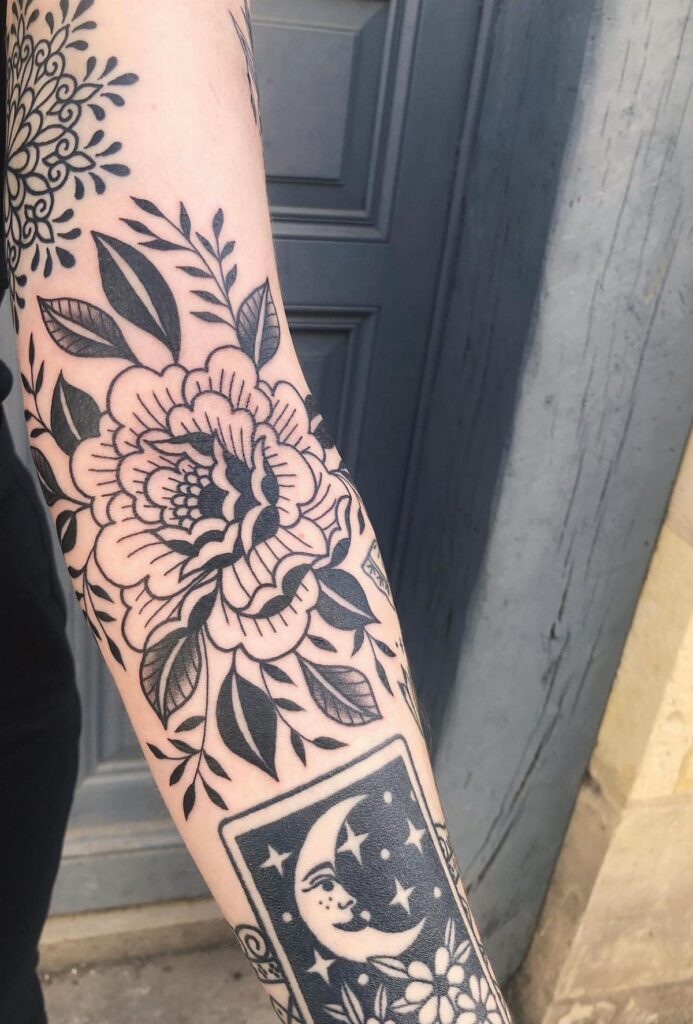
Blackwork floral tattoos run from whisper-thin fine line petals to fields of solid black saturation that swallow multiple sessions, and the designs below cover every stop along that spectrum.
The deciding factor is how much skin you are willing to commit and how often you will sit for it, which shapes whether you end up with a single chrysanthemum or a vertical stack running the length of your arm.
[link-whisper-related-posts]1. Large Peony Flowers
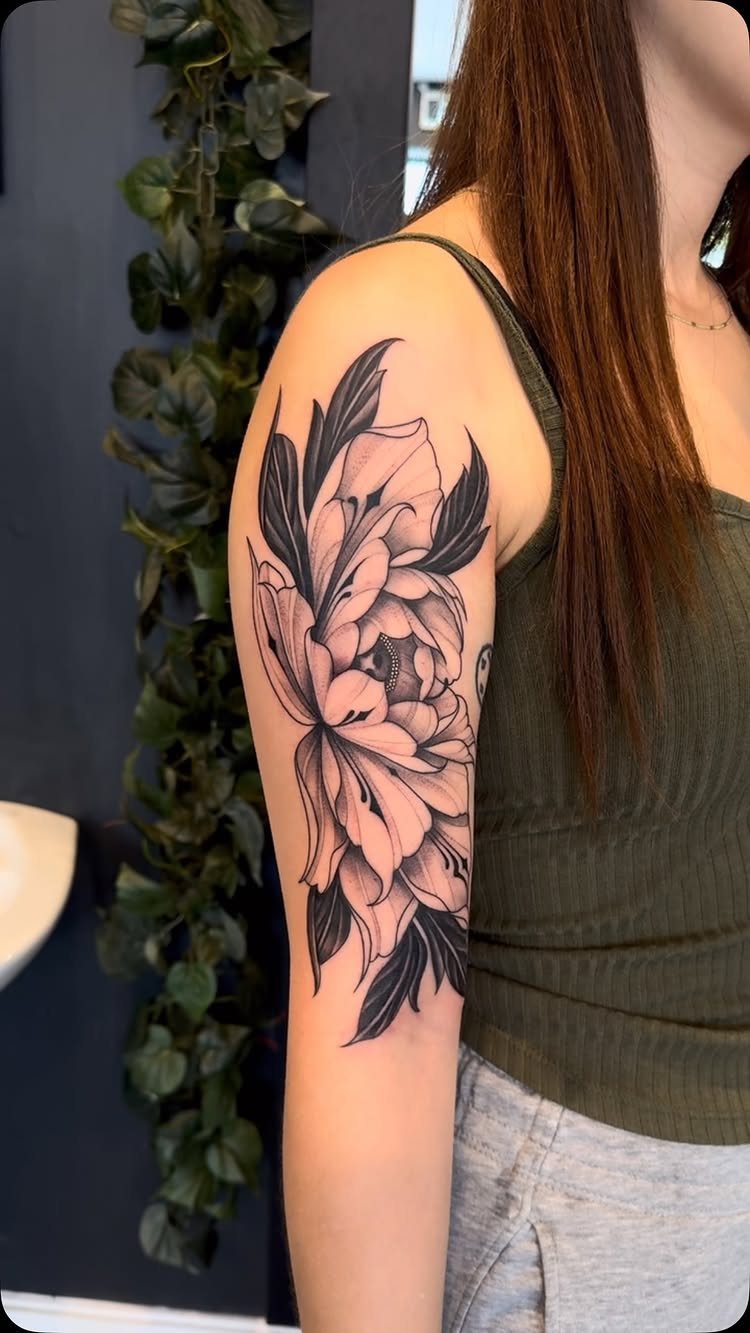
A full peony bloom carries weight on an arm or leg without needing color to hold attention. The heavy black shading anchors the design while fine line details keep the petals from turning into a dark mass.
This works best when the flowers stay large enough for the shading to breathe; too small and the black fills in over time.
I would ask the artist to keep the lightest petals toward the top of the placement, where the eye lands first, and keep the heavier fill lower where the sun does more damage over time.
Continuous arrangements flow around muscle shape better than isolated blooms. Plan for multiple sessions if the black saturation runs deep.

142+ Nature-Inspired Tattoos Stencil Designs in 12 Sheets: This temporay tattoo template set features over 142 unique, delicate designs centered on enchanting botanical and natural elements. Discover a vast collection of flowers (daisies, roses, sunflowers, lavender), intricate leaves, winding stems, complete bouquets, elegant wreaths, crowns, bees, and butterflies. Perfect for creating floral temporary tattoos, henna-inspired patterns, and nature-themed body art.

Premium Quality 1.5mm Silicone Material – Crafted from premium 1.5mm thick silicone, this tattoo skin offers a true-to-life feel with excellent durability and a smooth surface for effortless needle movement during practice.

Package Includes: You will receive 20 sheets reusable tattoo stencils, enough quantity to meet your daily requirements. The mehndi stencils are suitable for airbrush painting, glitter tattoo, and so on.
2. Black Ink Botanical Illustrations
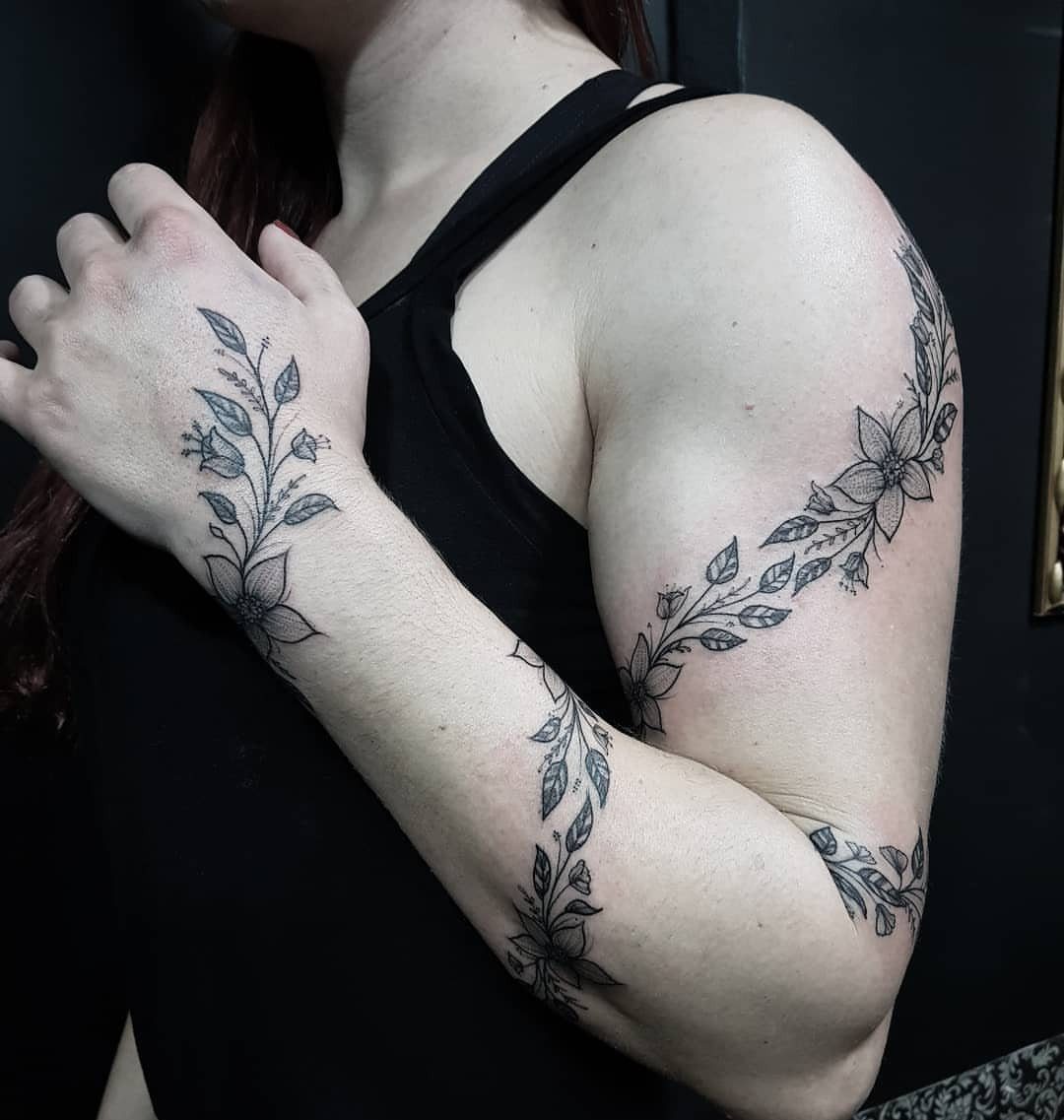
Botanical illustration style treats the skin like paper, building stems and leaves with the same precision as a field sketch.
Ginkgo leaves, peony buds, and small blossoms thread together in winding compositions that travel well along an arm from shoulder to wrist.
Stippled shading builds tone without the flatness of solid black, though it takes longer in the chair. The linework carries the design, so the artist needs steady hand control for the thin connecting stems.
I prefer this when someone wants the detail of scientific drawing without the stiffness. Wrap placements suit it because the vine has a natural direction; a straight band across the forearm fights the form.

Package: 50pcs mixed tattoo cartridge needles, includes 10pcs each of 1203RL, 1205RL, 1207RL, 1209RL, 1211RL.

Poseidon cartridge adopt a one-time joint design hygienic standard The material is stainless steel and easy to color,and has better ink flow

【50PCS Mixed Tattoo Cartridge Needles Set】Includes 50 individually packaged tattoo cartridge needles in popular configurations: 1203RL, 1205RL, 1207RL tattoo cartridges, 1209RL, 1205RS, 1207RS, 1207M1, 1215M1, 1209RM, 1215RM (5pcs each). Suitable for both lining and shading needles for tattooing.
3. Fine Line Floral Tattoo
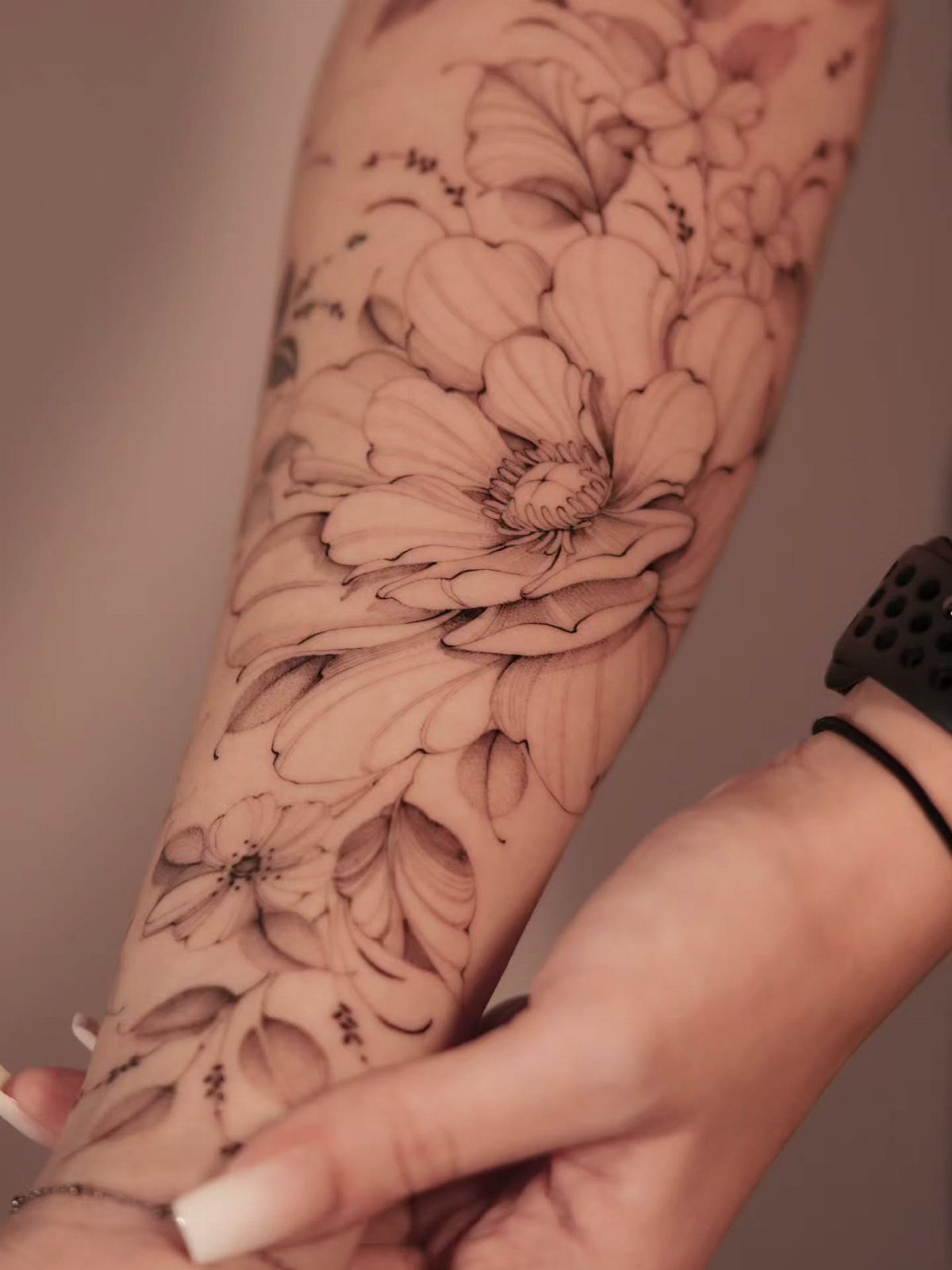
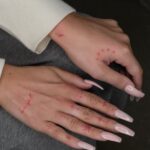
Fine line work keeps a floral tattoo readable at smaller sizes or in tighter spaces where heavy black would close up. The thin strokes define petal edges and leaf veins without dominating the surrounding skin.
This pairs well with bolder designs nearby; I have seen it used to soften the transition between a dense blackwork piece and bare skin.
Fine lines soften fast. The ink spreads under skin over time, and what starts as a crisp petal can blur into a gray smudge by year five or six.
Lines this thin spread and fade faster than heavy outlines, so placement matters. Inner forearm or upper arm, where sun exposure stays lower, holds the detail longer than a hand or foot.
Touch-ups every few years are not optional; they are maintenance.
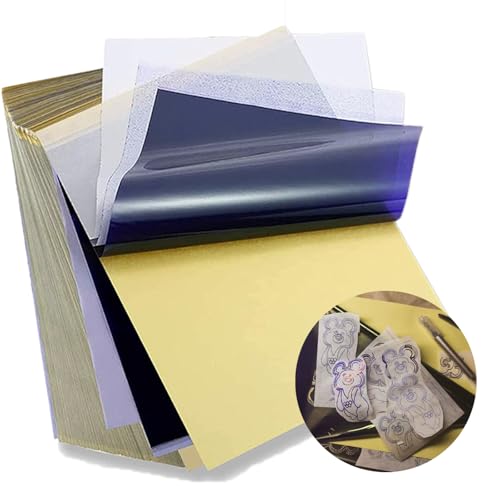
Standard size: Tattoo Transfer Paper is standard A4 paper size, each measures 8.27 in X 11.69 in. There are 4 levels in total. The thickness of the paper is very light and smooth to the touch.

🔍 Precision Industry-Standard Transfer - Engineered 4-ply stencil paper (8.25"x11.75") with high-density dyes delivers defined lines for intricate tattoo stencils. Compatible with major thermal printers for reliable tattoo transfer paper workflows.

Precision Transfers & Long Lasting: Tattoo stencil paper delivers vibrant, high-definition transfers even for intricate designs. Creates crisp, dark lines that transfer cleanly to skin (clearly on different skin tones) which are easy to follow during tattooing. The carbon layer made from high-quality dyes ensures sharp outlines without smudging or fading and maintains crisp lines visibility throughout long tattoo sessions, so you can focus on creating art instead of re-drawing lines
4. Heavy Black Shading Floral Tattoo
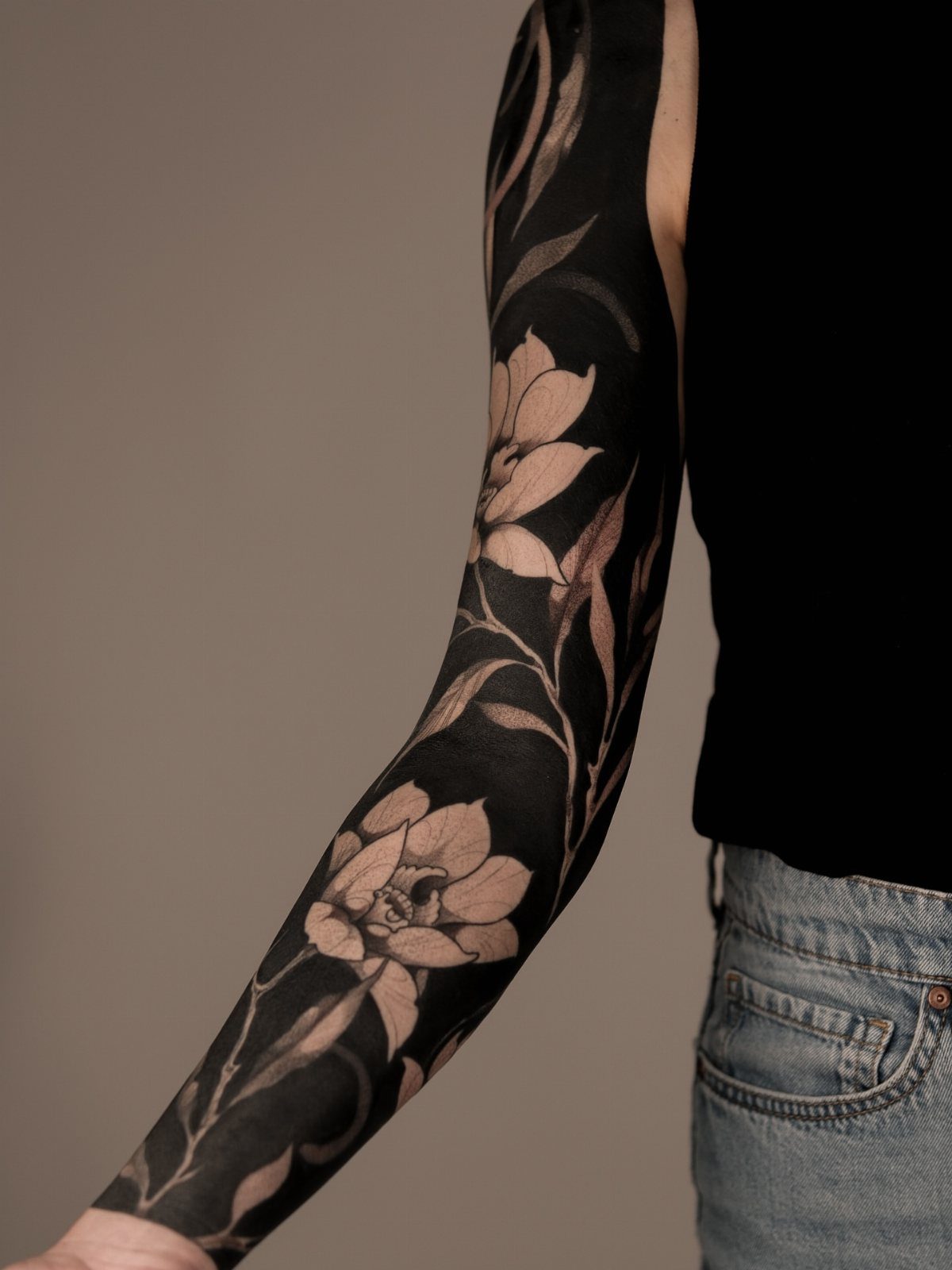
Solid black backgrounds make flowers pop forward like they are lit from the front. The technique borrows from traditional blackwork: large areas of saturated ink, then fine lines and grey wash to pull the petals out of the dark.
This demands commitment. The black heals patchy in spots and needs a second pass to even out.
I would budget for that from the start rather than treating it as a surprise. The result reads bold from across a room, which is the point, but it also limits cover-up options later.
Skin tone affects how the heavy black sits; darker complexions sometimes need the artist to adjust the grey values so the flowers do not disappear.

Variety Botanical Pattern: This set of hand face painting stencils contains 12 sheets 142+pcs Wildflower Floral tattoo Stencils for daily use, such as wildflower, floral, narrow leaves, plants, Spring flowers, butterfly etc allow children and adult to give full play to their imagination and fill in patterns freely
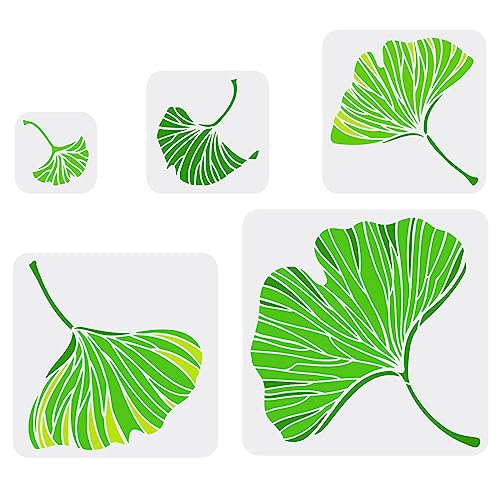
【Ginkgo Biloba】You will receive five templates of ginkgo biloba leaves in different shapes, with distinct lines,unique designs will surely design inspire you, you can choose any shape of ginkgo leaf for your creation.

The Crafter's Workshop Stencil - Ginkgo Leaves, 6" x 6"
5. Vertical Floral Tattoo Stack
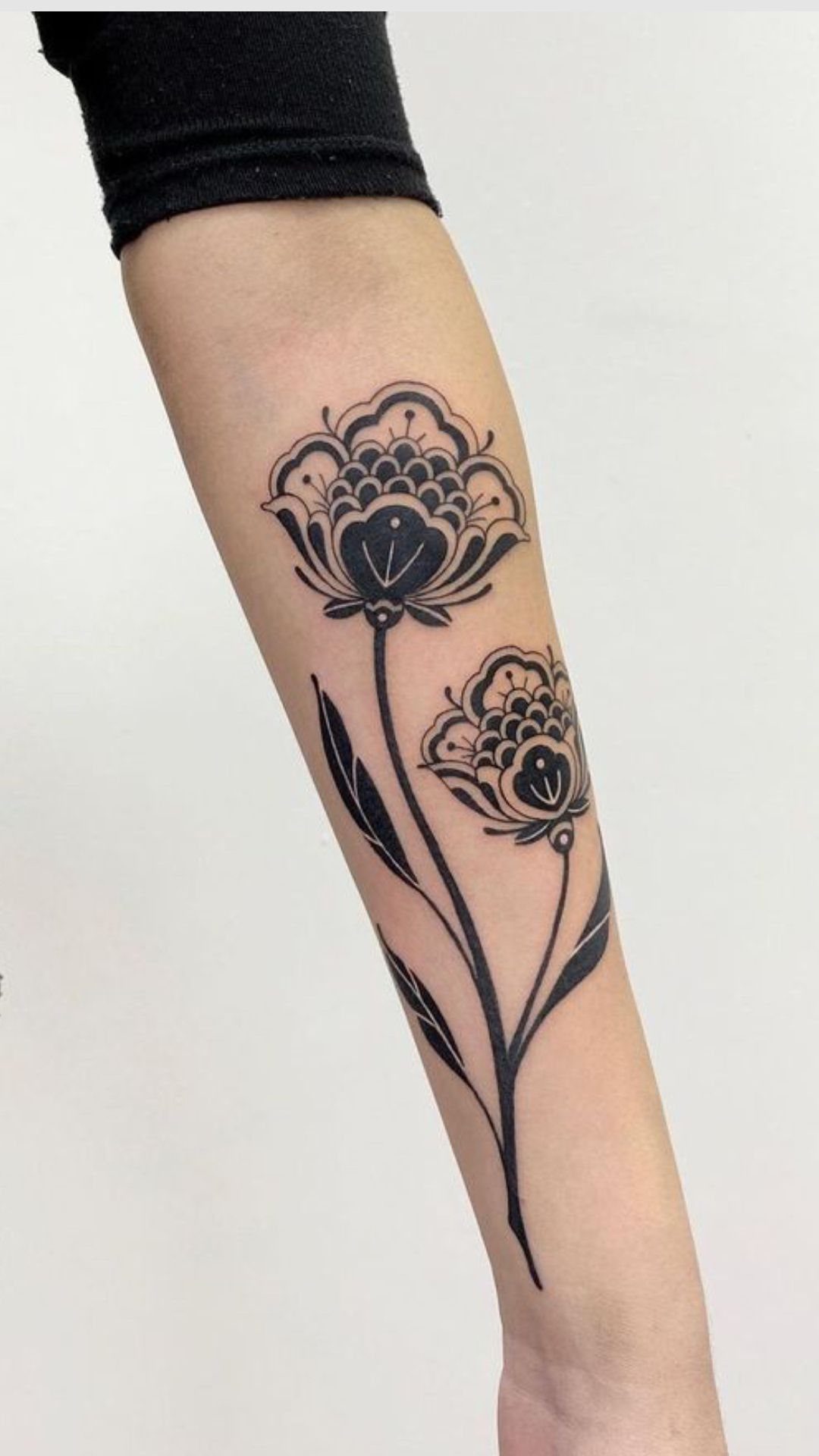
Stacking flowers vertically draws the eye along the limb rather than across it, which suits narrow placements like the outer forearm or calf. 2 full blooms with long stems fill the space without crowding.
The arrangement leaves room between the flowers for skin breaks, which keeps the design from reading as a solid block.
I have seen versions where the stems carry fine line texture or stippling; either works, but the stems need enough weight to connect the composition.
This format adapts to cover-ups more easily than scattered single flowers. The vertical line gives the artist structure to work old ink into leaves or shadow.

MADE IN THE USA SINCE 1990: For over 30 years Dynamic Color has produced professional tattoo ink in the United States, an established American brand artists built their work on long before most imported labels existed.

100% new brand and high quality. Favored among professional tattoo technicians.

6. Ornamental Swirls
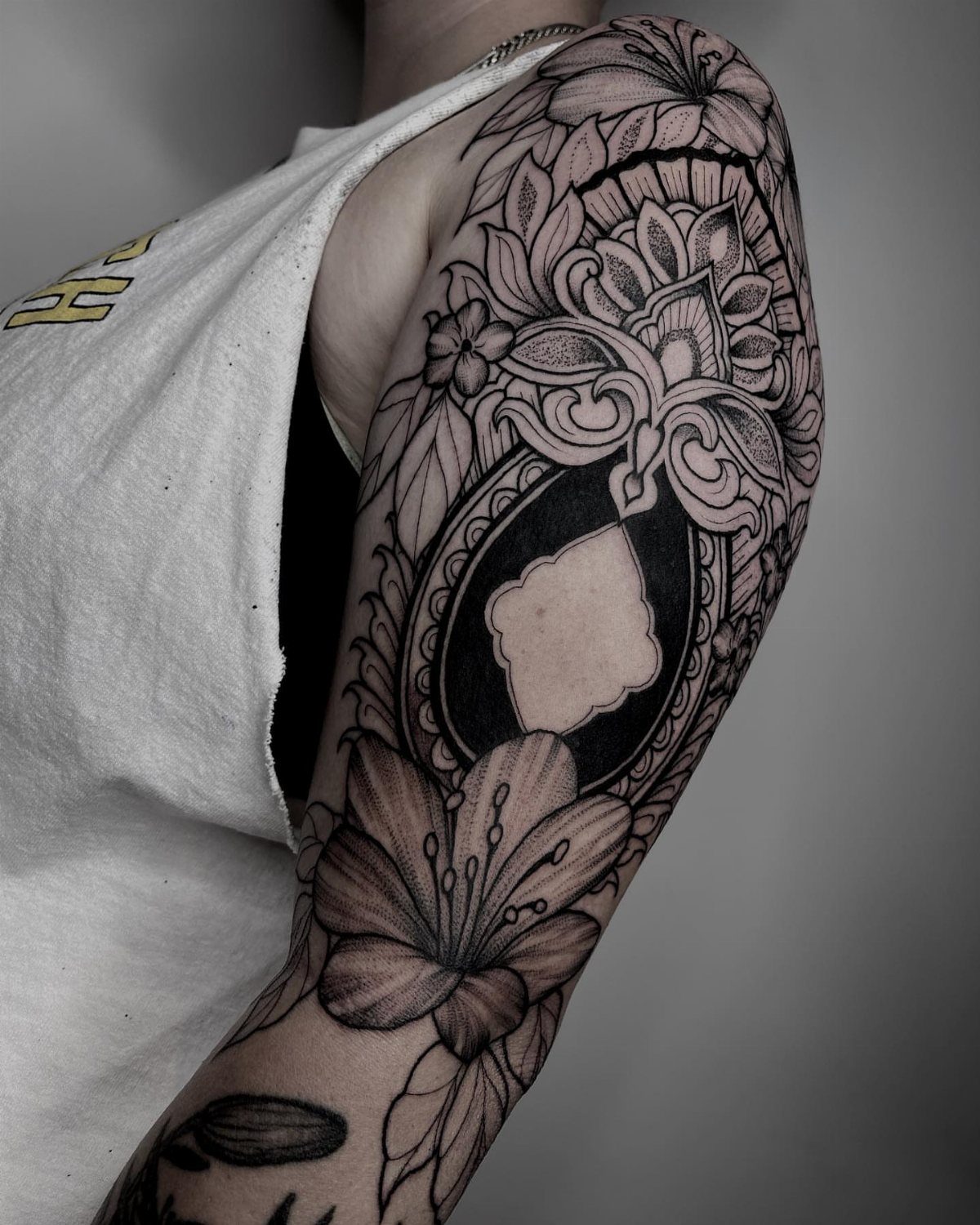
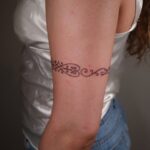
Ornamental swirls frame floral work with the same logic as a carved border on furniture: they contain the design and give the eye a path to follow.
Scrollwork, medallions, and leaf motifs wind around the central bloom without competing for attention.
Black and grey keeps the decoration from feeling too baroque.
The swirls need to flow with the body part; rigid symmetry looks printed rather than worn. I would check that the artist builds the ornamental elements from the same needle groupings as the flowers, so the texture stays consistent.
This style suits someone who wants their floral piece to read as finished and intentional rather than a collection of separate elements.

【 575+ Fun Assorted Tattoo Stencils 】-The ChurlChurl tattoo stencils collection includes 575 high quality stencils with multiple themes. enjoy cute trendy tattoo stencil designs like butterflies, words, flowers, symbols, totem, Egypt style patterns and more.

▶ Henna Tattoo Kit: 16 sheets tattoo stencils. airbrush tattoo stencils suitable for tattoo lovers. Experience the effects of tattooing without the pain of tattooing.
7. Geometric Floral Designs
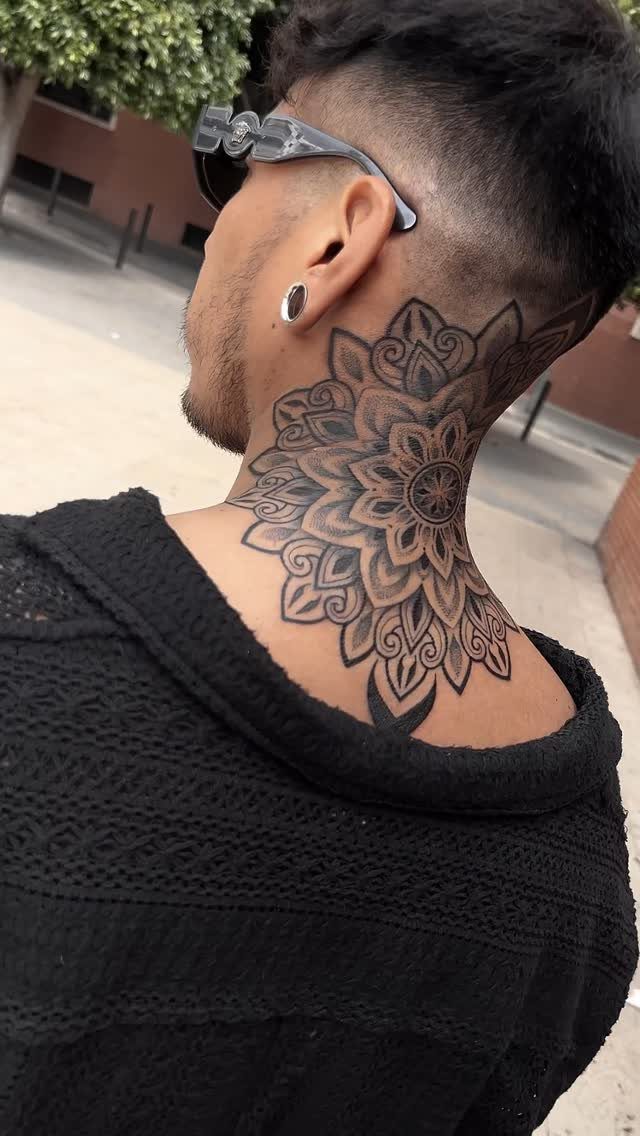
Geometric shapes give floral work a structure that reads modern without going abstract. A mandala crown or star pattern behind the bloom turns the flower into a focal point rather than a free-floating decoration.
The geometry needs to be drawn first, then the petals worked in around it.
Reversing that order leaves the lines fighting each other. I would keep the geometric elements in black only, no grey wash, so the contrast stays sharp against softer petal shading.
This suits someone who wants the organic feel of flowers but also likes the clean edges of technical drawing. The back or upper chest carries the scale best; too small and the geometry turns to noise.

Cartridge Needles Sizes: 20 pcs tattoo cartridge needles include 3RL 5RL 5RM 7RM, each size has 5pcs. Those tattoo needles can be used for lining and shading, which can assist you with the entire tattoo work

Complete Packaging: 50pcs mixed size tattoo cartridge needles set, includes 5pcs each of 1205RL 1207RL 1209RL 1205RS 1207RS 1209RS 1207RM 1207M1 1215M1 1215RM. The unique design of the needle can store more ink, and the sharp needle thread better completes tattoo activities, suitable for both professional tattoo artists and beginners.

JimKing Tattoo needles and tips are packaged in a disposable sterilization box to prevent secondary infections.
8. Chrysanthemum Tattoos
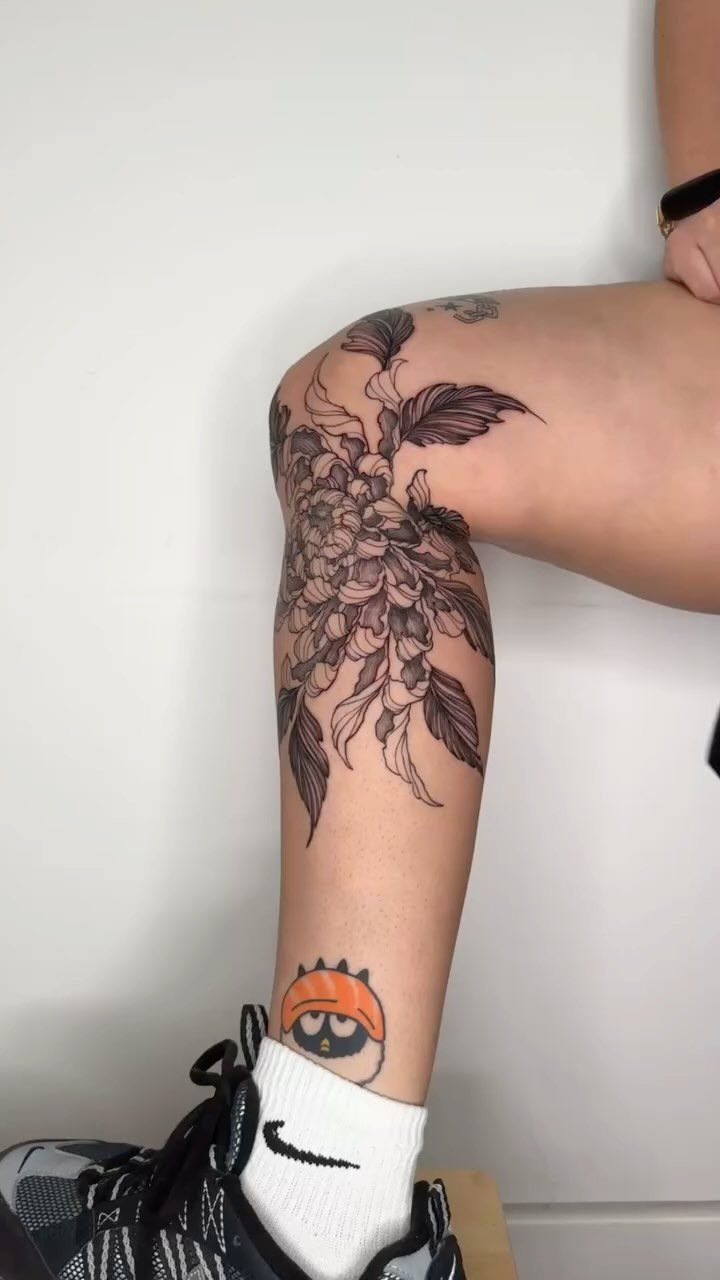
A chrysanthemum’s dense, layered petals give blackwork artists natural territory to build depth. The flower wraps well around joints like the knee because the radial shape follows the body’s curves instead of fighting them.
The leaves need as much attention as the bloom. Dark, heavy leaves below and lighter petal work above keeps the composition from floating.
Knee placement means the tattoo moves with every step, so the linework has to be built for stretching; tight detail right on the kneecap will blur faster than the surrounding areas.
Healing on a joint takes longer and needs more care. I would plan the sessions around movement, not just pain.

Precision Transfer Performance - It’s professional-grade tattoo stencil paper delivers vibrant, high-definition transfers even for intricate designs. The carbon layer ensures sharp outlines without smudging or fading, ensuring crisp lines that stay true to your original artwork.


DEEP SEA FUN: Embark on underwater adventures with 50 designs of beloved characters such as SpongeBob SquarePants, Patrick Star, Squidward Tentacles, brought to life through Savvi's Temporary Tattoos.
Pain Levels of Blackwork Tattoos
Blackwork floral pieces hurt more than fine line work because the needle returns to the same patch of skin repeatedly to build saturation.
Heavy shading and solid fill demand longer sessions in one spot, which wears down the numbing effect of adrenaline faster than single-pass linework.
Pain tolerance shifts with placement, not just person. A dense black peony on the outer arm sits differently than the same design over bone or a joint.
The knee and elbow carry less padding and more nerve density, so the chrysanthemum that wraps there will sting sharper during the black fill than during outline.
Long sessions for deep saturation are hard to push through.
I would break a large blackwork piece into shorter appointments rather than white-knuckling one marathon sitting. The skin also swells less, which lets the artist read their work accurately.

STENCIL:Package contains 1 piece Ginkgo Stencil - 12x12Inch. Material:Translucence 10mil Mylar PET.
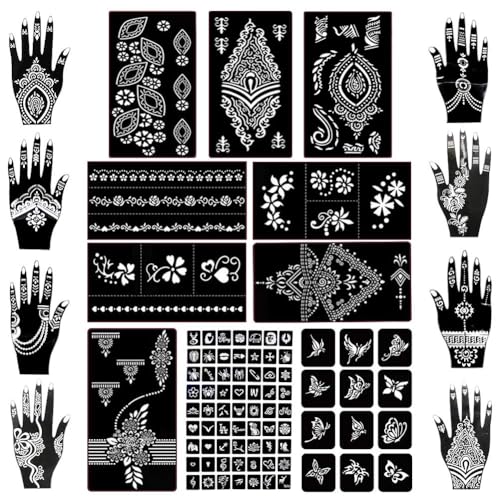
97 HENNA TATTOO DESIGNS IN 18 SHEETS:Includes 8 hand stencils, 8 rectangle flower pattern sheets, and 2 small pattern sheets. Features butterflies, flowers, roses, mandalas, paisley, and traditional Indian/Arabian mehndi designs. Perfect for creating stunning body art for weddings, festivals, and summer celebrations.

About the Stencil: You will receive 1 piece ginkgo tree branches and leaf stencil, which is made of high quality PET Plastic with good flexibility, durability, professionally cutting, smooth edges, rounded edges and corners, can serve you for a long time. Size: 11.8inch/30cm wide,11.8inch/30cm long.
Tattoo Placement Considerations
Visibility and size should match your daily life, not just your Pinterest board.
A heavy black floral piece on the forearm reads bold in a short-sleeve shirt but limits professional options in fields where that still matters. The back and upper thigh hide easily; the hand and neck do not.
Large designs need flat or gently curved surfaces to hold their shape. A big peony on the thigh keeps its proportions; the same design squeezed onto a wrist distorts as the skin moves.
Sun exposure fades black ink to charcoal over time.
Placements that see more sun, like the top of the arm or shoulder, will need more frequent touch-ups to keep the saturation crisp. I would plan for that maintenance before committing to placement.

100% brand new and high quality

MADE IN THE USA SINCE 1990: For over 30 years Dynamic Color has produced professional tattoo ink in the United States, an established American brand artists built their work on long before most imported labels existed.

【PREMIUM 3MM THICKNESS】Our practice skins are crafted from 3mm thick, professional-grade silicone to deliver an authentic tattooing experience. This optimal density provides superior needle resistance, elasticity, and durability — just like real skin. Perfect for mastering stretching techniques, shading, and outlining without the pressure of working on live models.
Choosing a Tattoo Artist
Blackwork floral tattoos sit at the intersection of two specialties, and most artists lean harder toward one than the other.
An artist with a strong blackwork portfolio but stiff flowers will give you bold saturation and dead petals. One who draws lively botanicals but rarely works in heavy black may struggle to control the fill.
I would look for healed photos, not just fresh work. Solid black backgrounds heal patchy in spots; an artist who only posts day-of shots might not show you how their saturation settles.
Heavy black sometimes needs a second pass to even out, and a specialist will build that into their process rather than treating it as a fix.
Ask whether they draw the ornamental or geometric elements freehand or stencil.
Freehand ornamental work flows with the body; stenciled symmetry can look printed. The geometry behind a floral piece needs to be laid first, so the artist should walk you through that sequence before the needle touches skin.
Frequently Asked Questions
What is the 1/3 rule tattoo?
There is no single 1/3 rule in tattooing, though some artists use rough proportional guides for balance.
The closest related guidance is about keeping light petals toward the top of a placement, where the eye lands first, and leaving skin breaks between stacked flowers so the design does not read as a solid block.
What is the prettiest flower to get tattooed?
Peonies and chrysanthemums both suit blackwork especially well. Chrysanthemums have dense, layered petals that give artists natural territory to build depth, and they wrap well around joints because the radial shape follows the body’s curves.
How painful are blackwork tattoos?
Blackwork floral pieces hurt more than fine line work because the needle returns to the same patch of skin repeatedly to build saturation.
Pain also shifts with placement; bone and joints like the knee and elbow carry less padding and more nerve density, so the sting sharpens during black fill.