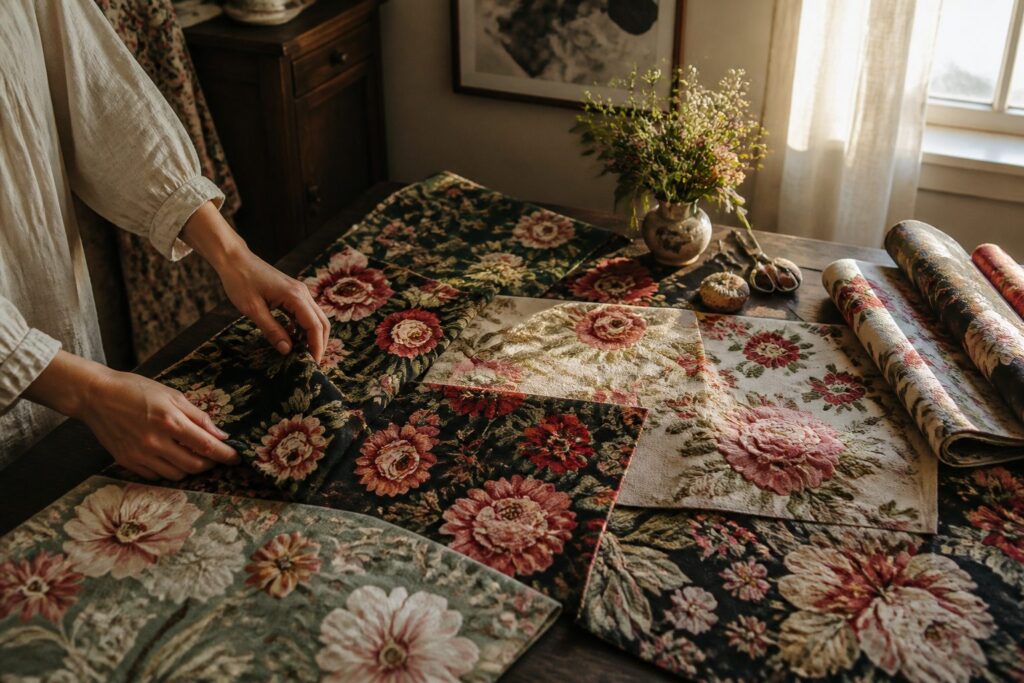
Floral pattern design in textiles is the art of rendering flowers onto fabric through distinct physical methods, each with its own cost floor and behavior.
A printed repeat like Paper Garden’s 19.68 inch maximalist floral runs $16.95 per yard and switches easily between machines, while embroidered thread at $7 per yard builds ridges you can feel under a fingertip.
The method you choose changes whether the pattern reads as flat color or dimensional architecture against skin, furniture, or light.
[link-whisper-related-posts]Printed Floral Fabrics
Printed florals are the workhorse of patterned fabric, and roller, screen, and digital printing are how most of them get there.
Roller printing laid the groundwork for mass production in the 19th century; digital arrived later and now handles photorealistic blooms and one-off custom runs without the setup cost.
Screen printing still sits between them for runs that need heavier pigment or specialty inks.
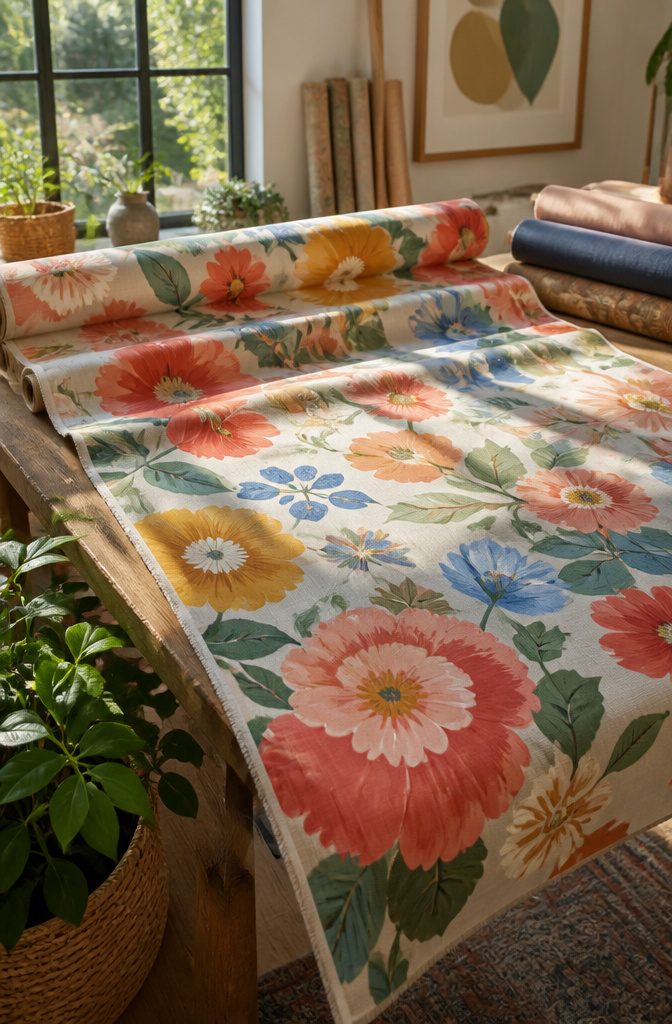
The Paper Garden Maximalist Floral Fabric shows what this method can deliver at $16.95 per yard, with a 19.68 inch repeat both horizontally and vertically.
That scale matters: a repeat too small looks busy on large upholstery, too large and it breaks awkwardly on a throw pillow.
The paper-cut style of this particular print sits in the middle ground, stylized enough to read as design rather than snapshot, bold enough to carry a room.
Printed florals dominate mass production because the cost per yard drops hard at volume and the design range is essentially unlimited. The same machine that runs a photorealistic rose garden Tuesday can switch to a 1960s abstract tulip Wednesday.
For the buyer, that means access but also a sorting problem: not every print that looks good on the bolt holds up once it is living on your sofa across from a window that throws real garden shadows at it.

The pillowcase is made of flannel and measures 18x18 inches to ensure maximum comfort.

Fabric Dimensions: One piece full width cuttable fabric, 39 x 63 inches (100x160cm), pre-cut. Multiple orders arrive as separate pieces and not continuous fabric.
Embroidered Floral Fabrics
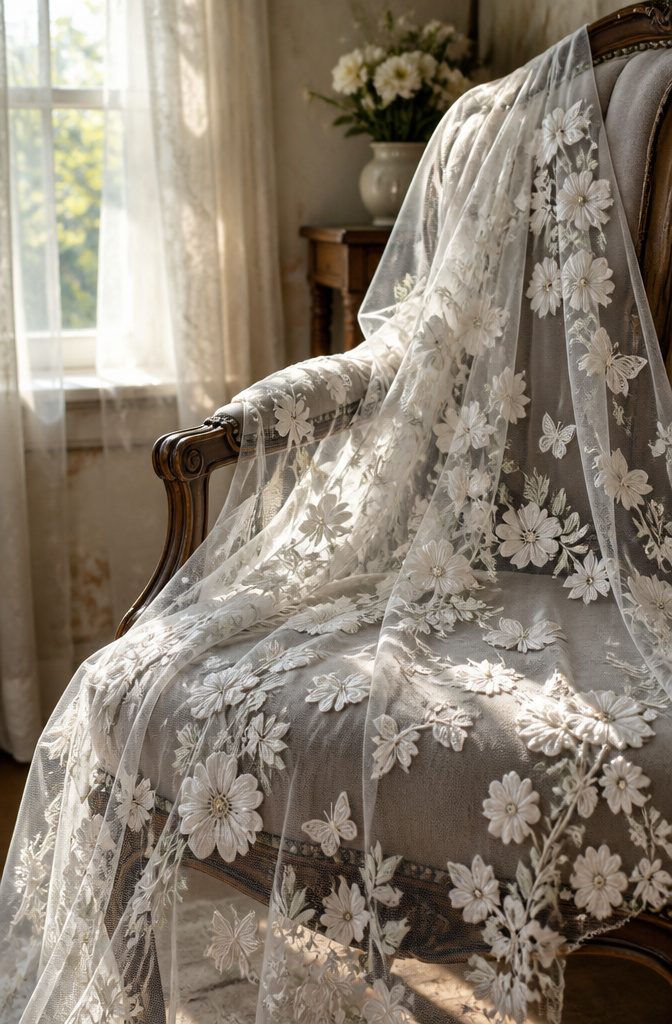
Embroidered florals carry actual weight.
Where a print sits flat, thread stitched onto base fabric builds ridges, shadows, and a surface you can feel run under a fingertip. That physical presence changes how a garment catches light and how it moves with the body.
Cost splits cleanly between method and scale. Machine embroidery dominates ready yardage now, producing consistent yards of repeating motifs at prices that run as low as $7 for something like the Spring Flowers & Butterflies Embroidered Tulle Fabric.
Handwork still shows up in couture and small-batch bridal, but the price multiplies and the character shifts: slight irregularities in tension become part of the texture rather than flaws.
Bridal and formal wear have always been the home for this technique. The opacity and dimension of stitched thread let a white-on-white floral read as ornament without competing with the cut of the dress.
For evening wear, the same dimensional quality catches candlelight or stage light in ways a flat print cannot manage.
The budget entry at $7/yard proves the look is not locked behind custom pricing anymore.
Machine embroidery has made dimensional florals workable for a home project or a single-occasion garment, though the hand-feel of the stitching against skin and the exact durability through dry cleaning remain things to test on a swatch before committing full yards.


Family Matching Hawaiian Outfits: Coordinate the whole family in the Watercolor Orchid White side-print design, with matching styles for women, men, girls, and boys.

🧵 100% Cotton Satin Fabric – Soft, breathable natural cotton satin with a smooth finish, perfect for sewing, quilting, and creative craft projects
3D Floral Lace Fabrics
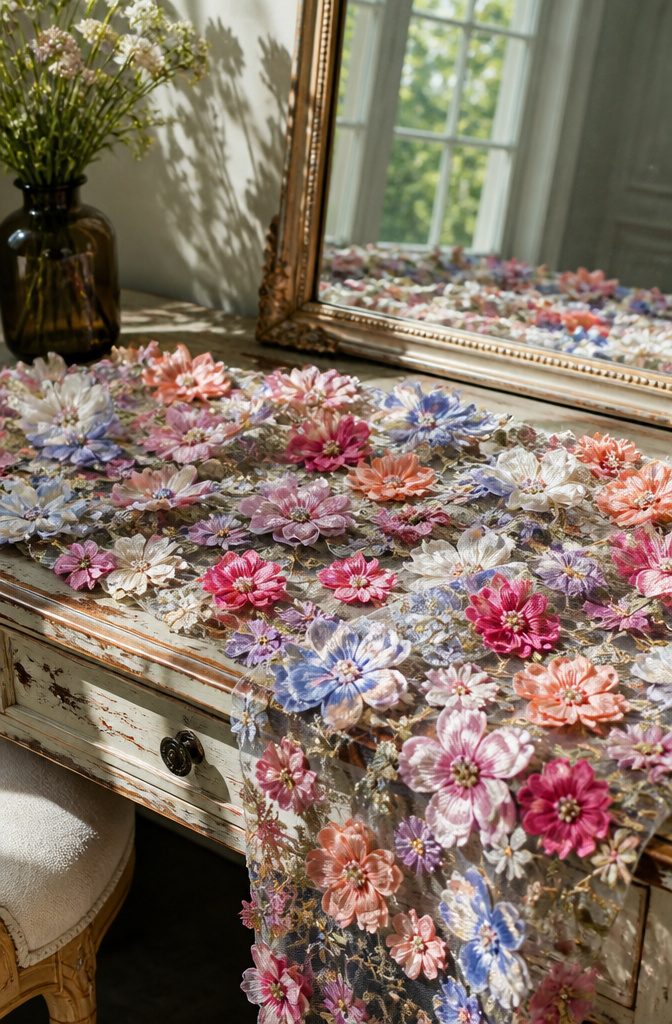
Dimensional floral lace lets a bouquet stand off the fabric instead of lying flat against it.
The Colorful 3D Flower Embroidery Lace Designer Fabric builds these petals through layering and appliqué, with stitched elements stacked on mesh so the shapes catch real light, and it runs about $20 a yard.
For sharper geometry, the Modern Laser-cut Big Floral Lace Fabric at $30 a yard uses controlled cuts to create negative space that droops or stands depending on how the garment moves.
Bridal gowns favor these constructions because photographed detail sells the dress, and the weight of built-up embroidery reads as costly in person. Haute couture pushes further into full sculptural blooms that become the garment’s architecture rather than its pattern.
The back of a gown or the border of a veil are the usual placements where this depth works without snagging on everyday wear.
Nine-color ranges and the higher sequinned tier at $48 a yard give designers options, but the real limit is movement too much projection and the piece becomes unwearable outside a studio shot.


【Soft Corduroy】Expertly crafted from premium corduroy fabric with a unique textured design, these pillow covers provide soft comfort and a cozy touch. Perfect for infusing your home with warm, trendy aesthetic and charming texture.

Premium Polyester Fabric: Crafted from lightweight, breathable, skin-friendly polyester material with reliable quick-dry performance. The soft textile fits snugly against your skin and evaporates sweat & water fast for all-day comfort during water activities.
Floral Organza Fabrics
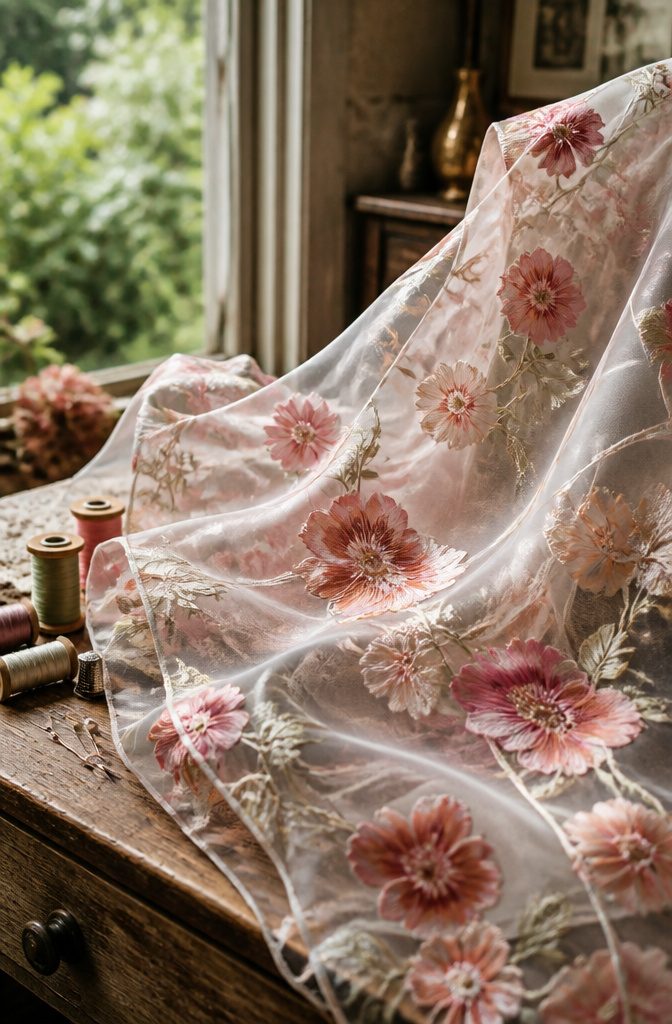
Organza holds its shape like paper holds a crease, stiff and translucent enough that a floral printed onto it reads as a veil of color rather than a wall of it.
The weave is plain and tight, usually silk or synthetic, which lets light pass through and makes the pattern seem to float between the cloth and whatever sits beneath it.
Floral organza fabric runs about $9 a yard, cheap enough that designers use it everywhere it does not need to last.
A rose printed on organza loses the depth it would have on cotton or velvet; the transparency flattens the image, so the motifs tend toward repetition and smaller scale, or they are woven in subtly with different sheens rather than inked on top.
The structure makes organza a natural for overlays, bridal veils, and evening wear that needs volume without weight. Florals on it read romantic because they are literally softened by the fabric itself; the edges blur where the light diffuses.
The risk is durability. Organza snags on jewelry, frays at cut edges, and a printed floral will crack faster here than on opaque ground because there is less pigment absorption and more flex against the thread count.
Wash it gently and line-dry, or accept that the piece is event-wear with a short lifespan.

Floral Embroidery Design: Exquisite Fashion Colorful Floral Flower Butterfly pattern design is very beautiful and gorgeous which can fully show your personal charm.
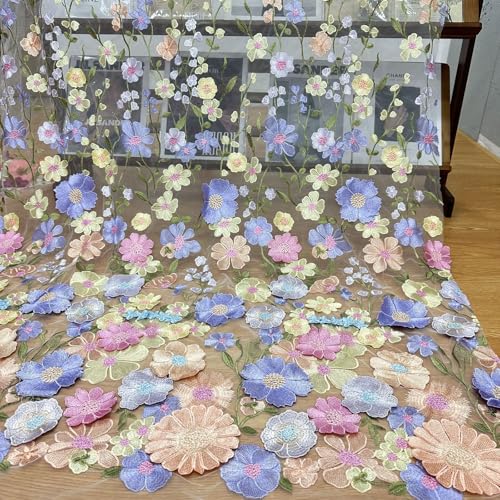
[Material]: 3D flower embroidery patch is made of polyester yarn, exquisite workmanship, durable, light weight, not easy to fade, looks more vivid and real.

Product Includes -- You will get 1 yard white polyester gauze embroidery fabric, about 160cm/63inch wide, the size is enough to meet your daily DIY needs
Floral Cotton Fabrics
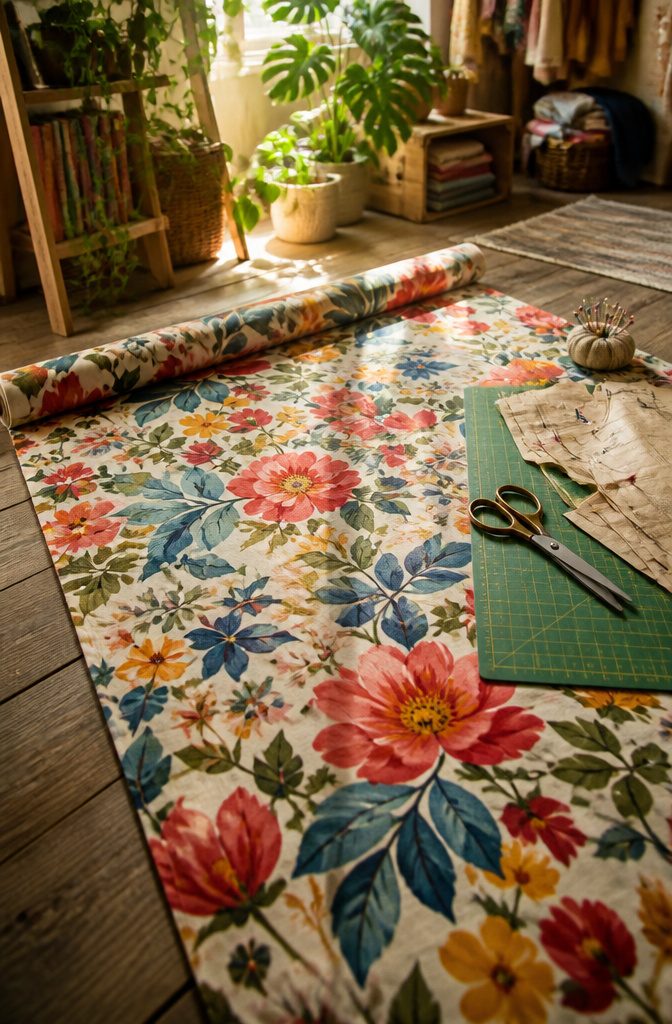
Cotton takes dye differently than silk or wool, bonding with fiber-reactive formulas for a crisp print that survives regular washing without bleeding into the dryer.
That reliability made cotton the workhorse of domestic floral textiles long before anyone talked about colorfastness as a technical property.
Quilting prints and calico still carry the visual vocabulary of 1930s feedsack florals, scaled for cutting into precise geometric blocks. Chintz, glazed to a softer hand, works better for curtains and pillow covers where hard wear is not the point.
The contemporary fabric design I see now borrows from both: bold maximalist layering like the Paper Garden repeat, with its cropped blossoms and mixed-pattern details, printed to order in continuous yardage when the print run allows it.
A printed width of roughly 27 inches visible in the colorway image is the practical detail that saves you from ordering blind.
For quilting, that scale matters. For upholstery, you are buying the repeat and the substrate together, and the printable width shifts with each base.
Washability is the real advantage. A cotton floral sofa cover can be pulled, soaked, and hung dry without the panic that attends silk or lace.
The wearability tradeoff is that cotton softens and fades faster than synthetics, which some collectors want and others consider failure. Decide which camp you are in before you commit to reproduction feedsack or fresh contemporary yardage.

Material Composition: Made from polyester filament with no glue on the back, which can be sewn with a needle or attached using a glue gun

❤[EMBROIDERED FLOWER FABRIC]: 55Inch wide lace trim fabric are with floral designing, pink flowers decorated with green leaves, elegant and vivid, abundant length can fully meet your needs of decorating your clothes.

Varied Sizes: The set includes six appliqués in different sizes and styles, offering ample coverage and options for your sewing needs.
Floral Linen Fabrics
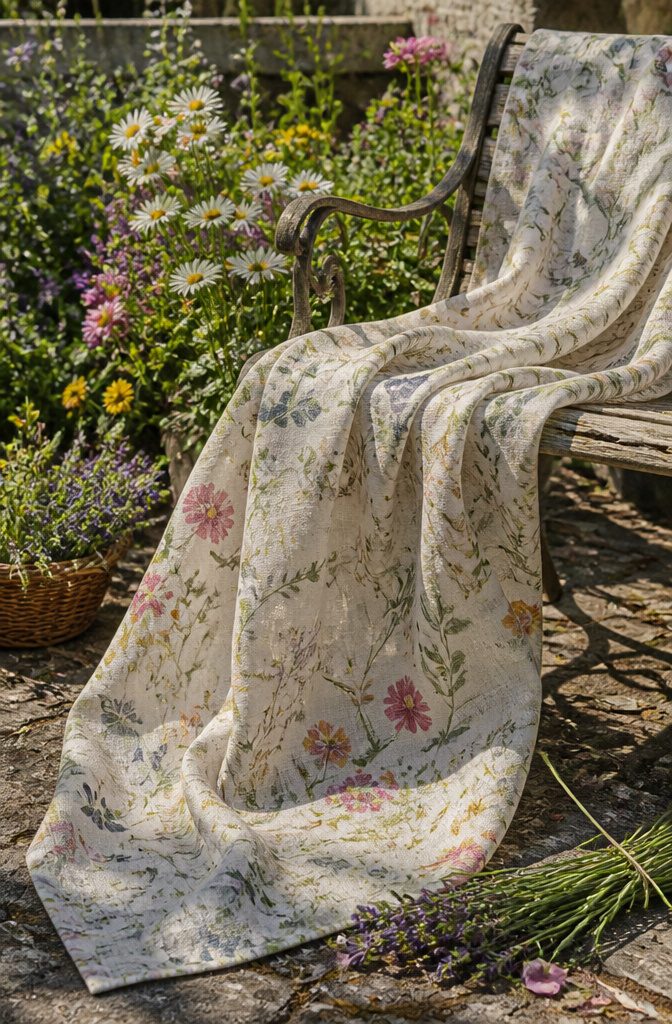
Linen’s slubbed surface gives every floral print a hand-worked quality no smooth weave can match.
The irregular threads catch light unevenly, so a cabbage rose or wildflower spray looks slightly different from one angle to the next. That movement keeps the pattern alive in a way that reads as relaxed, not decorative.
The fiber’s natural stiffness means a new linen curtain or shirt stands away from the body at first, almost architectural.
Five or six washes in, the drape changes completely. The fabric softens, crumples into the shape of whoever wore it last, while the print settles in and stays put.
The colors mellow rather than fade, the way indigo on old work shirts turns into something better than what you bought.
Contemporary brands have leaned hard into this aging process. Duvet covers and summer trousers arrive pre-washed now, sold on the promise of that lived-in feel from day one.
It works for about half the journey; the real give comes later, when the creases set where you actually sit and sleep. Florals on linen suit this arc.
A formal bouquet would look wrong on something that rumples so honestly, but a loose repeat of daisies or scattered herbs fits the fiber’s whole story: casual, imperfect, better at year three than year one.

Large Quantity: The package comes with 12 pieces of cotton fabric bundles, each has a different design, ideal for daily and holiday decoration

Products include:The floral cotton fabric package comes with 3 pieces rose fabrics by the yard,62 inches wide and 1 yard long of each piece,they are in 3 different colors floral fabric by the yard,enough for you to use and choose,You can also share these cotton fabric by the yard with your family

Size and Portability: Measuring 10 x 7.5 inches, this makeup bag is sized for effortlessly organizing all your beauty essentials, from nail clippers to tweezers.
Ancient Egypt to the Silk Road
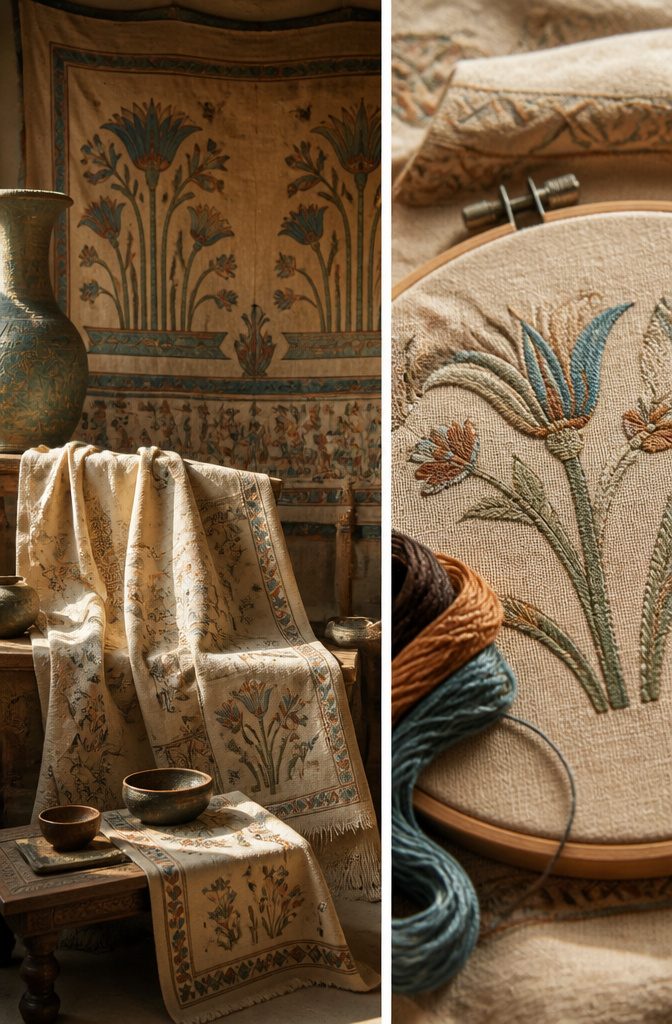
The earliest floral patterns on record come from ancient Egypt, where flowers were arranged in baskets and vases with stems hidden and every blossom flanked by leaves or buds.
Order, simplicity, and repetition defined the style. The lotus was sacred, its yellow center and white petals tied to the sun god Ra; roses, lilies, acacia, violets, jasmine, poppies, and narcissus carried their own symbolic weight.
Those arrangements traveled. By the 12th century, embroidered fabrics with flowers and nature scenes appeared in China, then spread through Asian and Middle Eastern countries via Silk Road trade routes.
Intricate floral embroidery on kimonos followed in Japan by the end of that century.
Floral designs reached Europe in the late Middle Ages when Italian merchants traded regularly with Ottoman textile manufacturers.
Venice and Florence soon became known for sumptuous velvet fabrics with large floral patterns woven in gold and silver threads; Italian weavers had learned to copy Ottoman velvet patterns brought by traveling merchants.
Organic motifs like pomegranates and vines dominated, ornate and stylized. Every fabric pattern that survived to the present first passed through this fashion capital.

Cotton Quilt Fabric Panel

Family Matching Hawaiian Outfits: Coordinate the whole family in the Watercolor Orchid White side-print design, with matching styles for women, men, girls, and boys.

🧵 100% Cotton Satin Fabric – Smooth, breathable natural cotton satin with a soft hand feel, ideal for sewing, quilting, and creative craft projects
Cultural Roots in Regional Design
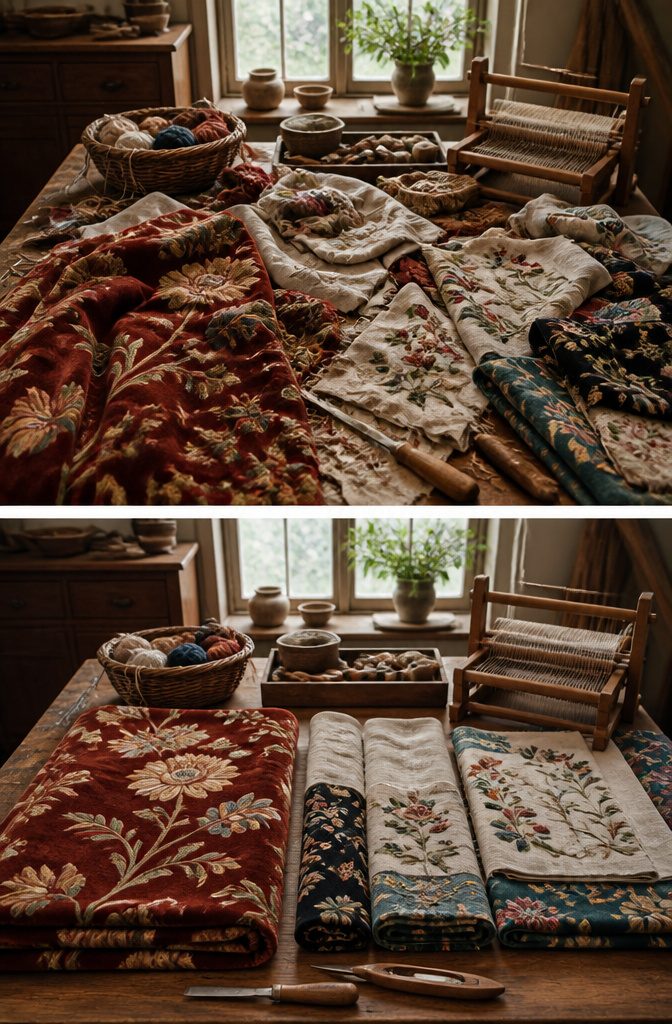
Italian weavers spent the 15th and 16th centuries reverse-engineering Ottoman velvet brought back by merchants, copying the tulips and vines worked in gold and silver thread.
That exchange produced the fashion capital’s first enduring floral vocabularies, and it shows how a single flower can carry entirely different weight depending on where it lands.
A tulip on Ottoman velvet signaled imperial patronage; the same shape in Florence read as imported luxury.
The 12th century gives the other half of this story. Chinese embroidery with peonies and nature scenes traveled the Silk Road into Japan by century’s end, where it surfaced on kimonos with its own grammar intact.
Somewhere between those two networks, flowers became what designers still treat them as: a universal inspirational tool that still kneads local meaning into every repeat.
Marigolds in Indian block printing carry festival and mourning both. French toile reduces the same impulse to a single color, a single narrative scene, and somehow keeps the garden alive.
The motif persists because the practical need never disappeared. Flowers offer endless variation without endless reinvention, a pattern base that solves the copy problem by nature of being alive.
But the deeper pull is older. Egyptian arrangements already hid stems, flanked blossoms with leaves or buds, and selected lotus or jasmine for symbolic charge.
That order and repetition still reads in a necktie or pocket square today. What changes is the code, not the impulse to encode.
Where Floral Textiles Show Up Now
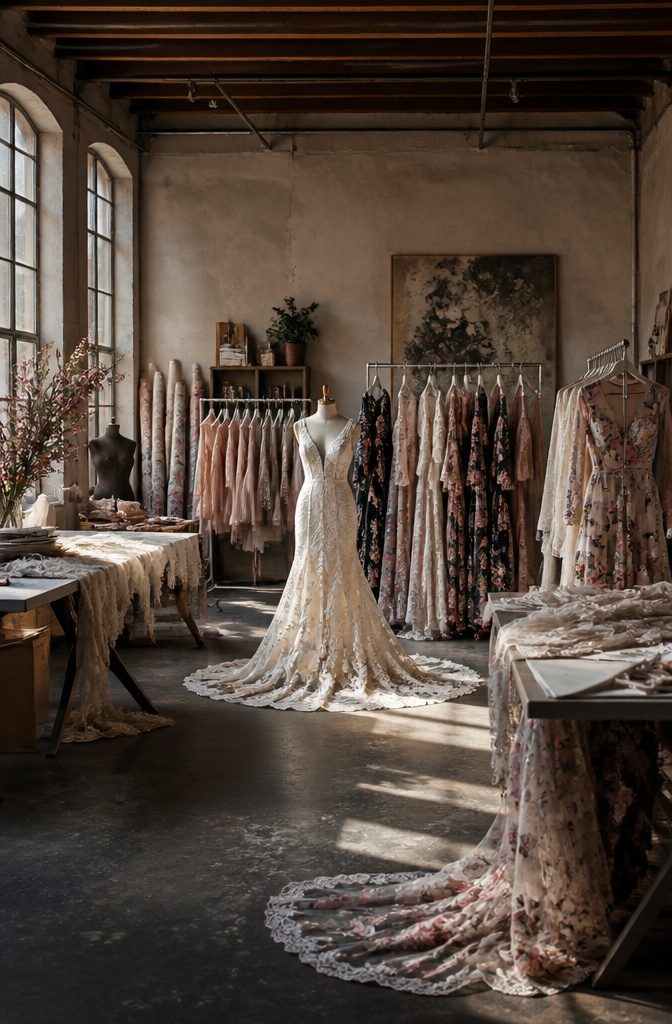
Right now, floral textiles are everywhere in apparel, home décor, and accessories, but the fabric choice changes the entire message.
A rose print on $7/yard tulle sits light and sheer, suited for statement overlays or costume pieces where the pattern reads as playful and blurred at the edges.
The same motif shifts to something architectural on $30/yard laser-cut lace, where the negative space around each bloom becomes part of the design itself, catching light and casting shadow against skin or lining beneath.
Bridal designers know this calculus cold. A gown bodice in that $40/piece scalloped bridal lace needs no additional embellishment, the edge finishing built into the yardage.
For veils or trains, that same designer might drop to the $12/yard embroidered tulle and spend the savings on hand-beading elsewhere.
Spring’s runways pushed the contrast further: maximalist florals like Paper Garden’s layered blossoms and mixed-pattern details showed up on couture ball gowns and upholstery alike, the scale blown up so the "textile" reads as environment rather than garment.
High-fashion houses choose 3D embroidered mesh at $20/yard when they need the bloom to literally project off the body, catching camera flash.
Accessories and ready-to-line migrate toward printed organza at $9/yard or basic embroidered mesh at $5/yard, where the floral sits flat and the cost allows for experimentation. The setting decides the fabric as much as the pattern does.
Frequently Asked Questions
What are the different types of floral patterns?
Floral patterns in textiles fall into printed, embroidered, and 3D lace varieties. Printed florals use roller, screen, or digital methods to apply flat color to fabric.
Embroidered florals build dimensional texture with stitched thread. Three-dimensional lace constructs petals that stand off the mesh or base fabric through layering, appliqué, or laser-cut techniques.
How did floral patterns originate?
The earliest floral patterns come from ancient Egypt, where arranged flowers in baskets and vases followed rules of order, simplicity, and repetition.
By the 12th century, embroidered florals appeared in China and traveled the Silk Road to Japan; they reached Europe in the late Middle Ages through Italian trade with Ottoman manufacturers.
What are the applications of floral patterns in textiles?
Floral textiles appear in apparel, home décor, and accessories, with fabric choice shaping the final use.
Sheer embroidered tulle at $7/yard works for overlays and costume pieces; laser-cut lace at $30/yard suits architectural bridal or evening wear; printed cotton handles washable home textiles like sofa covers and curtains.
What are the different types of textile design?
Each method changes how the pattern reads, how it wears, and what it costs per yard.
What are the types of floral design?
Within textiles, floral design takes forms ranging from photorealistic printed blooms to stylized repeats like the Paper Garden maximalist pattern, from flat ditsy prints to sculptural 3D lace with stacked petals.
Egyptian florals favored symbolic order; contemporary design ranges from vintage feedsack calico to blown-up couture statements.
What is motif design?
A motif is the repeating unit within a pattern.
In floral textiles, this means the repeat size and arrangement, such as the Paper Garden fabric’s 19.68 inch repeat both horizontally and vertically, or the stem-hidden, bud-flanked blossoms of Egyptian design that still read in modern neckwear.
What is a fabric designer called?
Italian weavers and Ottoman manufacturers historically performed equivalent roles in pattern development and replication.