Pirate tattoo designs run from a single nautical star behind the ear to a full chest piece of ship, skull, and tentacled sea creature, with session counts and pain levels scaling to match.
What decides which one belongs on your skin is how much canvas you are willing to commit and whether you want the image to read from across a room or reward someone leaning in close.
Black ink keeps rigging and compass points readable for years; color usually blurs the finer lines by year five.
[link-whisper-related-posts]1. Sailing Ship
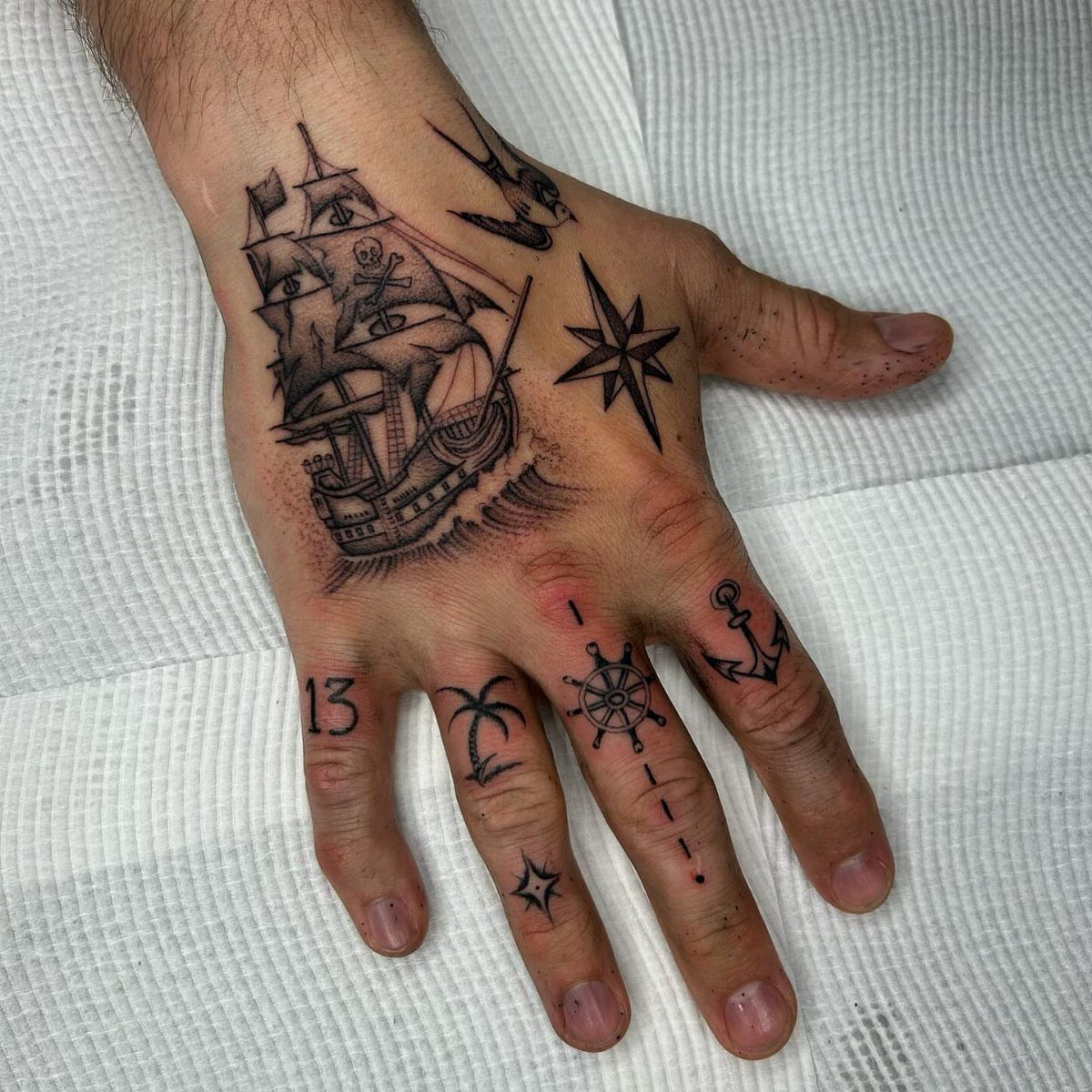
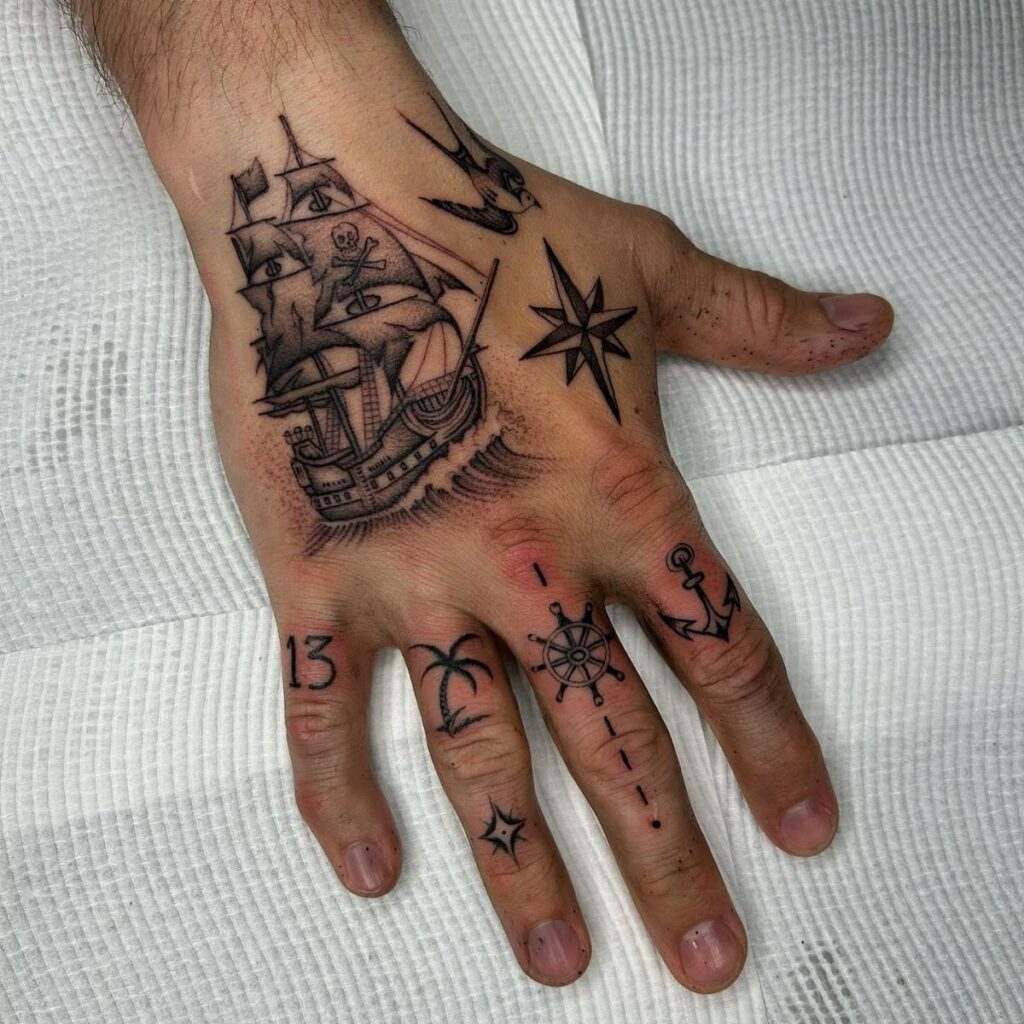
A ship under full sail reads differently than most pirate imagery because it carries motion without violence.
The Jolly Roger on the mainmast turns a generic nautical piece into something specific, and that specificity is what keeps it from looking like a Navy memorial.
I like this best as a hand or forearm piece where the rigging lines stay crisp. Black ink holds those details for years; color tends to muddy the shrouds and ratlines by year 5.
Fresh redness and raised skin mean this one was still settling when the photo was taken. A sailing ship with shaded waves will need more than one session; the waves alone can take as long as the hull.
The skull-and-crossbones sail is optional. A plain ship sails closer to traditional Americana, which ages better if you ever need to blend this into a larger sleeve.

💕【50+ Patterns 6 Sheets Creative Pirate Temporary Tattoos For Adults】--VANTATY Unique Desgin Mixed Style Pirate Captain Temporary Tattoos For Men Women Body Art Stickers Look Real! Package Includes 6 Sheets Pirate Tattoos Pirate Captain, Anchor, Compass, Sailboat Tattoos, Pirate Ships, Pirate Flag, Skull Crossbones, Axe, Sword, Sailor Pirate Skull Tattoos.

Unique Design Pirate Temporary Tattoo: Yazhiji Pirate Fake Tattoo were not only super cool, but also a symbol of strength, passion, and determination, reflecting strength, bravery and courage, sketches of pirate themes tattoos symbolize the spirit of freedom, adventure and rebellion.
2. Pirate Skull
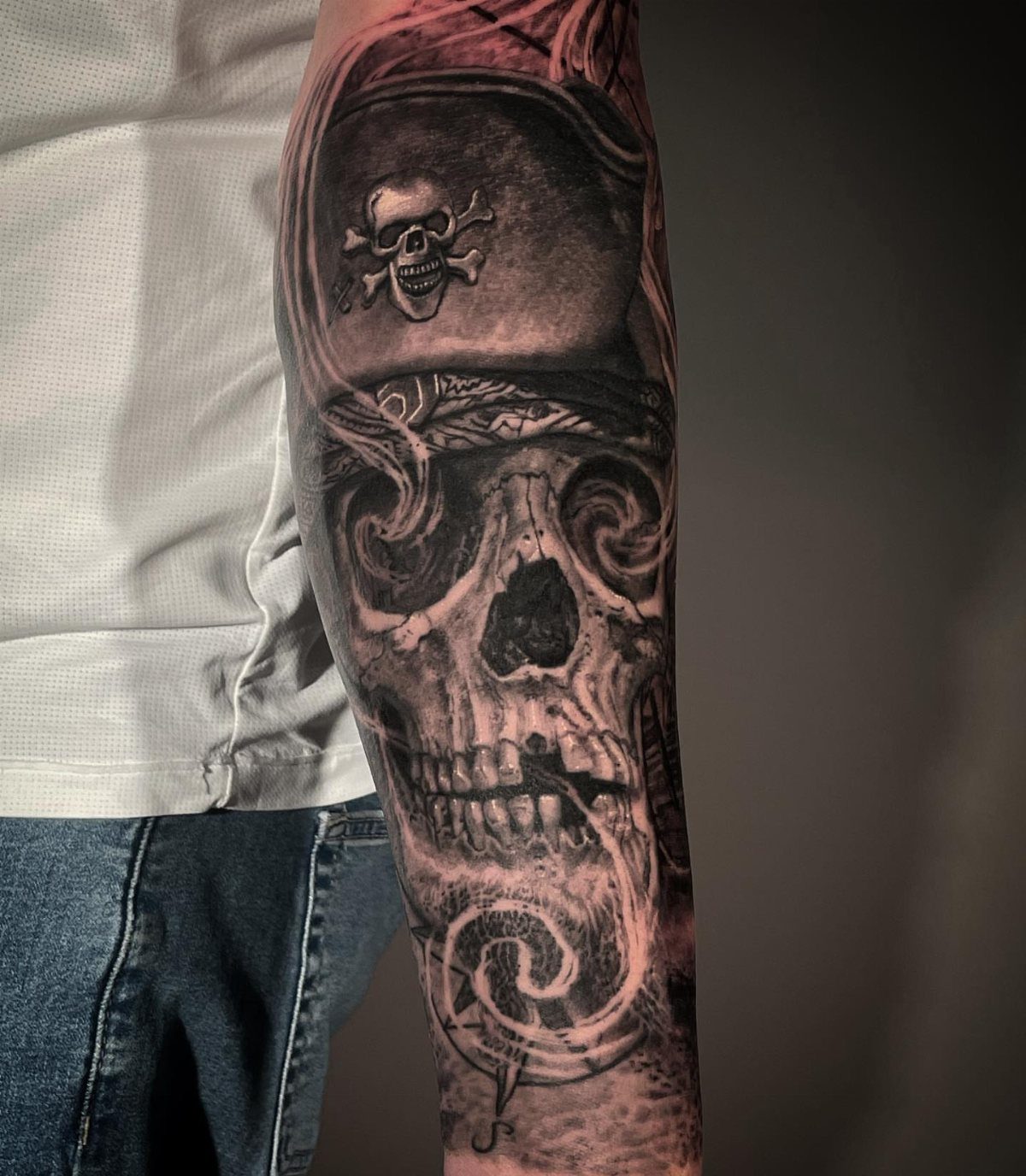
The tricorn hat does almost all the work here. Without it, you have a skull; with it, you have a pirate skull, and the distinction matters when someone spots this from across a room.
Bandana versions read softer, more Jack Sparrow than Blackbeard. Crossed swords behind the skull add bulk that helps on a larger canvas like a thigh or outer arm, but they also raise the session count.
Forearm placement keeps it visible without committing to a full sleeve, which suits someone testing whether pirate imagery fits their broader collection.
Black and grey ages cleaner on faces than color does.
The beads and bandana details in some versions look sharp at first, then blur faster than bone or teeth. My preference is the simpler hat-and-bones treatment, fewer elements that can wander.
3. Anchor Tattoo
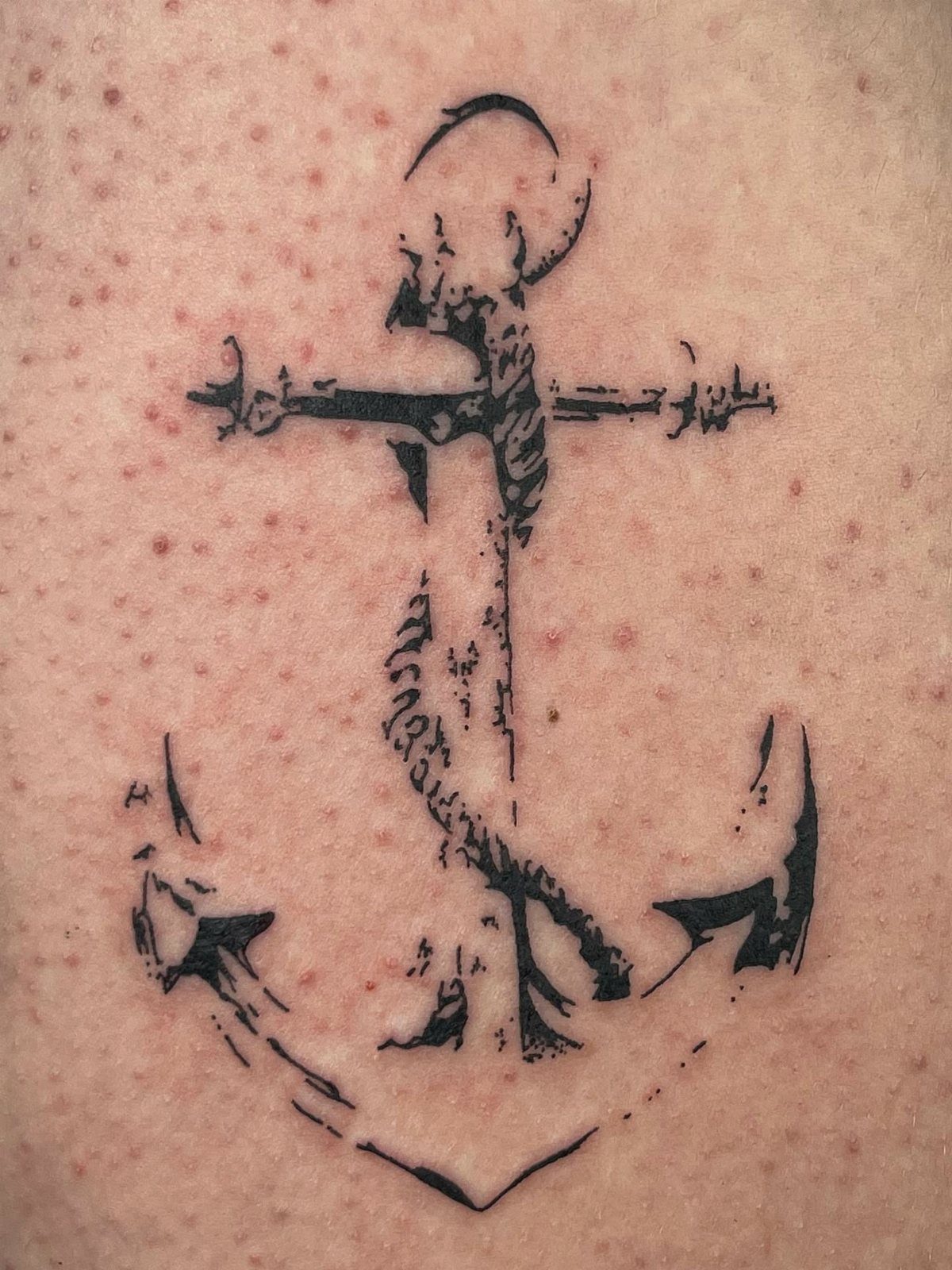
An anchor grounds a pirate-themed sleeve the same way it once grounded a ship: it gives everything else a reference point.
Rope wrapping adds movement that a plain anchor lacks, and the clean line weight suggests a tight round liner was used for the whole piece.
Traditional placement is the forearm, though I have seen these work as collarbone pieces where the shank follows the bone line. The nautical context keeps it from reading as purely religious, which a standalone anchor can do.
Pairing options matter. Ships, swallows, and compasses all sit naturally nearby; skulls less so unless you want the contrast of life against death.

NAUTICAL SAILOR COLLECTION: Features a rich variety of maritime symbols, including traditional naval anchors wrapped in heavy ropes, minimalist solid silhouettes, a sailor's infinity knot, and a unique creative piece where the anchor transforms into flying birds.

High quality fashionable temporary tattoo, which looks like real
4. Octopus Tattoo
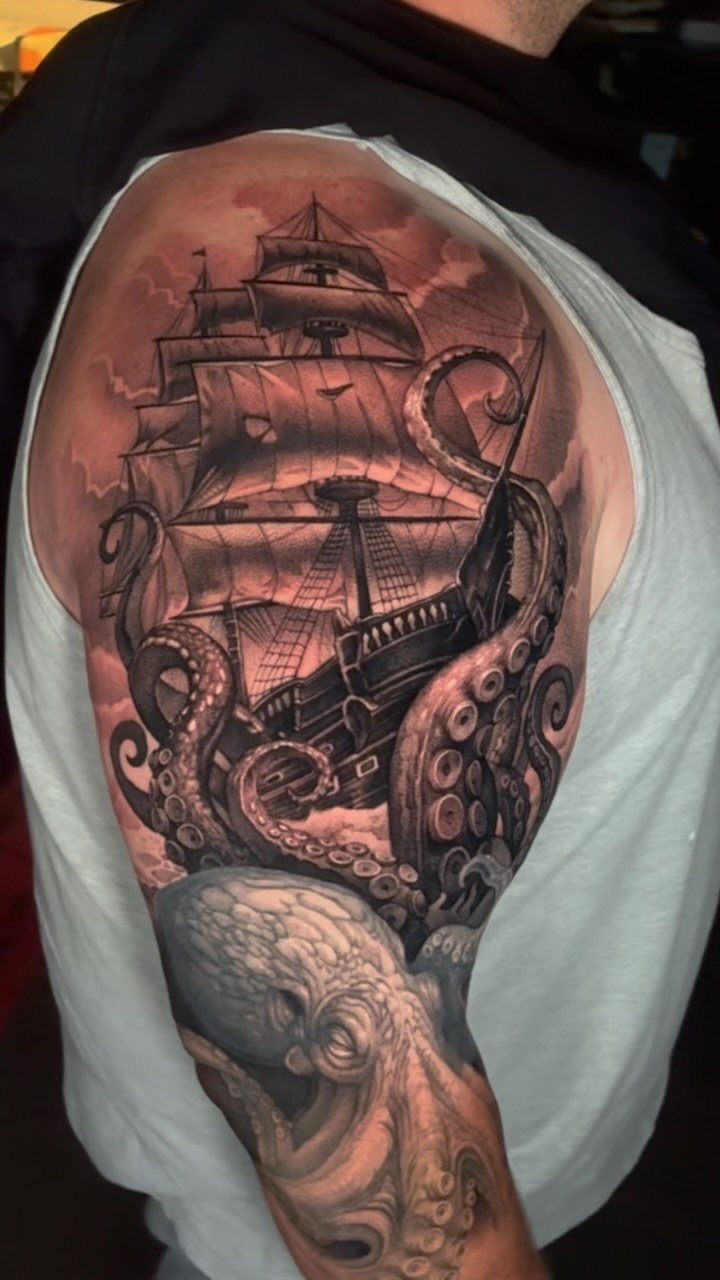
The kraken attacking a ship is the most cinematic image in pirate tattooing, and cinema is exactly what it asks for in space.
This upper arm piece has room for the tentacles to wrap and constrict; shrink it to a calf and the detail turns to soup.
Black and grey suits the subject.
Octopus ink is literally black, and trying to render that in color always looks slightly off to me. The clouds in the background fill negative space without adding competing elements, a smart move when the main action is already busy.
Pain notes: the inner arm where tentacles curl toward the body hits more nerve endings than the outer canvas.
Budget an extra break or two if your artist is shading there. Some versions add a ship’s wheel or compass as a separate element; I would not.

⚡Unique Black Vintage American Tattoo Designs – Featuring a stylish collection of classic style tattoos(skulls, roses, anchors, eagles,heart..). These tattoos are perfect for various body placements, including face, legs, arms, and neck. Share them with family and friends for endless fun!

Sailboat, boat tattoo, Traveler, Ocean, Sea, Flowers, Waves, Sailor, Nomad, Gypsy, Pirate, Boating
5. Treasure Map
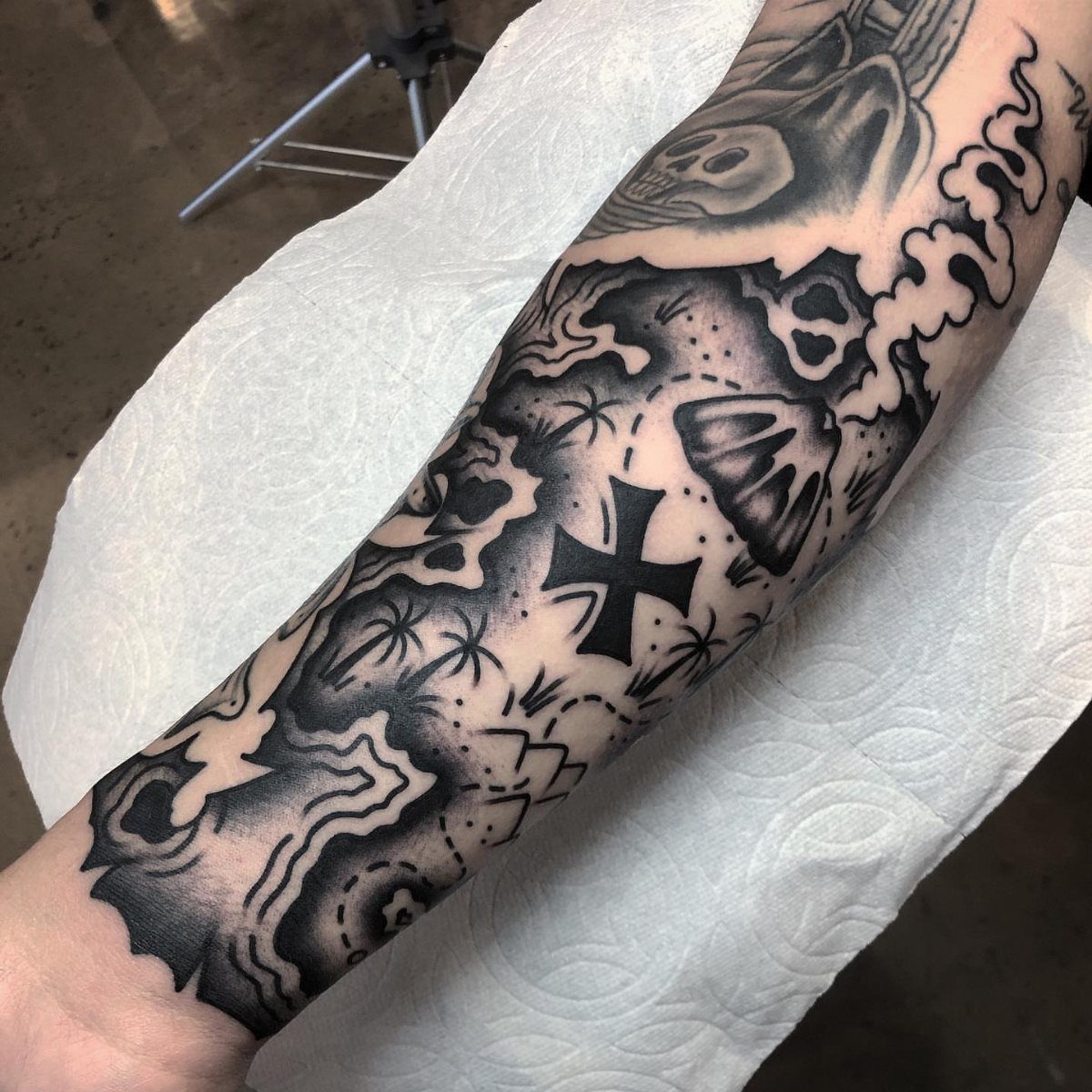
A treasure map tattoo works because it invites reading. The dotted path, the palm trees, the X: these are elements a viewer follows with their eyes, which means the tattoo keeps engaging people after the first glance.
Forearm placement gives enough flat territory for the map to read as a document rather than a distorted scrap.
The coastlines need to simplify; too many inlets and the lines blur together by year 2. I have seen versions with a small compass rose in the corner, which helps orient the image but also crowds it.
The X can mark a real location, coordinates of a first tattoo or a hometown.
That personalization is free and matters more than any artistic flourish. Without it, you have a generic prop from a costume shop.

183PCS Different Styles Tattoos Stencil: Our temporary tattoo stencils forkids comes with 183 temporary tattoo stencils painting set design such as flowers, cats, hearts, skulls, dinosaurs, fruits, deer, scorpions, Hannah, unicorns, whales, cars, rainbows, telescopes, ships, too fast, astronauts, pirates, letters, stars and more Style in 12 sheets A5 size. Perfect for festivals, parties, or daily fashion.
6. Compass Tattoo
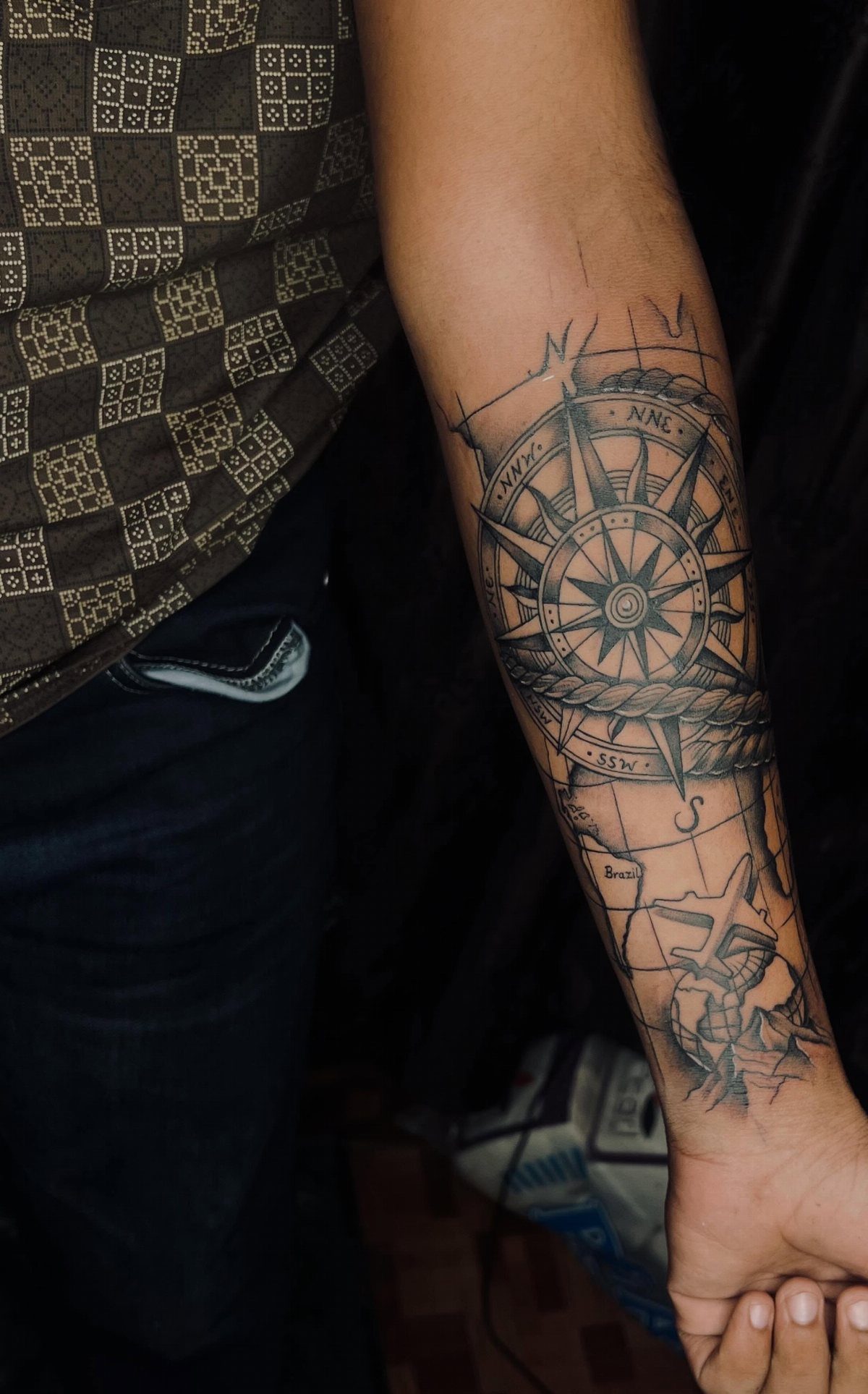
A compass rose without coordinates is decoration; with them, it becomes a specific story.
Map lines and an airplane alongside push the design toward travel generally rather than piracy specifically. That is a choice to make deliberately.
Nautical compasses use far more points than the basic designs most people request.
The detail rewards close looking but demands a larger minimum size than most people expect. At small sizes the points merge into a starburst and the direction meaning is lost.
Rope borders frame the piece and connect it to surrounding work.
Inner forearm placement keeps it self-visible, which matters if the coordinates mean something you want to recall. Black ink only; color in a compass fades unevenly because the needle passes over the same spots repeatedly to build the fine lines.

✿【Pirate Skull Designs Tattoo】:This temporary tattoo pack comes with diversified classic pirate themed patterns elements: pirate skulls, crossbones,pirate captain anchor, eye patches, pirate flag ,pirate hats, treasure maps, compasses, and pirate ship patterns. Bold lines, realistic details, and a rugged adventurous temperament, perfectly restoring the bold and unrestrained charm of pirates, loved by pirate enthusiasts, cosplay, and those who pursue cool, bold styles.
7. Nautical Stars
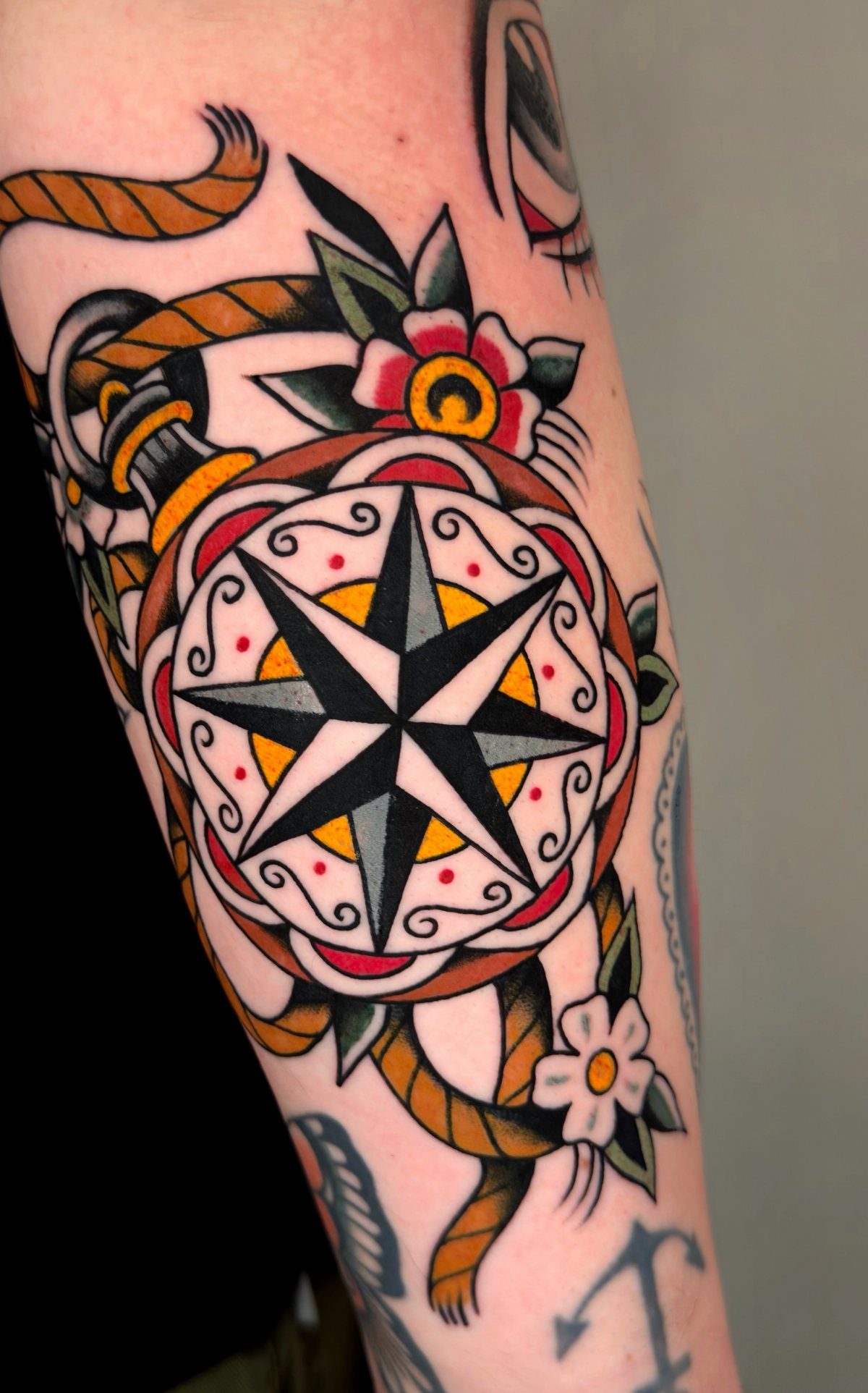
An eight-pointed star inside a compass rose with rope and flowers is more than most people mean by "nautical star."
The simpler version, a single star with alternating light and dark points, was how sailors marked the North Star on their forearms for guidance home.
That minimal version reads faster from a distance and fits smaller spaces like the wrist or behind the ear.
Ornate work like this needs forearm or upper arm real estate to keep the points distinct. Traditional color uses red and black; green and black is another period pairing, though green fades faster on skin that sees sun.
A standalone star carries less pirate specific weight than the compass-surrounded version. For pirate context, keep the rope border or add it later as a connecting element to other pieces.

Versatile Art Stencil – Perfect for painting, scrapbooking, DIY décor, and nautical, travel, or adventure-themed craft projects.

15 sheets transfer paper

Add a touch of nautical adventure to your DIY art projects with this craft stencil that features a detailed shape of a 7" round captain’s steering wheel to compliment your nautical boat ship artwork; perfect for hobbyists and craft enthusiasts, this 8-inch x 9-inch stencil is ideal for creating signs, paintings, and other decorative pieces that showcase your love for nautical themes - so, whether you are a fan of pirate lore or simply want to add a touch of adventure to your artwork, this nautical ship wheel stencil is the perfect choice for your next project
8. Pirate Portrait
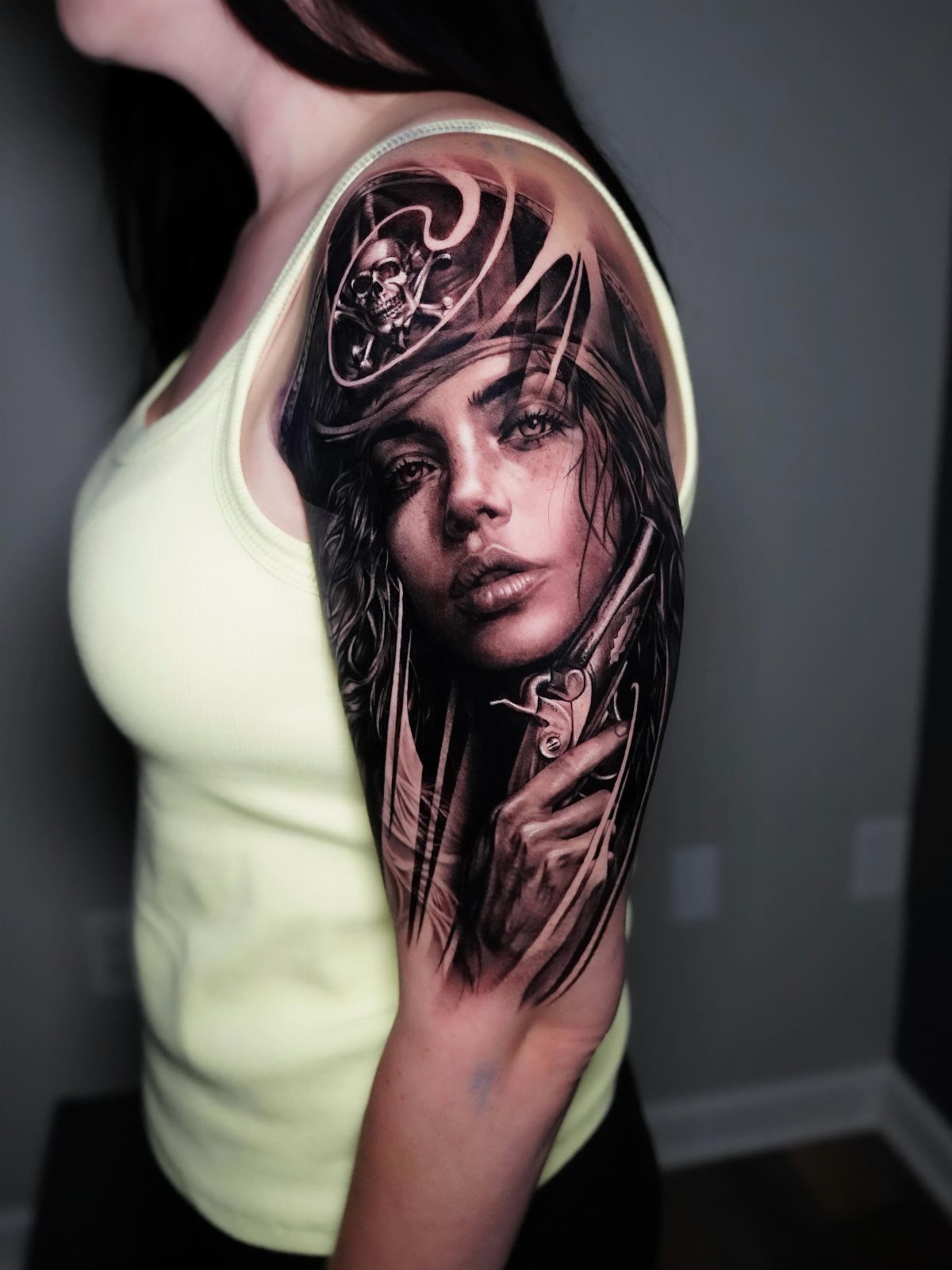
A face carries more narrative weight than any symbol, which is exactly why a pirate portrait commits harder than a skull. A pistol and tricorn place a pirate portrait in a specific century rather than Halloween.
Black and grey realism suits this subject better than color because skin tone, weathering, and fabric texture read as real. An eye patch is an option, though covering one eye loses half the expression that makes portraiture worth the investment.
Facial tattoos on a face tattoo need a large minimum size; shoulder and upper arm give the artist room for subtle shading around the cheekbones and hat brim.
A named historical figure, Anne Bonny or Calico Jack, grounds the piece in actual history. A generic pirate face risks looking like unused concept art.

NAUTICAL PARTY DECOATIONS : NAUTICAL tattoo pertaining to our popular collection will accommodate your expectations at Birthday party, party decorations, special celebrations. Each tattoos set covers 8 sheets in total with 96 Pcs. The dimension of each sheet is 6.1*3.1 inches, including tattoo pieces that have proportions reasonable for adults to kids. Our tattoo stickers designed to different styles promise to develop the impression for party

Realistic Finish: Different from you know ordinary temporary tattoo stickers or fake tattoos. It is so real and comparable to the real tattoo. It is a semi-permanent technology, Water-Resistant, friction-resistant, and can last for a long time, staying on your skin for 1-2 weeks.

Bold old-school tattoo flash artwork featuring a rope-wrapped anchor and soaring swallows, inspired by classic sailor iconography and vintage Americana illustration styles.
9. Skull with Octopus
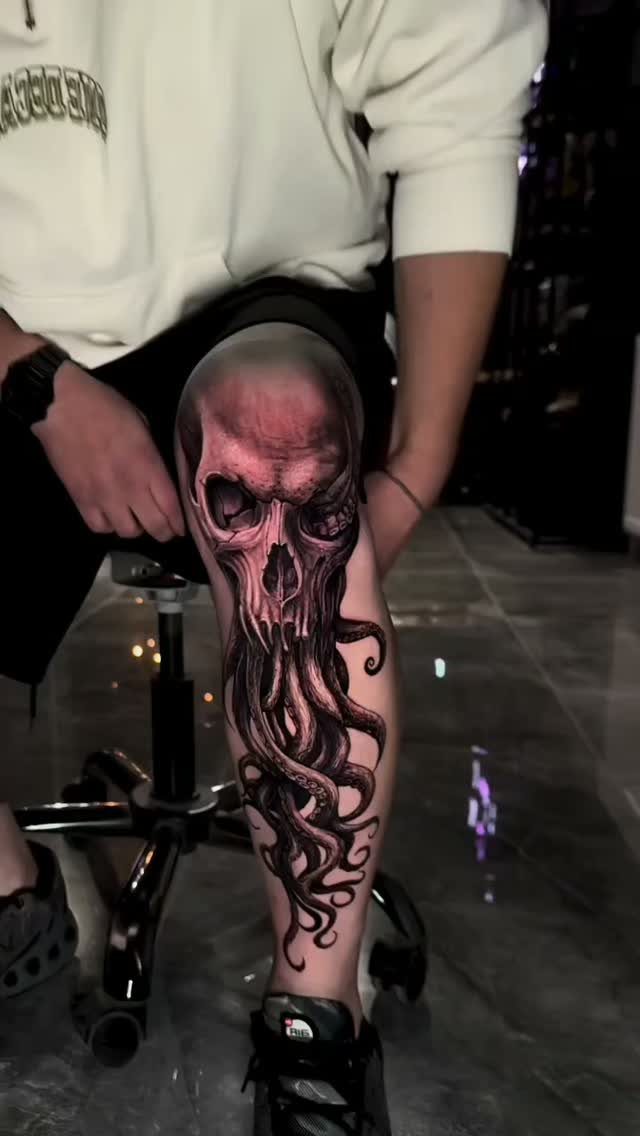
Knee and shin placement uses a painful canvas for maximum visual effect: the joint becomes the skull’s center, and the tentacles wrap the natural curve of the calf. This is not an easy sit.
Black and grey keeps the 2 creatures from competing; color would force a choice between bone and cephalopod that the eye does not need to make.
A cracked skull suggests age and pressure, which tentacles reinforce by appearing to pull it apart. That tension matters more than either element alone.
A bearded sea god is a possible variation, though the combination muddies the pirate theme.
Adding a third figure turns leg into mural, and murals need larger budgets and more sessions than most people plan for. The skull-octopus pairing already says everything about danger and the deep.

✔[FULL SLEEVE PIRATE SKULL TATTOO] Briyhose Skull Pirate Full Arm Temporary Sleeve Tattoos Can Cover Your Body Parts Large. It Contains 8 Sheets 18.9 * 6.7 Inch (48 * 17cm) Long Sleeves Pirate Fake Tattoo Stickers For Adults Men Women Tatto Kit. You Can Share It With Your Family And Friends.

【Large American Traditional Black Tattoo Stickers】Tazimi original 12 sheets of super large classic black adult temporary tattoo stickers, old-fashioned traditional tattoo stickers are designed for adults. These retro traditional American elemental tattoos are creatively designed by our artists and are 4.72*9.06 inches in size. These waterproof fake tattoos look very realistic, artistic, eye-catching, and make you shine like a star. Enjoy expressing yourself with these American old tattoos!

Pirate Glitter Tattoos Package Content: you will get 240 pieces of pirate glitter tattoos, each sheet contains 24 different styles of glitter pirate stickers, a total of 10 sheets; The abundant quantity and various patterns offer you many choices to choose the one you like for tattoos making
10. Jolly Roger
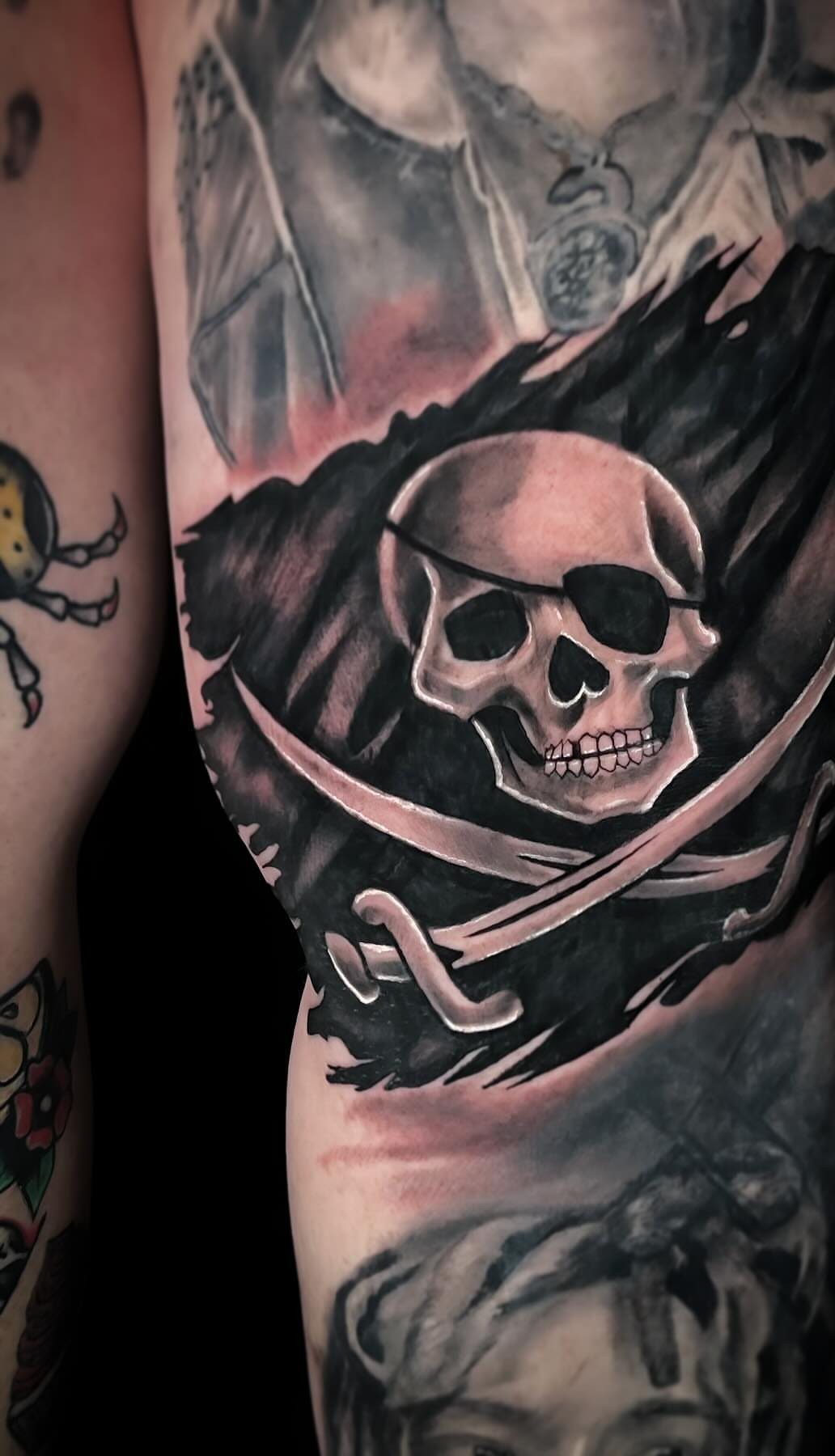
An eye patch on a skull is a small detail that does surprising work: it turns the universal symbol into a specific pirate, one who lost something to the life.
Crossed swords read more aggressive than crossed bones, which suits a flag meant to threaten.
Tattered edges on the flag fabric add motion and age; clean edges look like a decal.
Arm placement keeps it visible, though the Jolly Roger works anywhere a rectangular shape fits naturally: ribs, thigh, outer arm. Black ink is the only choice that makes sense; a colorful pirate flag reads as parody.
Compass and sailing elements can extend the design without changing its meaning.
Those belong on a larger piece, a chest or back where the flag can fly above a scene. On the arm, let the flag be the whole statement.

▶ Henna Tattoo Kit: 16 sheets tattoo stencils. airbrush tattoo stencils suitable for tattoo lovers. Experience the effects of tattooing without the pain of tattooing.

Package Included: Pack of 12 Sheets temporary tattoo stencils. All the designs are shown in the pictures. Only has tattoo template, no tattoo ink

【 575+ Fun Assorted Tattoo Stencils 】-The ChurlChurl tattoo stencils collection includes 575 high quality stencils with multiple themes. enjoy cute trendy tattoo stencil designs like butterflies, words, flowers, symbols, totem, Egypt style patterns and more.
Symbolism of Pirate Tattoos
Pirate tattoos carry meaning beyond the images themselves. The spirit behind them is adventure, freedom, danger, and rebellion, the same qualities that made the historical figure both feared and romanticized.
A Jolly Roger turns a nautical piece into a statement about lawlessness, not just travel. Skulls with tricorn hats mark a specific historical moment, the 17th and 18th centuries when piracy flourished in the Caribbean and Atlantic.
The compass and map elements tie the theme to navigation and self-direction.
Coordinates make the design personal; without them, the compass remains decoration. The kraken and octopus imagery adds danger from below, the unknown depths that sailors feared.
Placement Ideas
The chest and back offer the only canvas large enough for a full scene: ship, sea, and sky together.
These placements suit the kraken attack or a Jolly Roger flying above nautical elements. A chest piece spreads across pectorals with the sternum as a natural center line.
The ribs work for a flag design because the rectangular shape follows the body’s vertical lines. This is a harder sit than the chest; the skin moves with breathing and the bone sits close beneath.
The upper arm and outer arm carry single figures well: a portrait, a skull, a ship in profile. The wrist and behind the ear fit only the minimal nautical star, the simplest sailor mark.
The ribs are advanced placement for collectors who have already tested their pain tolerance elsewhere.
Color Schemes
Practical reasons keep black and grey at the top of pirate tattooing.
Fine lines in rigging, compass points, and map details hold their edges longer without color to blur. Bone reads as bone in greywash; color on skulls tends toward cartoon.
When color shows up, red and black are the usual pair. A skull with a red bandana reads softer than a black one, more pop-culture reference than historical figure.
The choice between black and grey and color is partly about aging and partly about which tradition you want to join: the sailor’s sparse palette or the carnival poster.