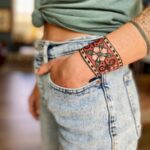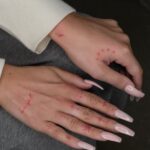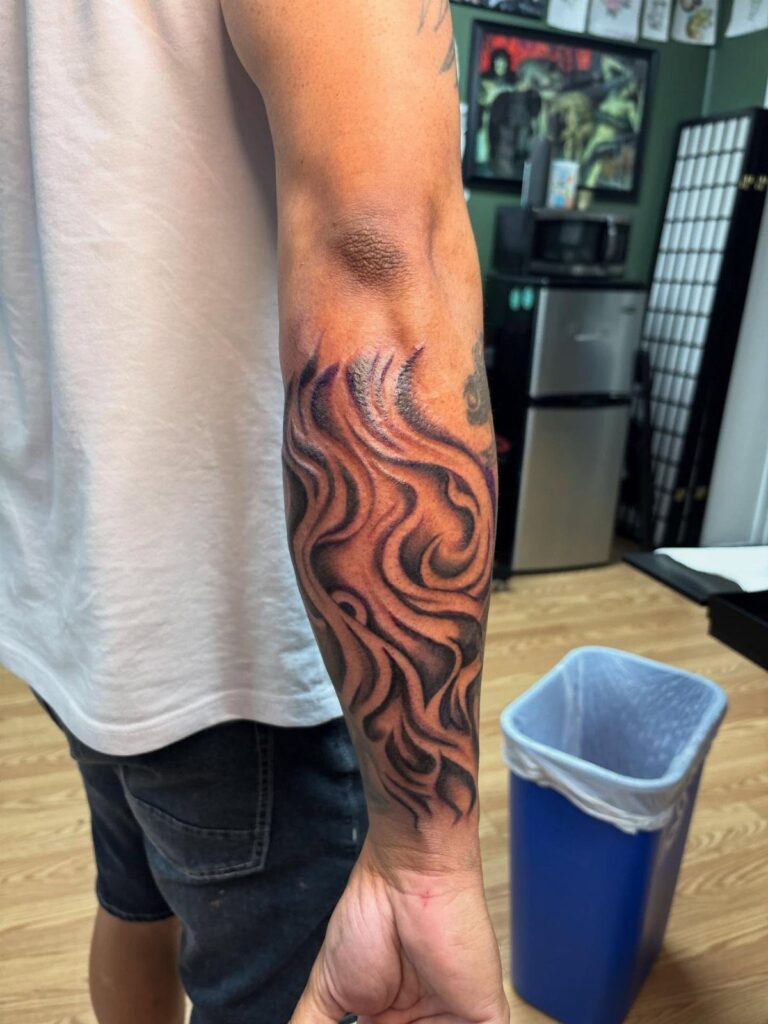
Tattoo filler ideas for men run from soft cloud shading to heavy black geometry, and the list below covers smoke, honeycomb, mandalas, skulls and flames, botanicals, stars and clouds, plus how placement and color change the whole look.
Smoke and botanical designs blend existing work together, while skulls with flames or honeycomb patterns turn empty space into its own statement.
[link-whisper-related-posts]1. Swirling Smoke Patterns
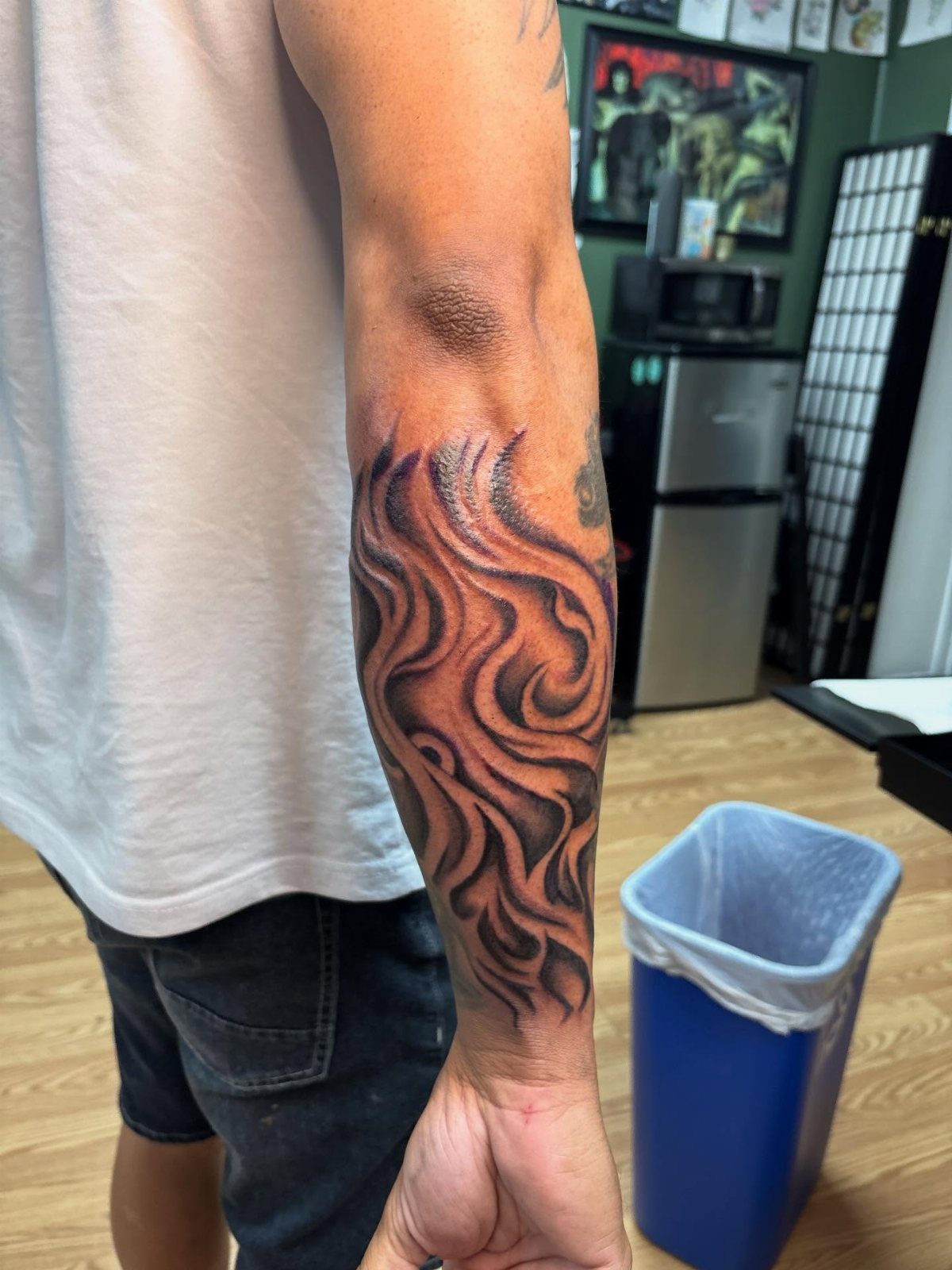
Smoke swirls work because they bend around whatever is already there.
A gap between a skull and a rose, the awkward inch above a wristband, the inside curve of an elbow where nothing quite fits; grey wash and tight black lines turn dead space into movement.
The back of the forearm is prime territory for smoke filler: the shape of the muscle gives the gray wash somewhere to travel.
Ask your artist for smooth gradients without hard edges, since smoke that ends abruptly reads as a sticker instead of atmosphere. Solid black at the source, fading to skin, keeps it readable from across the room.
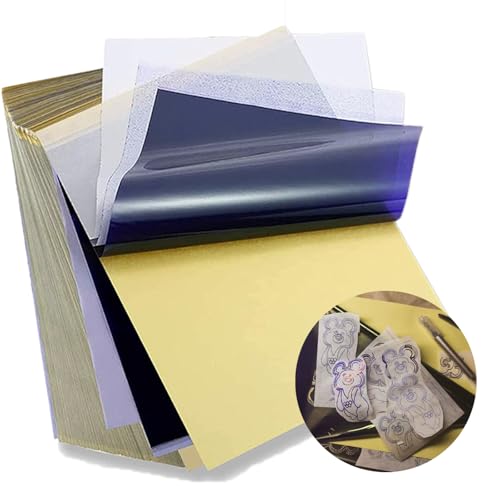
Standard size: Tattoo Transfer Paper is standard A4 paper size, each measures 8.27 in X 11.69 in. There are 4 levels in total. The thickness of the paper is very light and smooth to the touch.
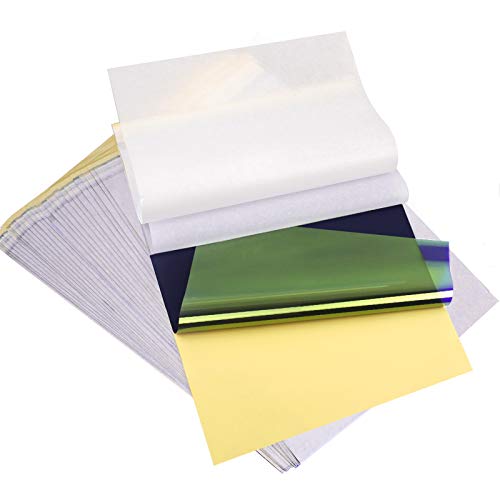
ADVANCED MATERIAL: Tattoo transfer paper is made with the high quality dyes and stencil paper. Transfer marks are very clear, clean and smooth. Tattoo transfer paper kit come with 35 sheets. Great for tattooing, trace and transfer images onto the body.<br>

2. Honeycomb Patterns
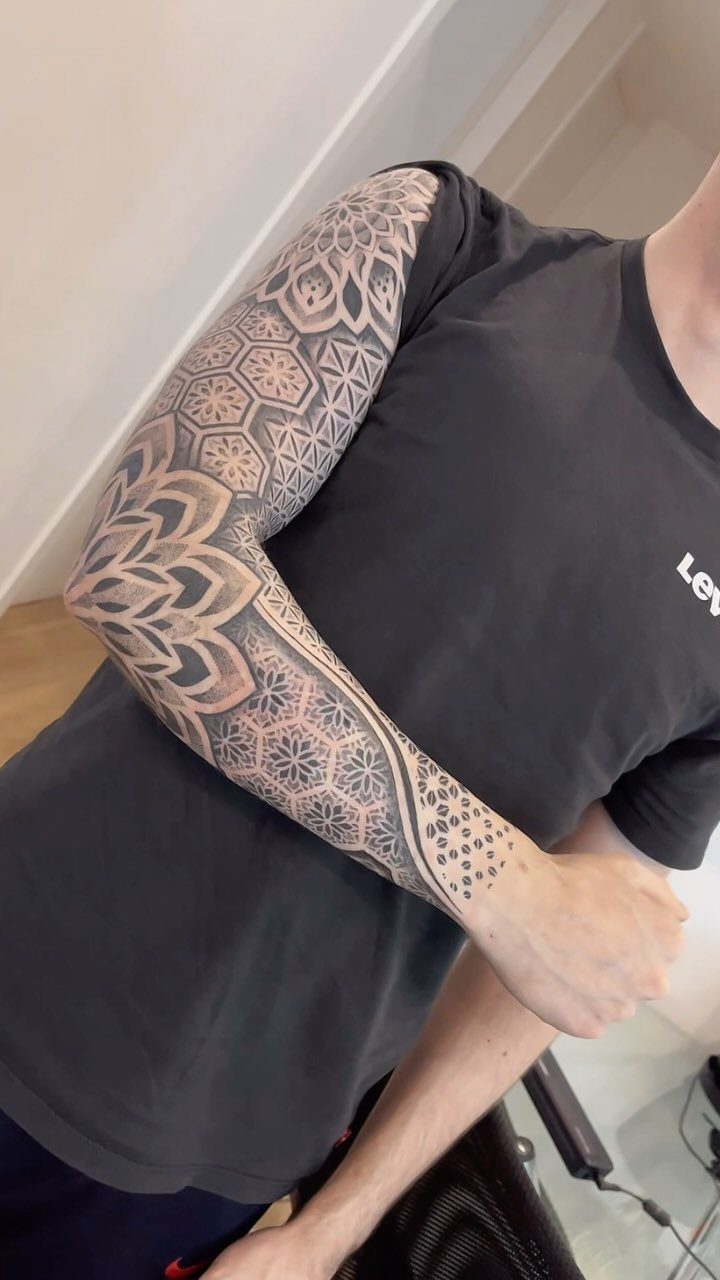
Sacred geometry sleeves need planning, but the honeycomb sections are what hold the whole thing together. The visible arm pairs hexagons with mandala centers and dotwork shading that softens the hard lines.
Dotwork takes longer than solid fill, expect multiple sessions if you are covering a large area. What I like about this approach: the pattern scales to any gap.
A single hexagon fills a knuckle, a cluster of them bridges shoulder to elbow. Thick black bands at the wrist and upper arm frame the geometry so it does not float.

Package Content: You will get 10 pieces honeycomb bee stencils with 10 different honeycomb size options, and provided 2 sizes of the stencil, the large stencil is measure 11.8x11.8 inch, the small stencil is measure 5.9x5.9 inch!

Package Includes: You will receive 20 sheets reusable tattoo stencils, enough quantity to meet your daily requirements. The mehndi stencils are suitable for airbrush painting, glitter tattoo, and so on.

Thin, flexible Mylar stencils perfect for face and body painting
3. Black Ink Mandalas
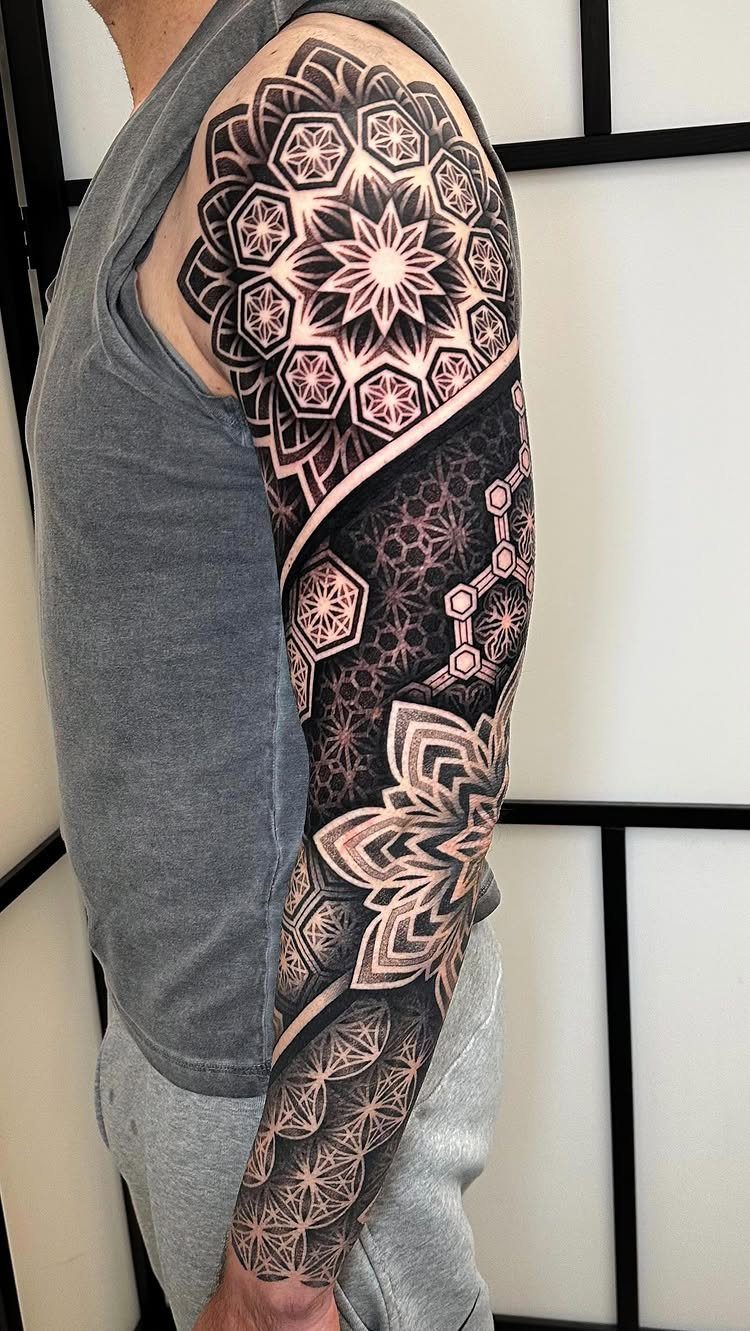
Mandalas read as complete objects, which makes them tricky as filler unless you break the symmetry.
Partial mandalas at the edges work best, with petals that flow into the next piece instead of closing the circle. Botanical elements help here: leaves and vines extend the geometry into surrounding space so nothing looks boxed in.
If your existing work is already busy, stick to open mandalas with negative space at the center; a solid disk will fight for attention with whatever sits next to it.
Fine line for the detail, heavier outline to keep it legible as it ages.
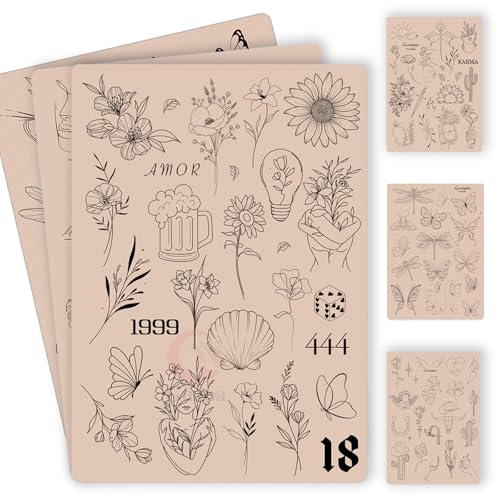
100+ Pre-Printed Designs – Features a wide variety of fine line and tiny tattoo stencils to enhance detailing skills.

Premium Quality 1.5mm Silicone Material – Crafted from premium 1.5mm thick silicone, this tattoo skin offers a true-to-life feel with excellent durability and a smooth surface for effortless needle movement during practice.
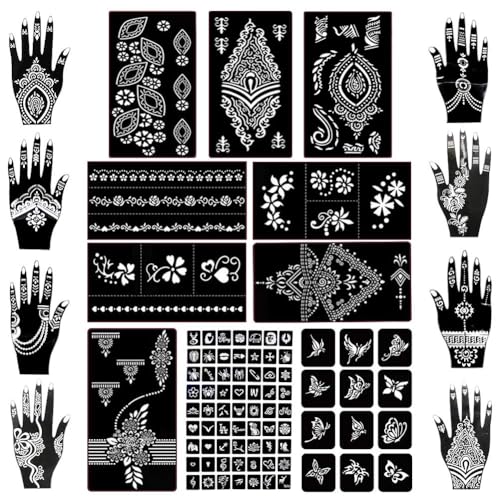
97 HENNA TATTOO DESIGNS IN 18 SHEETS:Includes 8 hand stencils, 8 rectangle flower pattern sheets, and 2 small pattern sheets. Features butterflies, flowers, roses, mandalas, paisley, and traditional Indian/Arabian mehndi designs. Perfect for creating stunning body art for weddings, festivals, and summer celebrations.
4. Skulls and Flames
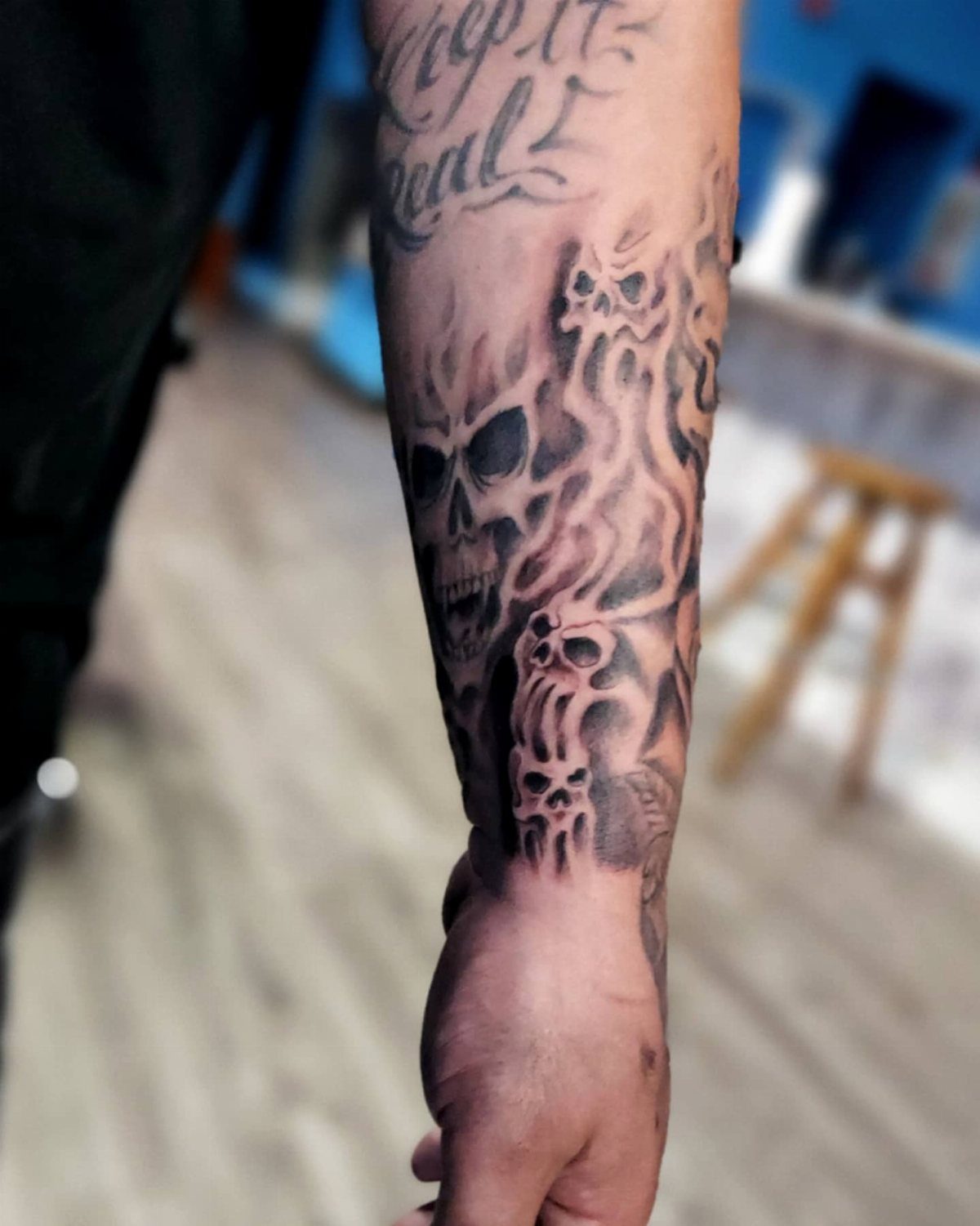
Skulls with flames or smoke hit a specific mood that not every sleeve needs, but when it fits, nothing else substitutes.
The forearm piece shows skulls dissolving upward into dark flow, which solves a common problem: how to transition between a heavy subject and lighter work above it.
Smoke softens the exit; flames make it aggressive. Either way, the skull needs enough solid black to hold its shape from a distance.
This reads best on arms and legs where the vertical flow follows the body. On a chest or back, the same design loses its direction.

Delicate design: skull stencils for painting include flame,skeleton hand finger,skull, unique designs for decorating to create an horrible artistic atosphere.

【Material】: Made of PET plastic, durable and flexible, cut with laser in a clean and smooth way, washable and reusable

171 PCS Different Styles Halloween Tattoos Stencil: Our hallloween temporary tattoo stencils sheet comes with 171 different hallloween design such as pumpkin lamps, black cats, skulls, wizards, witch hats, ghoost, witch, Spider Web, Skeleton more halloween Style in 12 sheets A5 size. Perfect for couple halloween party and decoration.
5. Botanical Designs
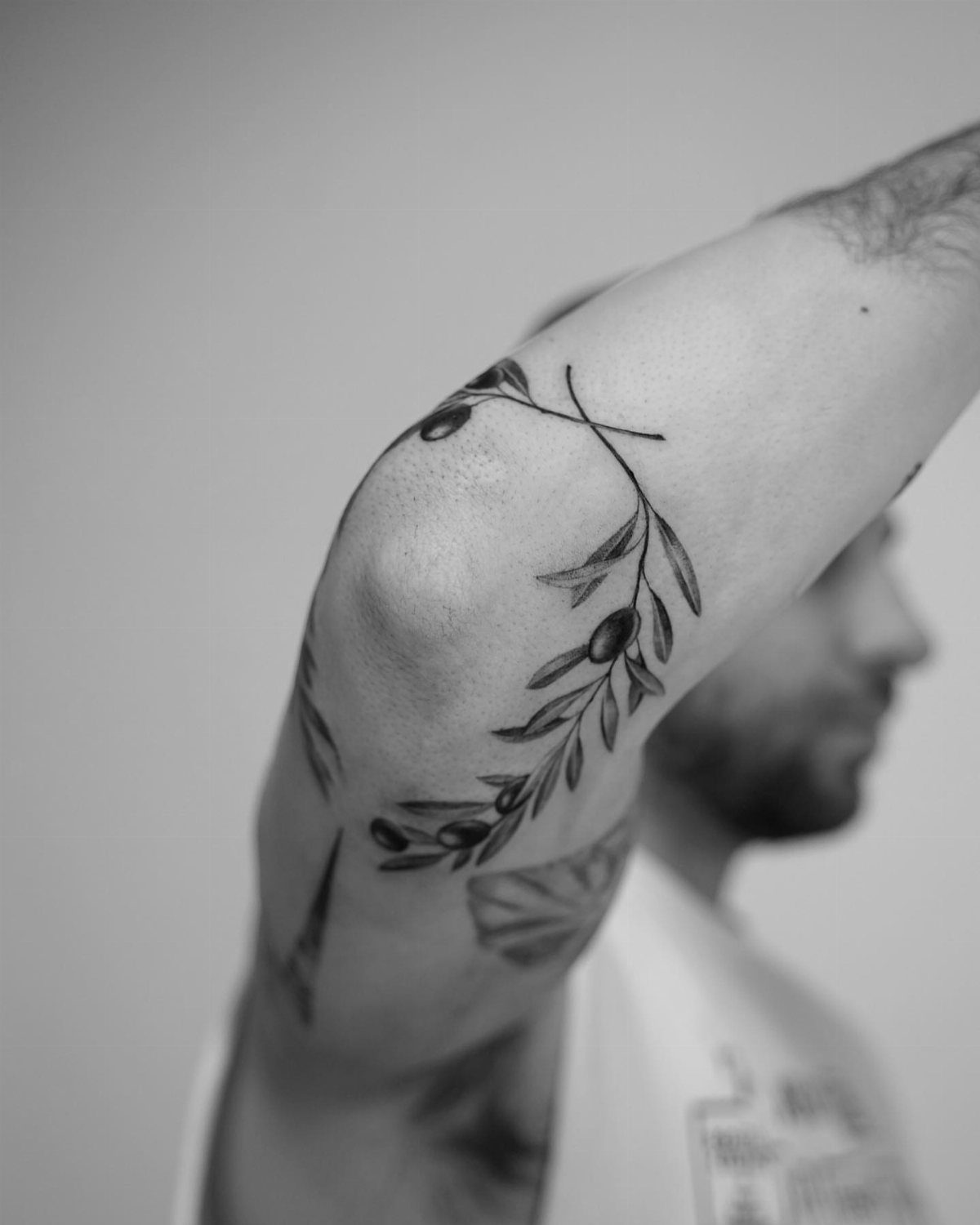
Botanical filler is the choice when you want the gap to disappear rather than announce itself. Olive branches curve with the body instead of fighting it, which makes them a solid choice for elbow filler.
Leaves and small flowers thread between existing tattoos, connecting separate pieces into something that feels planned. The stippled shading in some botanical work gives texture without the weight of solid black, which matters if your arm is already crowded.
Ask for flowing lines that echo the shapes already on your skin; a branch that ignores your existing roses will look like exactly what it is, a patch.

【 575+ Fun Assorted Tattoo Stencils 】-The ChurlChurl tattoo stencils collection includes 575 high quality stencils with multiple themes. enjoy cute trendy tattoo stencil designs like butterflies, words, flowers, symbols, totem, Egypt style patterns and more.

You will receive: there are 12 pieces of moon and star stencils in different styles, which include many kinds of stars, moon, clouds and so on; You can choose these stencils as you need, and you can also share with your friends, your sisters, your brothers and so on

VARIETY OF OPTIONS - This set of temporary tattoo stencil includes 262 different theme patterns. butterfly, mermaid, flower,pirate,animal,shark,crown, dinosaur etc daily kid’s favorite design, also have like as pumpkin, spider, bat, skull, snowflake, etc Halloween, Christmas festive Style in 14 pages A4 size.
6. Stars and Clouds
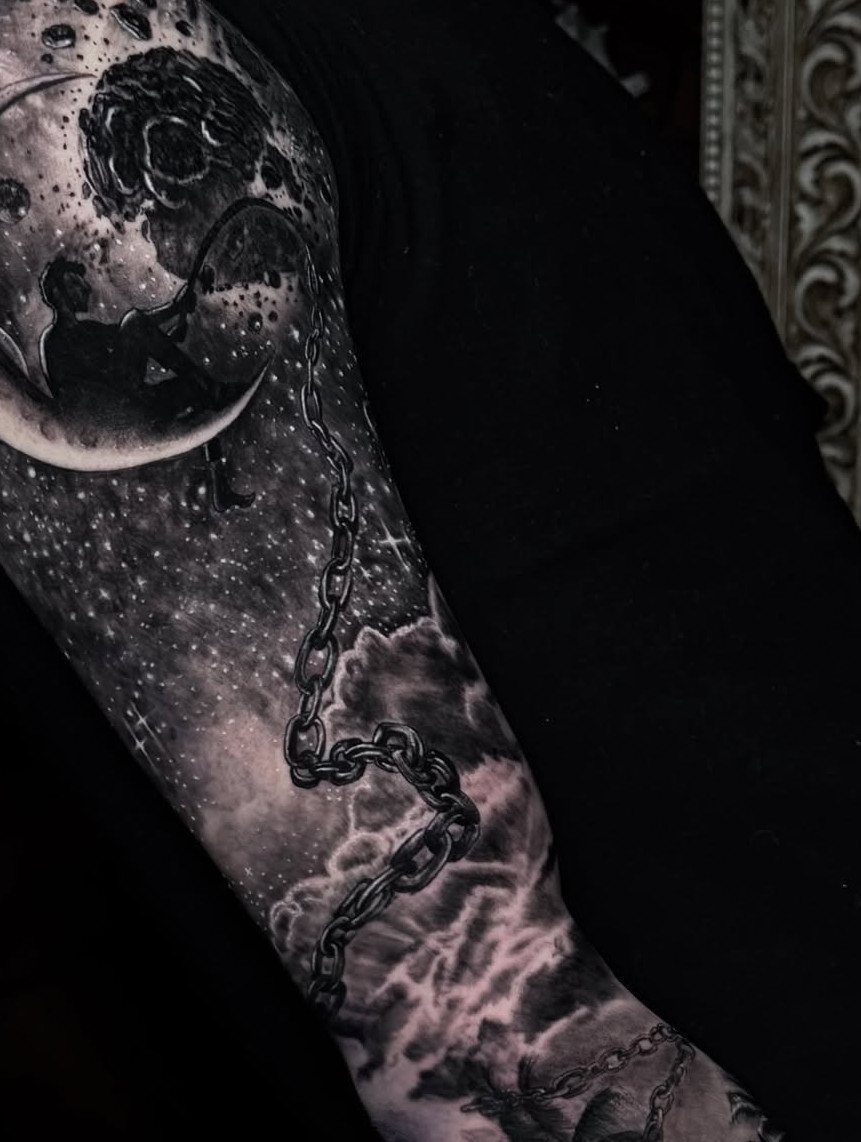
Stars and clouds read as night sky, which sounds limited until you see how many gaps it can fill.
Soft cloud shading with four-pointed stars and tiny dots for depth is a standard combination that leaves room for a central figure or moon. Cloud edges need to stay soft; hard outlines turn them into cotton balls.
Stars work at any scale, from single needles for distant points to bold solids for the bright ones. This suits collectors whose main pieces are narrative or figurative, since the filler becomes atmosphere rather than competition.

Warm Tips: The tattoo transfer paper need to work with transfer medias.You will need to purchase the stencil ointment separately. Apply the design made on the master paper. Please pay attention to press the back side of the pattern to the skin for at least 3 seconds

Precision Transfers & Long Lasting: Tattoo stencil paper delivers vibrant, high-definition transfers even for intricate designs. Creates crisp, dark lines that transfer cleanly to skin (clearly on different skin tones) which are easy to follow during tattooing. The carbon layer made from high-quality dyes ensures sharp outlines without smudging or fading and maintains crisp lines visibility throughout long tattoo sessions, so you can focus on creating art instead of re-drawing lines

【100pcs Tattoo Stencil Paper Kit】Tattoo Stencil Paper kit come with 100 sheets tattoo stencil paper. 4 Layers of transfer paper includes the master sheet, transparant protective sheet, blue carbon sheet and yellow backing sheet, size approx. 8 1/4" x 11 3/4" which can be cut down into smaller sheets for more use.
Meaningful Tattoo Fillers
Filler can turn separate pieces into a single story if you choose symbols that already matter to you.
A stone-textured sun calendar bridging a Mesoamerican deity mask and a geometric tribal band ties the whole arm to heritage rather than decoration.
I have seen sleeves where every gap carries something significant and the eye has nowhere to rest; the meaning drowns in its own weight.
If your existing ink is already narrative-heavy, consider letting one or two gaps stay purely visual. A dotwork pattern or stippled botanical flower can provide breathing room between symbols that carry weight.
The connection does not always need to be explicit. Sometimes a shared texture, stone against stone or feather against feather, does more storytelling than another named symbol squeezed in.

▶ Henna Tattoo Kit: 16 sheets tattoo stencils. airbrush tattoo stencils suitable for tattoo lovers. Experience the effects of tattooing without the pain of tattooing.

Honeycomb Bee Stencil: This package comes with bee theme stencils in different styles,different bee stencils for you to DIY your art projects.

Product Kits: You will receive 12 A4 sheets featuring 142 unique henna tattoo stencils patterns including butterflies, flowers, words, symbols, totems and egyptian designs. Our versatile temporary tattoos adult with stencils collection offers something for every taste with its wide variety of artistic models.
Placement Considerations
The inside curve of the elbow and the ditch of the knee are the hardest gaps to fill well; skin there moves constantly and stretches unevenly.
Smoke or cloud patterns suit these spots because soft edges forgive distortion better than geometry. The back of the forearm offers the opposite problem: stable skin but a long, flat plane that can look segmented if fillers do not flow.
Vertical elements, flames or dissolving skull shapes, follow the muscle line and keep the eye moving. Wrist and upper arm bands frame whatever sits between them, so plan the band before the filler if both are coming.
A band added after the fact often traps existing work in a space that looks too small or too large by accident.
Knuckles and fingers need the opposite approach: single small motifs, one hexagon or one star, since complex filler there blurs within months from sun and abrasion.

18 Sheets with high-quality 3 layers PVC henna hand stencils; Safe,Washable and Non-Toxic.Beautiful, Stylish, Easy to Use, Size: 21cm x 12cm/8.2" x 4.7"

142+ Nature-Inspired Tattoos Stencil Designs in 12 Sheets: This temporay tattoo template set features over 142 unique, delicate designs centered on enchanting botanical and natural elements. Discover a vast collection of flowers (daisies, roses, sunflowers, lavender), intricate leaves, winding stems, complete bouquets, elegant wreaths, crowns, bees, and butterflies. Perfect for creating floral temporary tattoos, henna-inspired patterns, and nature-themed body art.

[Tattoos Stencils Kit]: 40 sheets Ramadan style tattoo stencils featuring moon,star, butterfly,floral,lamp design. Enough quantity and different pattern for you unleash your creativity and adorn yourself with beautiful henna designs. Variety of options to meet your every need.
Color Choices
Black and grey dominate filler for a practical reason, not just fashion.
Existing blackwork stays readable longer when the filler shares its value range; a bright red mandala dropped between healed black pieces can look like it belongs to a different arm entirely.
That said, a single controlled color can work as punctuation. A dark blue night sky behind black stars and clouds reads as depth rather than contrast for its own sake.
The danger is temperature: warm colors, orange flames or red roses, advance visually and can make nearby blackwork look flat or faded by comparison.
If your sleeve is already color, match the saturation level of the filler to what surrounds it. Color filler also means more touch-ups over time, since colored pigments fade faster than black on high-friction areas like forearms and calves.
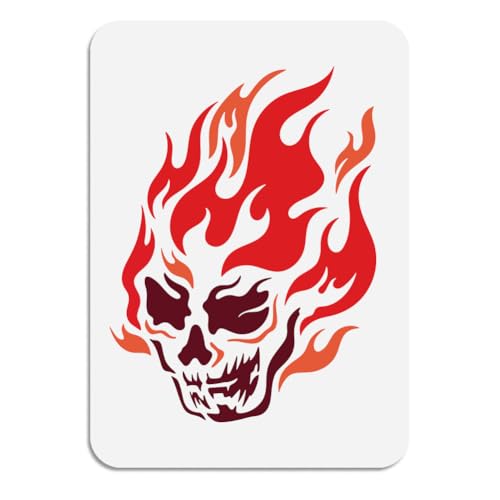
Fire Skull Stencil: Made of premium plastic, washable and reusable, flexible and durable, not easy to break, did not bend or rip after being used multiple times
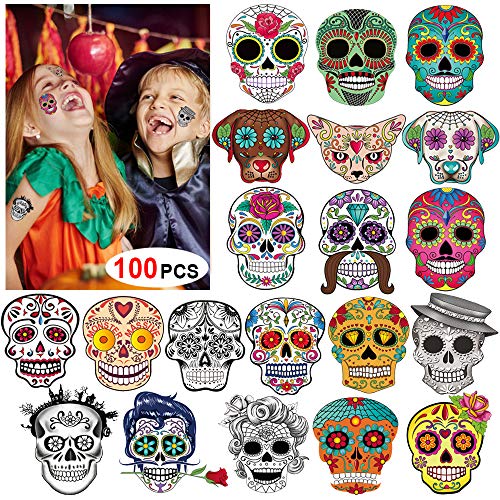
You will receive 25 sheets totally 100pcs in 20 different designs day of the dead skeleton face temporary tattoo face kit, black white blue pink brown gold silver fluorescence multicolor apply in to create more interesting experiences and celebrate life! each pattern measures 4.6*4.6cm/ 1.82*1.82inch , one size fit all girls boys kids Women Men Adult and Kids

192 PCS Different Styles Tattoos Stencil: Our hallloween temporary tattoo stencils sheet comes with 192 different hallloween design such as pumpkin lamps, black cats, skulls, wizards, witch hats, ghoost, witch, Spider Web, Skeleton more halloween Style in 12 sheets A5 size. Perfect for halloween party and decoration.
Frequently Asked Questions
What is a good filler for tattoos?
Smoke swirls, honeycomb patterns, partial mandalas, botanical designs, and stars with clouds all work well, depending on what surrounds them.
Smoke bends around existing pieces, honeycomb scales to any gap size, and botanical elements connect separate tattoos into something planned. The best choice matches the flow and weight of the ink already on your skin.
What tattoos do girls like on guys?
Preferences vary enough that no single filler style guarantees appeal.
Meaningful symbols tied to your own heritage or story read as more than decoration, and sleeves with breathing room between heavy narrative pieces tend to hold up better over time than arms crowded with significance.