Chicano tattooing runs from a single name in script to a full back piece of Aztec stone and eagle warriors, and what decides which one fits you is how much of your own story you are ready to wear permanently.
The style was built in prison yards with soot and toothpaste for ink, a single needle, motors pulled from tape players; that scarcity is why black and grey still carries the weight it does.
[link-whisper-related-posts]1. Portraits of Women
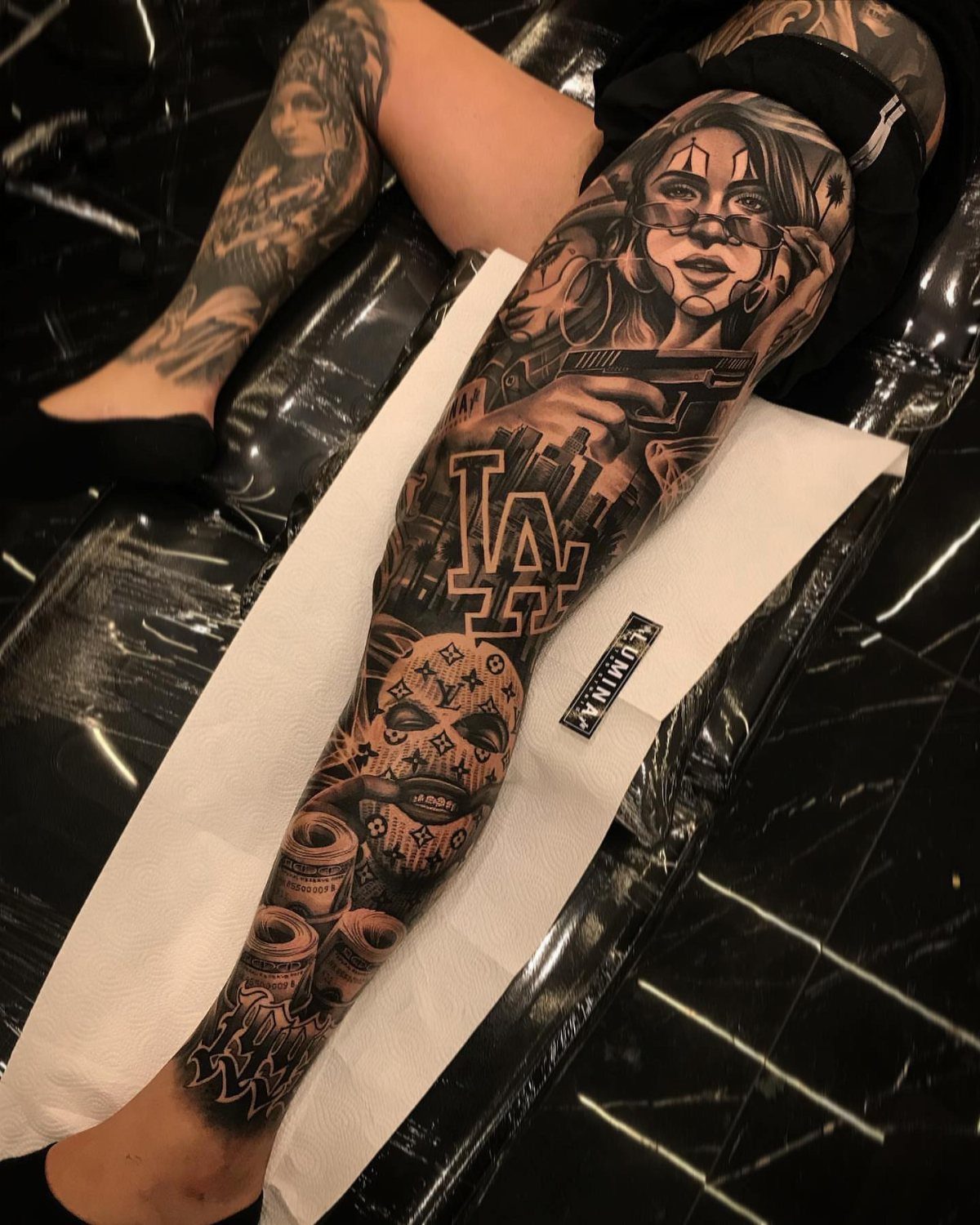
The woman in these pieces is rarely a specific person; she is an archetype, the Madonna and the street queen merged into one image.
Black and grey shading carries the whole weight, no color needed, because the contrast between her soft face and the hard objects around her does the work.
I would ask for smooth gradients on the skin, not dotwork, since Chicano portraits live or die on how real the flesh looks.
A blindfold or a bandana lets the artist hide the eyes, which is a relief if you worry about the likeness feeling off.

Clean, Flawless Transfers: Your artwork will look so clean once transferred to the skin with the Stencil Stuff gel! Gentle on the skin, Stencil Stuff transfer solution helps you achieve clear and sharp tattoo stencil transfers every time!

171 PCS Different Styles Halloween Tattoos Stencil: Our hallloween temporary tattoo stencils sheet comes with 171 different hallloween design such as pumpkin lamps, black cats, skulls, wizards, witch hats, ghoost, witch, Spider Web, Skeleton more halloween Style in 12 sheets A5 size. Perfect for couple halloween party and decoration.

【 575+ Fun Assorted Tattoo Stencils 】-The ChurlChurl tattoo stencils collection includes 575 high quality stencils with multiple themes. enjoy cute trendy tattoo stencil designs like butterflies, words, flowers, symbols, totem, Egypt style patterns and more.
2. Sugar Skulls
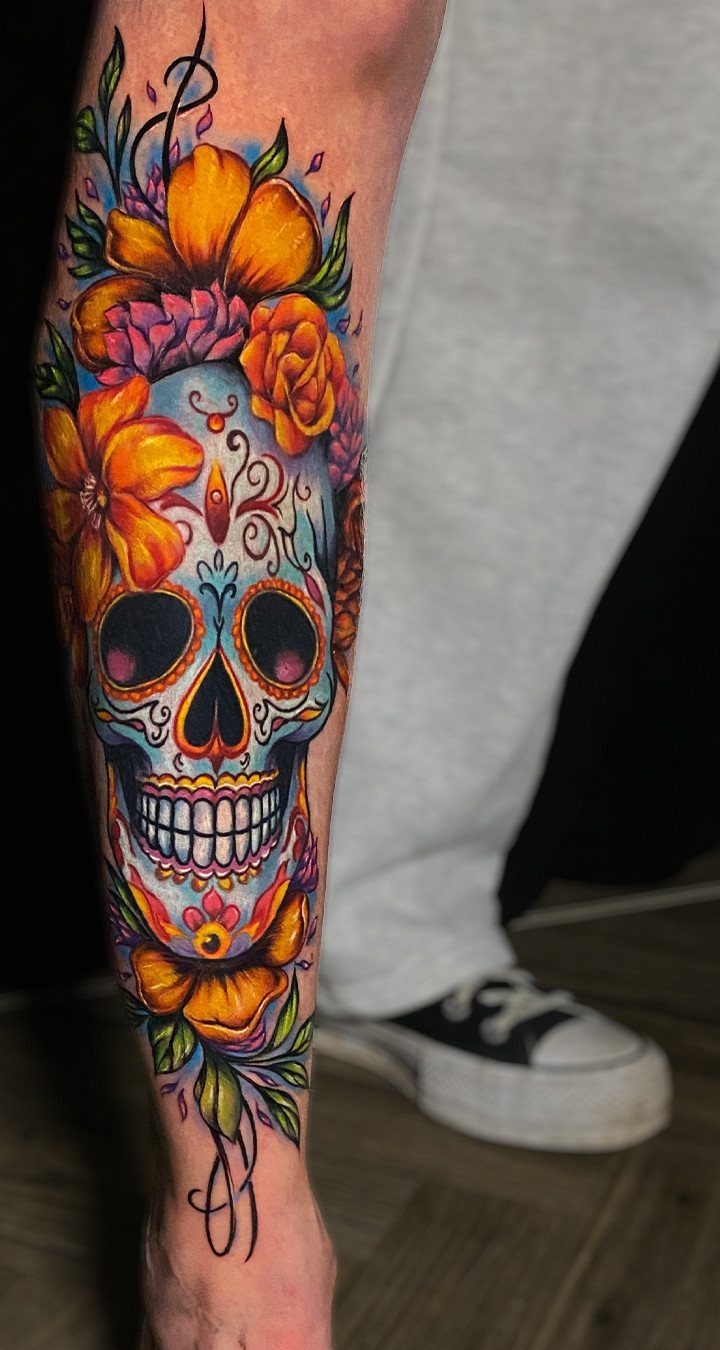
Sugar skulls give you a way to carry Day of the Dead memory without a literal gravestone on your body.
The face paint pattern is what makes it read as Chicano rather than generic skull art: the spiderweb on the forehead, the petals around the eyes, the scrollwork on the jaw.
Color is traditional, though I have seen strong black and grey versions that let the linework speak. If you pair it with a woman’s portrait, decide which element leads; two focal points fight each other unless one is background.

ABUNDANT QUANTITY: Our Day of the Dead sugar skull tattoos costume,Halloween sugar skull temporary face tattoos, include 20 sheets, 2 different styles, Including 8 large sheets halloween temporary face tattoos, measures 21*15cm(8.3*5.9inch), and 12 sheets sugar skull tattoo, measures 6*6cm/(2.4*2.4inch), sugar skull makeup kit, day of the dead skeleton face temporary tattoo, enough to share with friends
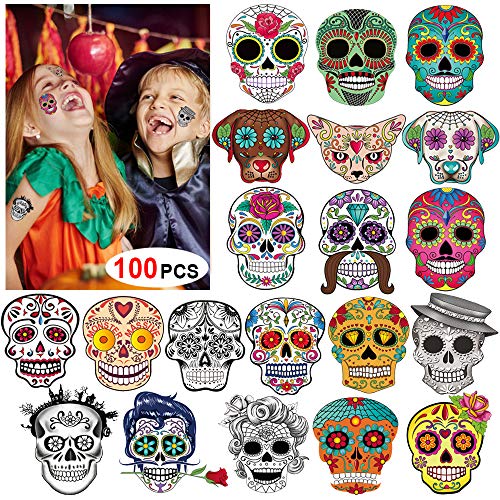
You will receive 25 sheets totally 100pcs in 20 different designs day of the dead skeleton face temporary tattoo face kit, black white blue pink brown gold silver fluorescence multicolor apply in to create more interesting experiences and celebrate life! each pattern measures 4.6*4.6cm/ 1.82*1.82inch , one size fit all girls boys kids Women Men Adult and Kids

❥DERMATOLOGICALLY TESTED, GMP MADE: Applied formula passed independent 30-person skin patch testing with zero reactions; produced in an FDA-registered, ISO 22716 GMP-certified cosmetics facility — the same standard as skincare brands.
3. Lowrider Cars
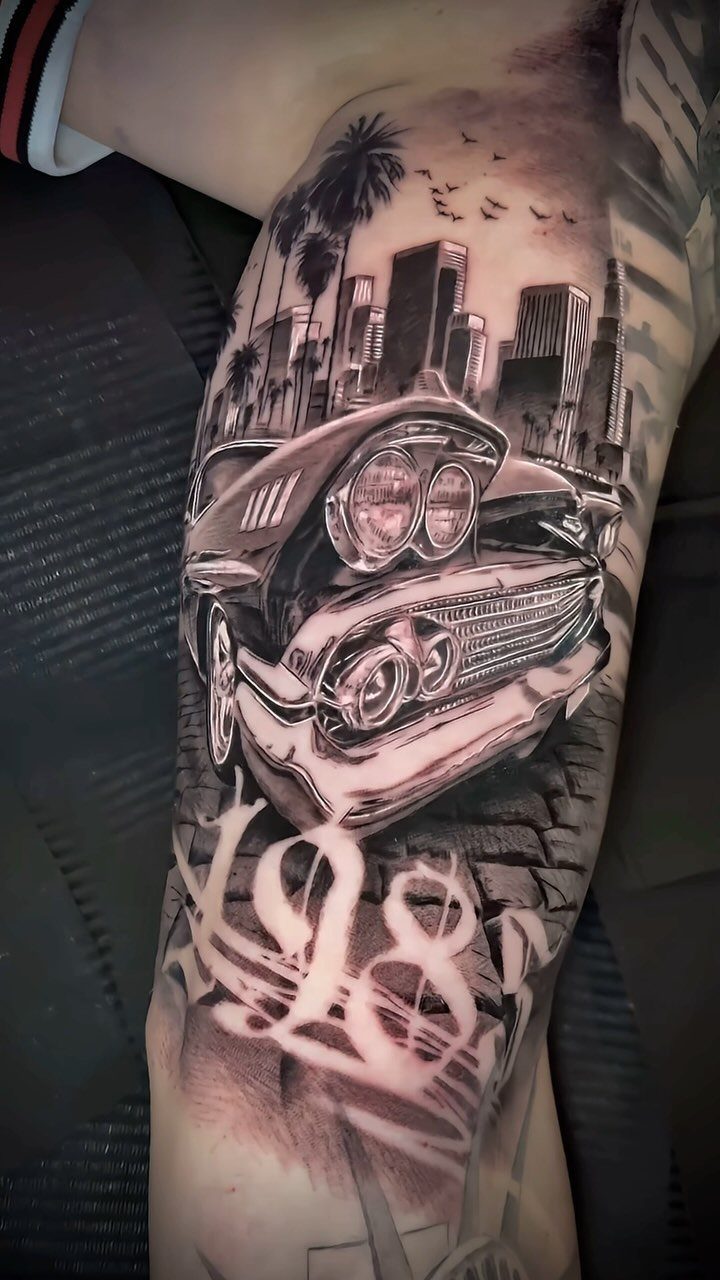
A lowrider in a tattoo is never just a car. It is the Chevy Impala, the Riviera, the exact year and model your uncle lowered in his driveway.
The artist needs to nail the suspension stance, the wire wheels, the reflection in the chrome; a car that sits wrong kills the piece.
Background matters too: palm trees for LA, the grid of streets, maybe a figure leaning on the hood. I would budget extra time for this, since mechanical detail eats hours.

Features a cropped lowrider rear quarter panel with hydraulic stance and oversized wire-spoke wheel in stencil tattoo-flash style

Features a cropped lowrider rear quarter panel with hydraulic stance and oversized wire-spoke wheel in stencil tattoo-flash style

Features a cropped lowrider rear quarter panel with hydraulic stance and oversized wire-spoke wheel in stencil tattoo-flash style
4. Chicano Lettering
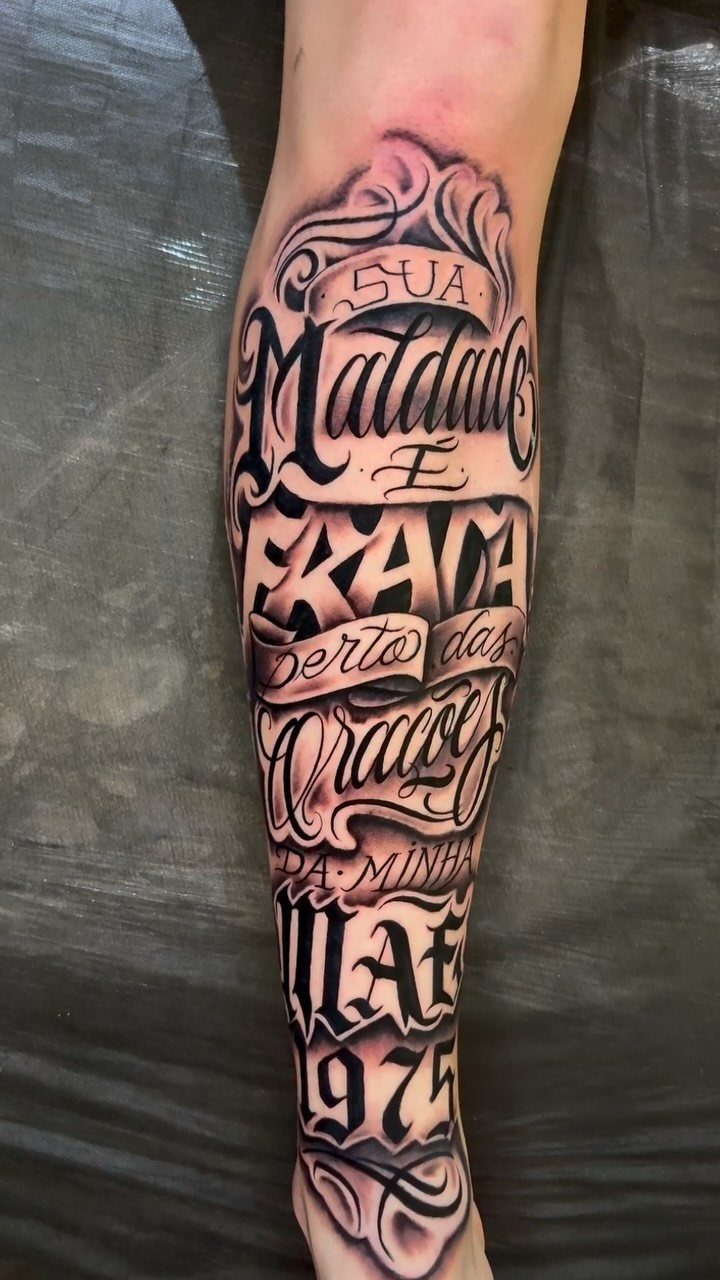
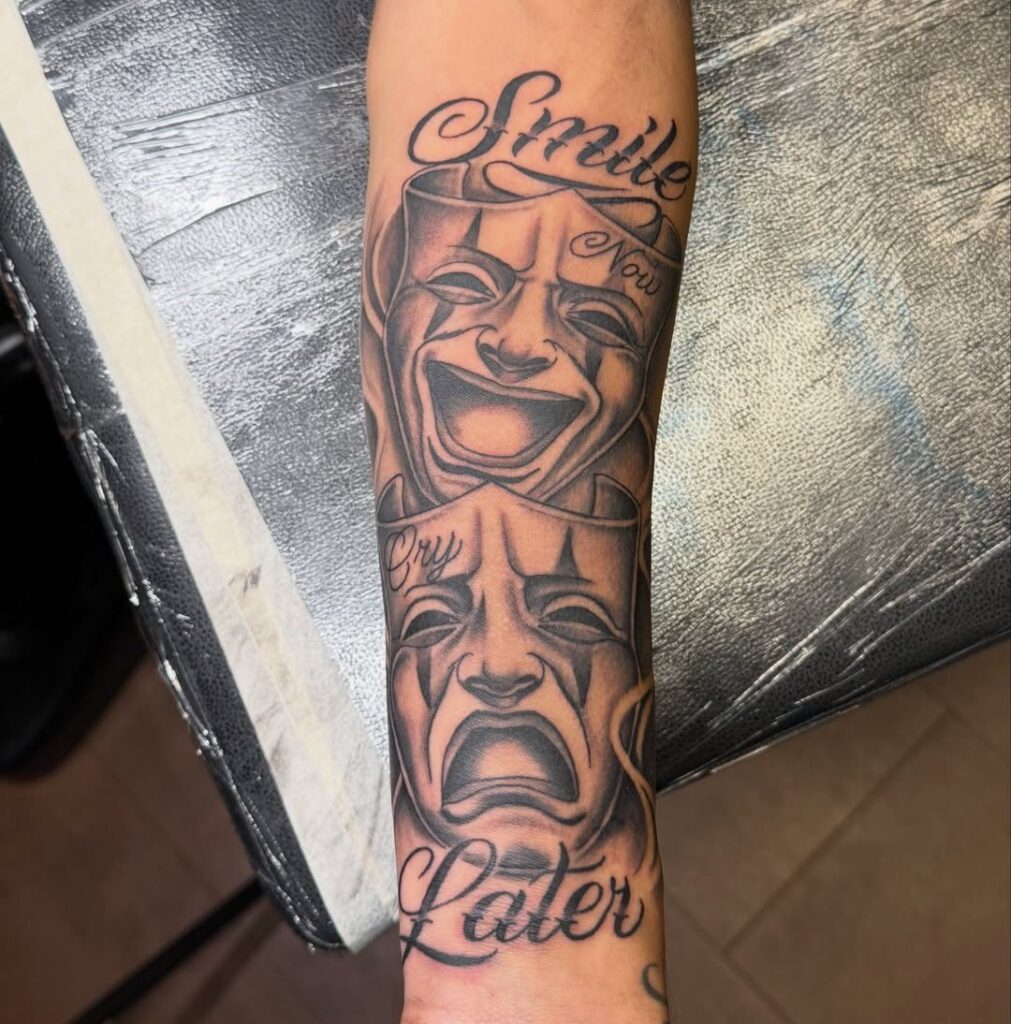
Chicano lettering is its own script, not just fancy writing. The letters swell and taper like brushstrokes from a sign painter’s hand, with sharp points where they meet and shadows dropped to one side.
Banners and scrolls give the words a frame, and the phrases are usually personal: a name, a date, a warning.
Spanish fits the style’s roots, though English works if the letterforms stay true. I would have the phrase finalized before the stencil goes on; these letters do not forgive a last-minute change.

Ample quantity: you will receive exquisite French script stencils in 10 different styles, 1 piece for each style, together with a metal storage ring, 11 pieces in total, sufficient in quantity to meet your DIY crafts requirements on various occasions

Package contains: You will receive 6 pieces French script stencils in different designs, and each stencils size is measures about 11.8 x 8.26 inches. These French writing stencils are good for making DIY crafts and home decor.

What you can receive: there are 8 pieces of alphabet letter stencils, which are available in 4 different fonts, and each font includes capital letters, lowercase letters, numbers and punctuation; The abundant quantity and various styles can efficiently satisfy your painting needs in daily life
5. Cultural Symbolism
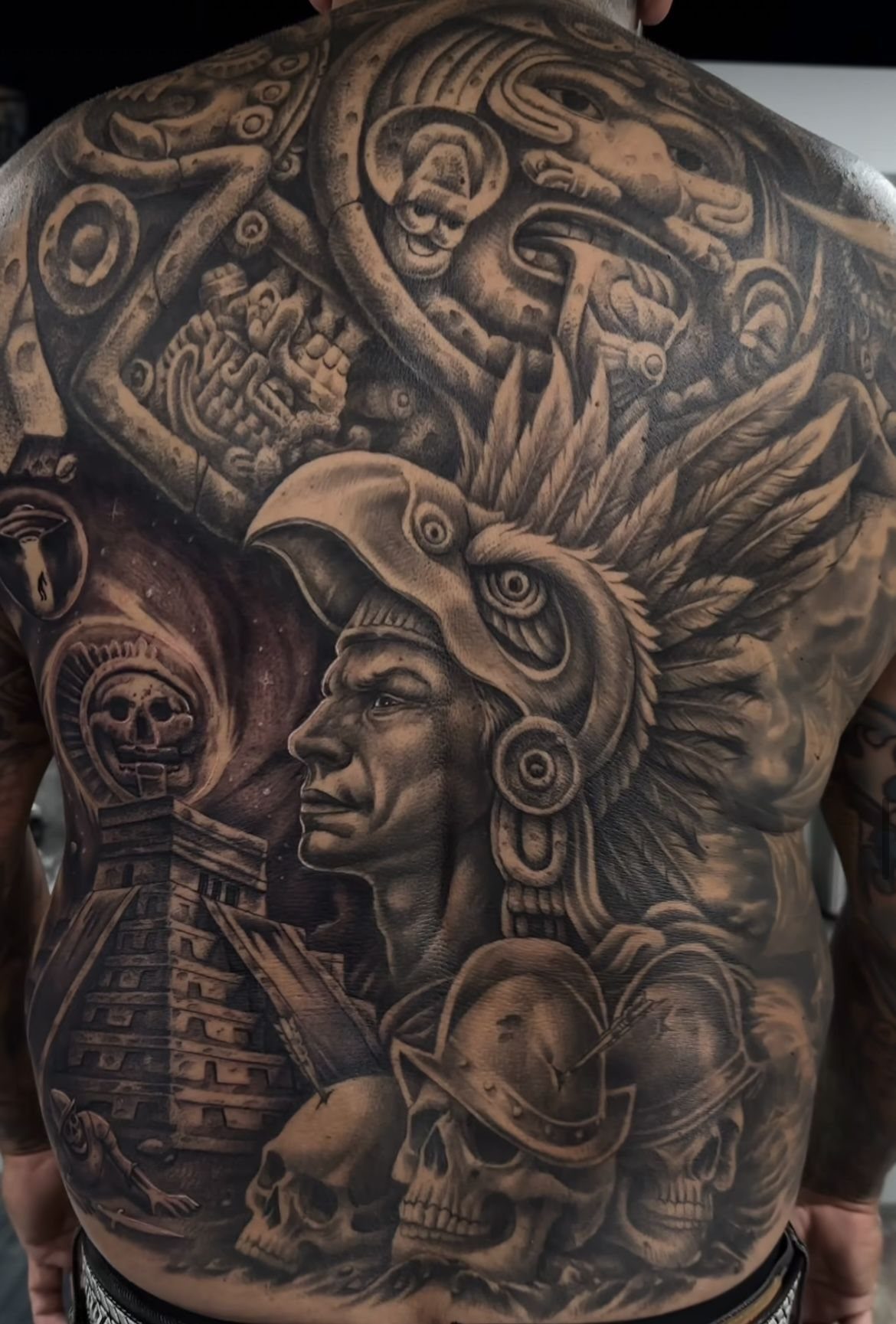
Aztec imagery in Chicano work is reclamation, not costume. The eagle warrior, the step pyramid, the sun stone; these are ancestors claimed against a history that tried to erase them.
A full back piece lets you build a world with depth, stone texture against skin, the weight of helmets and skulls.
The alien motif I have seen added is newer, a joke or a conspiracy layer depending on who wears it.
I would research the symbols before asking for them; wearing a warrior you have not earned reads wrong to people who know.

Movie quality effect

Quantity Included: 5 sheets x 8 = 40 temporary tattoos
Chicano Tattoo Significance
Chicano tattooing started in prison yards, built from whatever artists could get: a single needle, a motor from a tape player, ink made from soot and toothpaste. That scarcity shaped the style.
Black and grey was not an aesthetic choice at first; it was the only option, and it stuck because the technique turned out to carry emotion better than color for the subjects people wanted: family members lost to violence or distance, religious figures, the neighborhood itself.
The work is autobiography written on skin.
A portrait of a woman might honor a mother who kept the family together, or it might stand for the idea of womanhood as strength. The clown faces, the guns, the smoke: these are not decorations.
They map what the wearer survived, what they lost, what they refuse to forget. The style spread from East Los Angeles to Texas, New Mexico, Arizona, following the same migration paths the families had already traveled.
If you are not from this history, the question is not whether the art is beautiful.
It is whether you are borrowing a language or learning to speak it with respect. I would start by knowing what the symbols mean to the people who made them, not just what they look like on a Pinterest board.

Package Includes: You will receive 20 sheets reusable tattoo stencils, enough quantity to meet your daily requirements. The mehndi stencils are suitable for airbrush painting, glitter tattoo, and so on.

▶ Henna Tattoo Kit: 16 sheets tattoo stencils. airbrush tattoo stencils suitable for tattoo lovers. Experience the effects of tattooing without the pain of tattooing.

⯁ 400+ Reusable Henna Stencils: Get 24 sheets of high-quality, self-adhesive hollow templates featuring over 400 unique patterns. These temporary tattoo stencils allow you to create stunning body art including mandalas, butterflies, and dragons. Perfect for practicing techniques without permanence
Tattoo Placement
The forearm is the classic placement for Chicano work, and for a reason: it is visible enough to show, easy enough to hide under a long sleeve.
A portrait there reads at conversation distance, which is where you want someone to see the detail. The hand is harder.
Skin on the knuckles and fingers sheds ink faster than almost anywhere else, and a Chicano hand piece needs to hold its lines to read at all. Budget for touch-ups, probably more than one.
A full sleeve lets you build narrative: the portrait at the shoulder, the car or the lettering rolling down toward the wrist, background filling the gaps.
The calf works for larger pieces if you do not want the arm committed, though pants hide it more completely than a shirt hides an arm.
The chest or back gives you a canvas for the Aztec imagery, the pyramid steps, the eagle spreading wide enough to need the space.
Wherever you put it, think about how the design moves with the muscle underneath.
A lowrider that looks parked on flat skin can look twisted when the arm bends. I would ask the artist to draw the stencil with the limb in different positions, not just hanging straight down.

Ten Times The Fun: Our sugar skull makeup kit contains ten sheets of face tattoos of different personalized elements. Each day of the dead skull face temporary tattoo can be cut out individually, with simple base makeup, you will create unknown horror atmosphere. Matched the tattoos with different dia de Los Muertos costumes, and you will get more Halloween role-playing fun. With these days of the dead face paintings, you will transform into the ambient highlight of a Halloween party above.

【PACKAGE】9 PCS Day of the Dead Sugar Skull Temporary Face Tattoos.

Design Inspiration
The women in Chicano portraits draw from specific sources: the Virgin of Guadalupe, the mothers and aunts who raised kids alone, the girlfriends who waited or did not.
The fedoras on the men come from pachuco style, Zoot Suit culture reclaimed as pride after the riots that tried to shame it.
The roses are never just roses; they are funerals, they are love that outlasts death, they are East LA in April.
The evil clown is newer, a figure that plays with danger without claiming it directly. It lets someone carry the edge of street life without the specific confession of a gun or a grave date.
The smoke swirling through pieces connects everything: it is breath, it is memory, it is the haze of a neighborhood at dusk.
If you are looking for your own theme, start with what you actually carry, not what looks dramatic.
The best Chicano work I have seen was specific: a particular intersection, a license plate number, a date that meant something to no one else.
The style has room for your story because it was built by people telling theirs with nothing but what they had.

Features a cropped lowrider rear quarter panel with hydraulic stance and oversized wire-spoke wheel in stencil tattoo-flash style

Features a cropped lowrider rear quarter panel with hydraulic stance and oversized wire-spoke wheel in stencil tattoo-flash style
Frequently Asked Questions
What is Chicano tattoo style?
Chicano tattoo style grew out of black and grey realism born in prison yards, where artists worked with what they had: single needles, tape-player motors, ink mixed from soot and toothpaste.
The limits of those early supplies created a look that stuck; black and grey began as a necessity, but the technique proved better than color at carrying the weight of portraits for lost family, saints, and the old neighborhood.
It is autobiography written on skin, mapping what the wearer survived and refuses to forget.
What is an Aztec tattoo?
In Chicano work, Aztec imagery means the eagle warrior, the step pyramid, the sun stone; these are ancestors claimed against a history that tried to erase them.
The alien motif sometimes added is newer, a joke or conspiracy layer depending on who wears it.
Is there a difference between Chicano and Mexican art?
Yes. Chicano art specifically reflects the experiences and culture of Mexican Americans, built in prison yards and East Los Angeles barrios and carried along migration paths through Texas, New Mexico, and Arizona.
The style started from scarcity and autobiography, mapping survival and loss on skin. Mexican art as a national category does not carry that specific history of reclamation and border experience.